Summary
Editor's rating
Value: who should actually spend this much on a kettle?
Design: looks great, with a few practical quirks
Comfort and everyday use: nice to handle, slightly fussy to operate
Materials and build: premium feel, but not bombproof
Durability and reliability: good hardware, mixed reports on electronics
Performance: heats fast, pours great, but the brains aren’t perfect
What you actually get with the Stagg EKG Pro
Pros
- Precise temperature control to the degree with reliable hold mode in normal use
- Gooseneck spout and handle make pour‑over brewing easier and more consistent
- Attractive, compact design that feels solid and looks good on the counter
Cons
- High price compared to other electric and gooseneck kettles
- Reported firmware and reliability issues, including potential safety concerns in some units
- Short power cable and slightly overcomplicated menu system for a simple task

Specifications
View full product page →| Brand | Fellow |
A $200 kettle… seriously?
I’ve been side‑eyeing this Fellow Stagg EKG Pro for a while because, let’s be honest, it’s a lot of money for something that just boils water. I finally grabbed the matte black with walnut handle version and used it daily for pour‑over coffee and tea for a few weeks. I’m coming from a basic stainless electric kettle and a cheaper gooseneck (no temperature control), so I had a decent comparison. I’m not a barista, just someone who makes coffee every single morning and a couple of teas during the day.
First thing: this is definitely not a “plug in and forget about it” type of purchase. At this price, you notice every small flaw, and you start asking if all the extra features are actually useful in real life. There’s temperature to the degree, scheduling, a brew timer, altitude settings, and a fancy color screen. Half of that is cool, half of that feels like overkill for just making hot water.
In day‑to‑day use, I focused on a few key things: how fast it heats, how accurate the temperature is, how it pours for pour‑overs, and whether the software is annoying or actually helpful. I also paid attention to noise, comfort of the handle, and how much of a pain it is to clean and live with on the counter. If a kettle is fussy at 6:30 a.m., it’s going to get on my nerves quickly.
So, is it just an expensive piece of decor, or does it actually improve the routine? Short version: it does a very good job at heating and pouring, and the control is real, but it’s not flawless. There are some software quirks and safety concerns from other users that you need to know about before dropping this much cash, and I’ll be blunt about those in the sections below.
Value: who should actually spend this much on a kettle?
Let’s be blunt: this is not cheap. It sits way above the price of a normal electric kettle and even above a lot of basic gooseneck kettles. So the real question is whether the extra control and design justify the price for you. If you just need boiling water for instant noodles and the occasional tea bag, this is overkill. You can get something that boils water for a fraction of the price and be perfectly happy.
Where the Stagg EKG Pro starts to make sense is if you’re serious about pour‑over coffee or specific tea temps and you actually use those features daily. The precise temperature control, stable hold mode, and controlled pour do help make brewing more consistent and less annoying. For me, being able to set 205°F, have it hold there while I grind, and then pour with a smooth gooseneck is genuinely useful. It doesn’t magically fix bad beans or a bad grinder, but it removes one variable.
On the other hand, the software quirks and reliability stories drag the value down. At this price, you expect rock‑solid performance. Hearing about units that don’t turn on, or firmware bugs that cause unsafe boiling behavior, is not great. Yes, support seems good and will likely sort it out, but that’s still hassle. Also, some of the fancy features (guide mode, scheduling, deep settings) feel more like nice extras than must‑use tools. You’re partly paying for a nice screen and a sleek look.
So in terms of value, I’d call it good but not outstanding, and very dependent on your priorities. If you brew pour‑over daily and care about details, it can be worth the money and feel like a solid upgrade from a cheap kettle. If you’re more casual about hot drinks, you’re basically paying a premium for design and features you won’t fully use. In that case, there are cheaper kettles that will get the job done just fine.

Design: looks great, with a few practical quirks
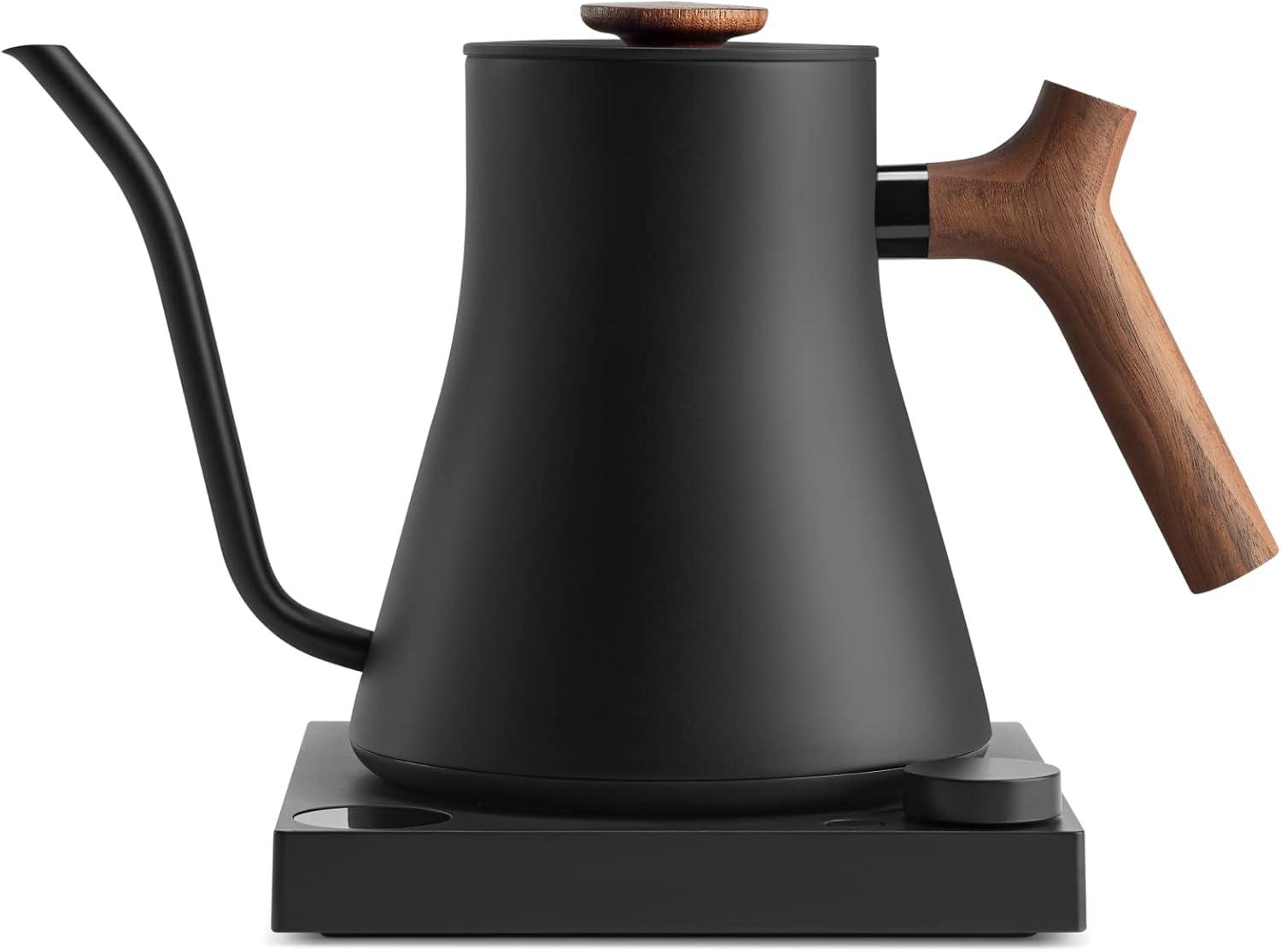
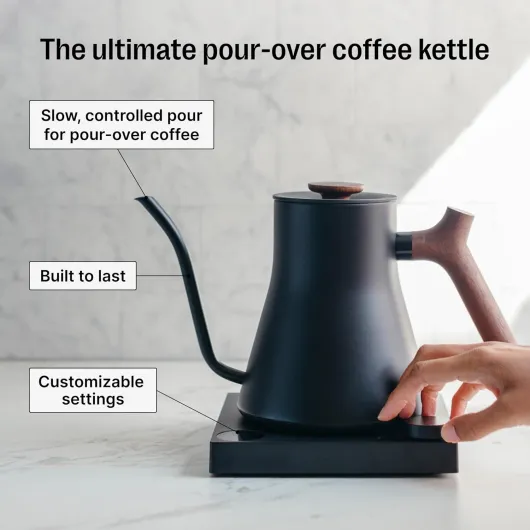
Design is clearly where a big chunk of the price goes. The matte black finish with walnut handle looks clean and modern on the counter. It doesn’t scream “appliance,” it looks more like a piece of gear. The footprint is fairly compact: about 10.3" long, 6.8" wide, and just under 8" tall, so it doesn’t hog the whole counter. The base is low‑profile with that color LCD, and the kettle sits on it in a stable way—no wobble or weird alignment issues in my unit.
Functionally, the gooseneck spout is the key design element. It’s shaped to give a slow, controlled pour, and it actually does. Compared to my cheap gooseneck, the flow is smoother and easier to control, especially at low flow rates for blooming coffee. If you’re into V60 or similar pour‑overs, that’s a noticeable upgrade. The handle angle also feels thought‑through: it keeps your wrist in a neutral position and doesn’t twist your arm when the kettle is full.
On the downside, a few design choices are a bit annoying. The cable length is only about 2 feet, which is short if your outlet isn’t right behind the kettle. I had to move some stuff around on the counter to make it work. The matte black finish also shows water spots and fingerprints more than I expected, so if you’re picky about how it looks, you’ll be wiping it down a lot. The walnut accents look nice, but they immediately made me think about long‑term wear and water damage if you’re not careful about drips.
The screen is clear and bright, but there’s a slight “overdesigned” feel. For a kettle, there are a lot of menus and options. It’s not hard to use, but it’s more fiddly than it needs to be when all you really want is hot water quickly. Overall, design is pretty solid and definitely better than most cheap kettles, but you’re paying partly for the look here, not just raw functionality.
Comfort and everyday use: nice to handle, slightly fussy to operate
From a pure handling point of view, the ergonomics are good. The handle shape works well even when the kettle is full, and the weight (about 2.76 pounds empty, plus water) is manageable. I never felt like it was straining my wrist, even during slow pour‑overs that take a couple of minutes. The balance is decent: the center of gravity sits low enough that it doesn’t feel tippy when you tilt it slowly. Compared to a standard stubby kettle, this is more comfortable for controlled pouring.
The gooseneck spout helps a lot with comfort too, because you’re not fighting the flow. On my old cheap kettle, if I tilted too far it would dump water out suddenly. With the Stagg EKG Pro, you can pour at a trickle or a steady stream without much effort. That makes it less tiring to do a precise 2–3 minute pour‑over. It also helps avoid splashing when you’re just making tea in a mug. Noise‑wise, it’s pretty quiet; there’s a soft hum when it’s heating, but no loud clicking or whistling. In a small kitchen, that’s appreciated.
Where comfort drops a bit is the user interface. Using a dial and one button for everything is okay once you learn it, but early on it feels a bit like setting a digital alarm clock from the 2000s. You turn the dial to set temperature, push to start, long‑press to enter settings, then scroll through menus. It’s not hard, but it’s more than a half‑asleep brain wants to deal with in the morning. The scheduling feature and guide mode are nice ideas but feel slightly overcomplicated for what they do.
Another minor comfort gripe: the short 2‑foot cable. It kind of dictates where this thing lives on your counter. If your outlet is low or tucked away, you may end up dragging it closer or using an extension cord, which is annoying for a pricey appliance. Overall, in terms of physical comfort and handling, it’s very good. In terms of mental friction using the menus, it’s fine once you get used to it, but not exactly effortless.
Materials and build: premium feel, but not bombproof
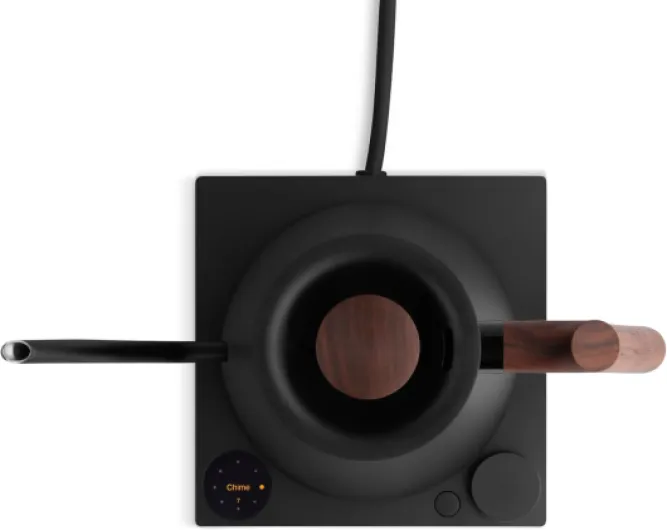
The kettle body is stainless steel, and it feels solid in the hand. No flex in the walls, no rattling parts, and the lid fits snugly without feeling cheap. The finish is a matte coating over the steel, which so far has held up fine—no peeling or bubbling—but like I said earlier, it does show marks easily. The handle and lid pull on this version are walnut, which definitely looks nicer than plastic, but you have to treat them with a bit more care to keep them from drying out or getting stained.
According to the specs, other parts like internal seals are food‑grade silicone and the handle structure under the wood is plastic. In normal use, nothing feels flimsy. The handle doesn’t creak when the kettle is full, and the gooseneck doesn’t bend or feel thin. The base is light, but it doesn’t feel hollow or cheap. Overall, in the hand, it feels like a premium product, not like a generic Amazon kettle rebranded with a fancy logo.
Where I’m a bit cautious is long‑term durability of the wood and electronics. The walnut is “strong and hard,” fine, but it’s still wood next to steam and water. If you’re careless with splashes or leave it wet, it’ll probably age faster than a full plastic handle. On the electronics side, user reviews show some quality control issues: a few people got dead units or bases that glitched out, and one user described serious firmware problems where the temperature reading froze and the kettle kept boiling aggressively. That’s not a materials problem, but it does affect how confident you feel about it lasting several years.
In my weeks of use, no obvious wear yet, no weird smells, no rust, and no loose parts. I use filtered water, which helps avoid mineral buildup like one of the positive reviewers mentioned. So in terms of materials, I’d say it feels high‑end, but you still have to treat it well, especially around the wood and the electronics. For the price, I’d like to see rock‑solid quality control, and based on the Amazon reviews, Fellow isn’t 100% there yet, even if their support seems responsive.
Durability and reliability: good hardware, mixed reports on electronics
I haven’t owned this kettle for a year yet, so I’m leaning on both my experience and what other buyers report. Physically, after weeks of daily use (multiple heats per day), no obvious wear: no loose handle, no wobble in the lid, no weird smells, no rust spots inside. The stainless body still looks fine apart from some water marks on the matte finish, which wipe off. The walnut handle and lid pull haven’t cracked or discolored, but I also don’t leave them wet and I wipe drips quickly.
Where the durability question really sits is in the electronics and firmware. Several Amazon reviews mention dead-on-arrival units, bases that wouldn’t power on, or displays freezing. One user had two bad units from Amazon in a row before getting a working one directly from Fellow. That points more to quality control and shipping/handling issues than to the basic design, but it still matters because nobody wants to play the return lottery on a kettle this expensive. Once you get a good unit, most people seem happy long‑term, but there are also stories like the one‑star review where the kettle’s temperature reading locks and it keeps boiling.
In my case, no crashes or weird lockups so far. The screen wakes up every time, the controls respond, and it shuts off properly. But I’m aware that the software is the weak link here. The hardware feels like it could last years if you don’t drop it or abuse it. The electronics are the question mark. The good news is that Fellow’s support, by most accounts, is responsive and willing to replace faulty units. That doesn’t fix the annoyance of dealing with problems, but at least you’re not stuck with a dead base.
So from a durability perspective: build feels solid, electronics are a bit of a gamble. If you’re unlucky, you might deal with returns or replacements early on. If you get a stable unit, it should hold up fine with normal care and filtered water. Just don’t treat it like an indestructible tank; it’s more like a nice gadget that needs a little respect.
Performance: heats fast, pours great, but the brains aren’t perfect
On the performance side, heating speed is solid. From room‑temperature water to around 200°F takes just a few minutes. It’s not wildly faster than other 1200W–1500W kettles I’ve used, but it’s at least on par, and you don’t feel like you’re waiting around. The big difference is you actually hit the target temperature instead of just blasting to a rolling boil every time. For pour‑over, that alone is worth something because I’m not guessing or waiting for water to cool.
Temperature accuracy seems pretty good in my unit. When I set 205°F, it stops right around there and doesn’t overshoot badly. The hold mode keeps it within about a degree or two while I grind beans or rinse the filter. For tea, being able to set 180°F for green tea and 200°F for black tea without fiddling is genuinely convenient. One of the Amazon reviewers mentioned using it for months with no scaling issues using filtered water; my experience lines up with that so far—no weird tastes or buildup yet.
The pour performance is where this kettle earns its reputation. The precision gooseneck gives a slow, consistent flow that makes bloom and controlled spirals over a V60 or similar dripper much easier. Compared to a regular electric kettle, it’s night and day. Even compared to a cheaper gooseneck, this one feels smoother and easier to control; it’s less twitchy, so your hand doesn’t have to work as hard to keep the flow steady. That alone can make your coffee more consistent, assuming the rest of your setup is decent.
Now the downside: software/firmware reliability. Some users report serious bugs. One 1‑star review describes the kettle’s base reading the wrong temperature after lifting and replacing the kettle, then cranking up the heat even though the water was already near boiling. That led to aggressive boiling and steam until manually shut off—basically a safety concern. I didn’t hit that specific bug, but knowing it exists makes me pay more attention when I set the kettle back on the base. For a product at this price, that kind of glitch is not great. So performance is strong when it works as intended, but the software side clearly has room for improvement, and you have to be a bit cautious.
What you actually get with the Stagg EKG Pro
Out of the box, you get the kettle body (0.9 L capacity), the base with the color LCD screen and dial, a short-ish power cable (about 2 feet), and that’s basically it. No extra carafe, no filters, nothing fancy beyond the kettle itself. Setup is straightforward: plug in the base, set language/units on the screen, and you’re ready to heat water. There’s a menu system controlled by a single dial and a button, so everything from scheduling to hold temperature is buried in there.
The main pitch is precise temperature control and pour‑over focus. You can set water by the degree, from typical tea temps (160–212°F) down to much lower if you want. There’s a built‑in brew stopwatch and a “Guide Mode” that gives you presets for coffee and different teas. You can also schedule it to start heating at a certain time and adjust things like altitude and chime volume. On paper, it basically tries to be the smart kettle for people who care about coffee more than the average person.
In practice, after a few days, I ended up using only a handful of features consistently: setting exact temps (e.g., 205°F for pour‑over, 180°F for green tea), using hold mode to keep water hot while I prep, and occasionally the brew timer. The rest—like changing chime sounds and fiddling with minor settings—felt like one‑time setup stuff. The screen is nice to look at, but once the novelty wears off, it’s mostly just a thermometer and a big temperature number.
Compared to a basic $30 electric kettle, the main real upgrades are: more accurate temp control, better pouring for pour‑over, and the ability to hold temp without constantly re‑boiling. If you don’t care about those three things, this product is probably overkill. If you do, then the extra features are at least going in the right direction, even if the software isn’t perfect and sometimes feels a bit too clever for a kettle.
Pros
- Precise temperature control to the degree with reliable hold mode in normal use
- Gooseneck spout and handle make pour‑over brewing easier and more consistent
- Attractive, compact design that feels solid and looks good on the counter
Cons
- High price compared to other electric and gooseneck kettles
- Reported firmware and reliability issues, including potential safety concerns in some units
- Short power cable and slightly overcomplicated menu system for a simple task
Conclusion
Editor's rating
Overall, the Fellow Stagg EKG Pro is a pretty solid choice for coffee and tea nerds who actually care about exact water temperature and controlled pouring. It heats quickly, holds temperature well, and the gooseneck spout genuinely makes pour‑overs easier and more consistent. The handle is comfortable, the kettle feels good in the hand, and the design looks nice on the counter. If you’ve been stuck with a basic kettle that only boils, you’ll notice the difference in how controlled and repeatable your brews become.
But it’s not perfect. The price is high, some of the smart features feel a bit overcomplicated for daily use, and the software/firmware side clearly isn’t bulletproof based on user reviews. The stories about units not powering on or the temperature reading freezing and causing aggressive boiling are worth taking seriously. Fellow’s customer service seems responsive, which helps, but you’re still taking a bit of a gamble, especially if you buy through a third party and get a bad batch.
If you’re the kind of person who weighs beans, times your pours, and drinks pour‑over or specific teas every day, this kettle can fit nicely into that routine and feel like money reasonably well spent. If you just want hot water quickly and don’t care about one‑degree accuracy, I’d say skip it and buy a simpler, cheaper electric kettle or a basic gooseneck. You won’t get the same level of control, but you’ll save a lot of cash and avoid dealing with fancy software on something that’s supposed to just heat water.