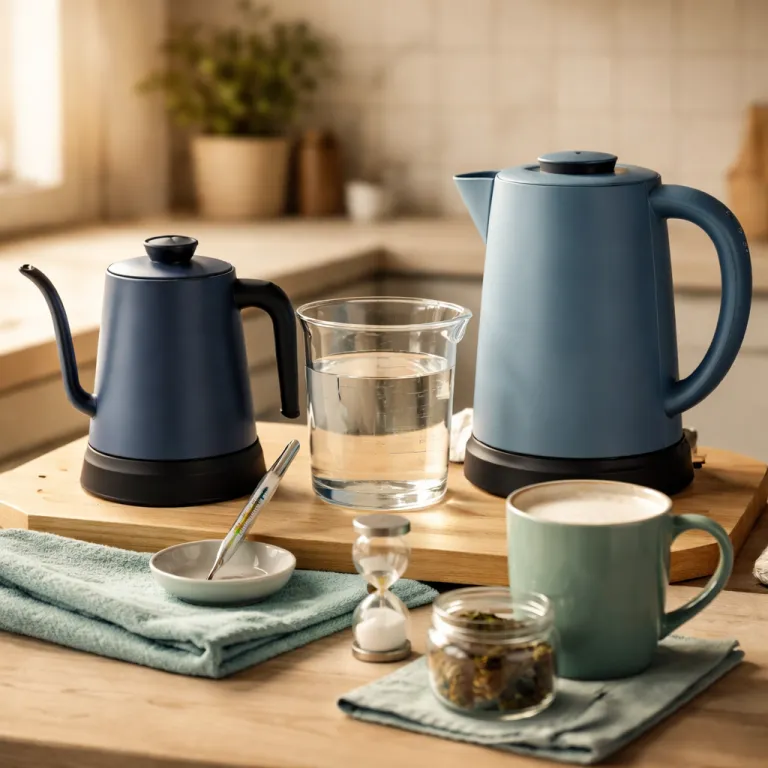
Why kettle capacity matters more than you think
A proper kettle capacity guide starts with how much water you actually use. Most electric kettles are sold at 1.7 litres, yet a typical brew for tea or coffee rarely needs more than 400 to 500 millilitres of boiling water. That gap between stated size and real brewing habits is where energy, money and the heating element quietly burn away.
When a full 1.7 litre electric kettle boils for a single mug, the extra heat wasted on unused water can add up to dozens of kilowatt hours over a year in a small flat. If you live alone and always fill to the halfway mark “just in case”, your kettle will repeatedly heat water you never drink, while the concealed heating elements sit longer in aggressively hot conditions that accelerate limescale and stress the stainless steel shell. Reboiling a smaller amount is almost always cheaper than boiling a large batch size once, especially when the kettle electric model has a minimum fill of 300 millilitres or less.
Think of capacity as a daily brewing decision, not a one time purchase specification on a box. A realistic kettle capacity guide for a solo student suggests 0.5 to 1 litre, for a couple around 1 to 1.5 litres, and for a family that regularly serves tea or instant meals 1.5 to 1.7 litres makes sense. The right kettle will match your routine so closely that you rarely overfill, which protects the heating element, reduces boiling time, and keeps the brewing process efficient rather than theatrical.
Minimum fill, batch size and real energy costs
Capacity is not just about the maximum size of the kettle, it is about the minimum amount of water the kettle will safely boil. A good kettle capacity guide therefore starts by checking the minimum fill line, because a model that needs 500 millilitres to cover its heating element wastes more power for a single brew than one that can safely heat 250 to 300 millilitres. Which? testing has long highlighted that a minimum fill of 300 millilitres or less is a practical benchmark for energy efficient electric kettles in everyday kitchens.
Imagine a shared house where three people each make one tea or coffee per morning, using about 250 millilitres of boiling water per mug, yet the only electric kettle available has a 1.7 litre body and a 0.5 litre minimum fill. Every time someone wants to boil water for a single drink, they must heat double what they need, so the kettle will consume more power and the heating elements endure more heat cycles than necessary. Over hundreds of boils, that extra boiling water accelerates limescale on the stainless steel interior, especially around the concealed heating element and spout, which then demands more frequent descaling and reduces ease of cleaning.
Batch size also matters if you brew tea in a pot or prepare instant noodles and soup alongside coffee. For two large mugs, a 1 litre electric kettle with a 300 millilitre minimum fill offers precise control over how much water you heat, while a 1.7 litre model encourages habitual overfilling that shortens the life of the steel body and plastic lid seals. If you want a deeper dive into how stainless steel construction and capacity interact, a dedicated review of top stainless steel electric kettles shows how different designs handle heat, limescale and repeated boiling in real use.
Solo, couple or family: matching kettle size to your household
Household structure should drive your kettle capacity guide, not the other way around. A solo student in a dorm who mainly drinks tea or instant coffee will usually be better served by a compact 0.8 to 1 litre electric kettle than a full size 1.7 litre model, because the smaller body boils faster, uses less power and keeps boiling water fresher between brews. For a couple who often brew back to back drinks, a 1 to 1.5 litre kettle offers enough water for two large mugs plus some cooking tasks without encouraging chronic overfilling.
Families who regularly prepare tea rounds, instant porridge and pasta might genuinely need a 1.5 to 1.7 litre kettle, but they should still consider the minimum fill and how often they actually use the full capacity. A 1.7 litre kettle will technically hold six to seven cups, yet in practice many households only heat 500 millilitres at a time, which means the extra size mostly increases limescale risk and extends the boiling time for no benefit. Overfilling also pushes boiling water and steam harder against the lid and spout, which can degrade seals, stress the stainless steel material and leave scale flakes in the first pour after a long idle period.
Compact and travel kettles are not a downgrade for small households, they are often the most rational choice. A 0.5 to 0.8 litre kettle electric model with a 300 millilitre minimum fill can heat water quickly for one or two mugs, while the smaller interior surface reduces limescale build up and makes ease of cleaning genuinely better. For anyone living in a hard water region, guidance on electric kettles that survive hard water shows how capacity, heating element design and stainless steel quality combine to determine long term durability.
Material, temperature control and everyday brewing features
Once capacity and minimum fill are sorted, the next layer of any kettle capacity guide is material and features. Stainless steel remains the most common choice for electric kettles because it balances durability, heat retention and neutral flavour, while plastic shells can feel lighter but may show wear faster around the handle and lid. Glass kettles look elegant when you boil water, yet they expose every trace of limescale and can feel hotter to the touch, so many students and first time buyers still gravitate toward stainless steel bodies with concealed heating elements.
Variable temperature control is not essential for everyone, but it transforms how you brew tea and coffee if you care about flavour. Models like the Fellow Stagg EKG or Breville IQ let you set precise control points such as 80 degrees Celsius for green tea, 93 degrees for pour over coffee and 100 degrees for instant noodles, so the kettle will stop heating at the right moment instead of always racing to a full rolling boil. That kind of precise temperature control reduces the time the heating element spends at maximum heat, which can extend its life and slightly reduce energy use over thousands of cycles.
Keep warm or hold features, usually running for 20 to 60 minutes, are useful if you brew several drinks in a row, but they also keep the water and steel interior at a higher temperature for longer, which can encourage limescale in hard water areas. If you mostly make one mug at a time, it is often better to reboil a small amount than to rely on a long hold feature that keeps boiling water hovering just below the boil. For readers interested in how ceramic shells change heat retention and flavour perception, a detailed analysis of a ceramic electric kettle for everyday tea and coffee rituals explains why some people prefer ceramic over stainless steel despite the extra weight.
From beer brewing gear to student kitchens: what actually transfers
Search results for any kettle capacity guide often mix everyday electric kettles with serious beer brewing equipment, and the overlap can be confusing. In professional beer brewing, large stainless steel brewing kettles with tri clamp fittings, HERMS coil systems and powerful heating elements are designed to heat water and wort in large batch sizes with precise control over temperature steps. Those brewing systems use industrial power levels and open steel vessels that are completely different from a compact electric kettle on a 360 degree base, yet some principles still apply to your student kitchen.
Brewers care about how fast they can boil water, how evenly the material distributes heat and how easy cleaning will be after a sticky brew day, and you should consider the same trio when choosing a kettle for tea. A good electric kettle will use stainless steel or high grade plastic that tolerates repeated boiling without flavour transfer, a concealed heating element that resists limescale, and a body size that matches your daily brewing process rather than an imagined party scenario. While you will not be attaching a tri clamp or HERMS coil to your dorm kettle, you can still think like a brewer by matching batch size to real demand and by avoiding chronic overfilling that batters the heating elements and leaves mineral rings above the usual water line.
Beer brewing also shows how overfilling shortens equipment life, because kettles that are constantly run at maximum volume see more boil overs, more scorching and more stress on welds and fittings. Translate that to your electric kettle and you get a simple rule, which might be the most important line in any kettle capacity guide for first time buyers. Choose the smallest kettle that comfortably handles your busiest realistic day, because in the long run it is not the wattage that ruins your gear, but the tenth kettle of limescale left sitting after a rushed morning brew.
FAQ
How much kettle capacity do I need for one person ?
Most solo users are well served by a 0.8 to 1 litre electric kettle with a minimum fill of 250 to 300 millilitres. That range boils fast, uses less power and reduces the temptation to overfill for a single mug. If you often cook instant noodles or soup, leaning closer to 1 litre gives extra flexibility without the bulk of a 1.7 litre body.
Is it cheaper to reboil water or to boil a full kettle once ?
For everyday use, reboiling a small amount of water is usually cheaper than boiling a full kettle once and letting the rest sit unused. Heating excess water wastes energy and keeps the heating element at high temperature longer, which can shorten its life. The most efficient approach is to boil only slightly more than you need for each brew.
Does kettle material affect taste and energy use ?
Stainless steel kettles are popular because they are durable, neutral in flavour and efficient at transferring heat from the element to the water. Glass models let you see the boil but show limescale more clearly, while ceramic kettles retain heat well yet are heavier and slower to cool. Taste differences are usually minor if the kettle is well made and regularly descaled, but poor quality plastics can sometimes impart odour when exposed to repeated boiling.
Why does minimum fill level matter so much ?
The minimum fill line shows how much water you must add to safely cover the heating element, and that volume sets the floor for every boil. A kettle that needs 500 millilitres for safe operation forces you to waste energy whenever you only want a single 250 millilitre mug. Choosing a model with a 250 to 300 millilitre minimum fill lets you match the heated volume to your real drinking habits.
Can a travel kettle replace a full size model in a small flat ?
For many students and single renters, a 0.5 to 0.8 litre travel kettle can fully replace a larger model. These compact kettles boil quickly, use less counter space and naturally limit overfilling, which helps control limescale and energy use. The main trade off is that they struggle with large cooking tasks, so heavy pasta or batch tea drinkers may still prefer a 1 to 1.2 litre kettle.
