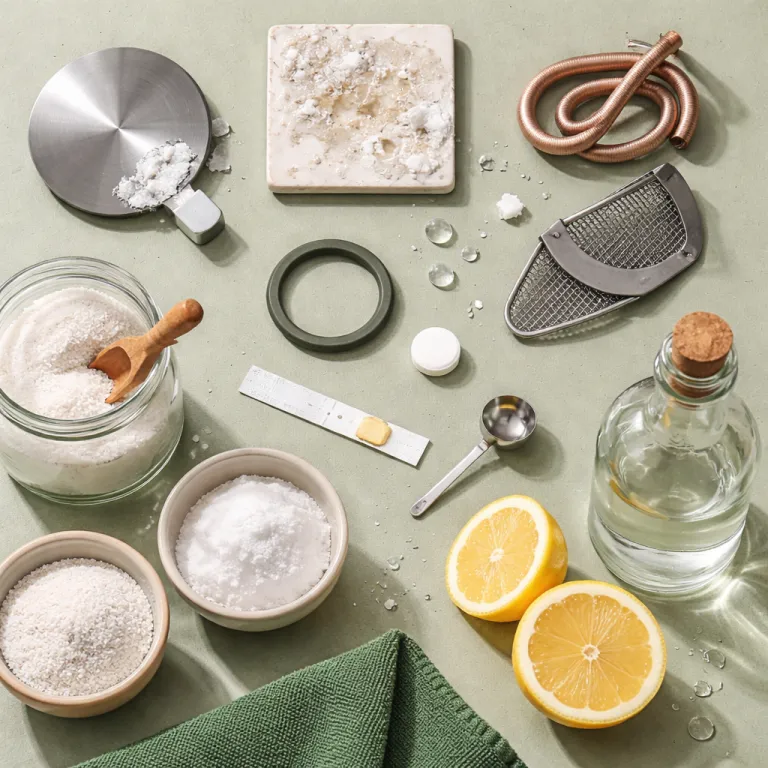
Why the best electric kettle starts with your water
Choosing the best electric kettle begins with understanding your tap water. In hard water areas, typically above 120 ppm (7+ grains per gallon) of dissolved minerals, every boil leaves calcium and magnesium behind, so the wrong kettle design turns into a crusted mess within months and makes boiling slower. If you boil water 5 to 10 times a day for tea, coffee or cooking, that build up matters more than a flashy screen or a bargain price.
Quick buyer’s checklist for hard water homes
- Concealed heating element under a flat stainless steel base
- Wide lid opening plus a removable limescale or mesh spout filter
- Mostly stainless steel or glass in contact with boiling water
- Clear water level markings and a comfortable, cool touch handle
- Automatic shut off and reliable boil dry protection
Hard water attacks the heating element first, so the type of electric element and how it is hidden or exposed is crucial. A concealed element under a flat stainless steel plate gives fewer nooks where limescale can cling, while old style exposed coils leave chalky rings that flake into the first pour of tea or coffee. When you compare electric kettles, look closely at the interior material, the shape of the base and how easy it is to reach every corner with a descaling brush.
For most households, a stainless interior is the best compromise between durability and hygiene. A full stainless steel lining, including the spout area, resists staining better than plastic and copes well with repeated fast boiling cycles in hard water. Glass kettles look clean at first, but every mineral streak shows on transparent glass, so a glass kettle demands more frequent scrubbing to keep the hot water tasting neutral.
Hard water compatible designs: stainless, glass and plastic compared
When reviewers talk about a kettle being hard water compatible, they usually mean a concealed element, a smooth stainless interior and a decent limescale filter. In practice, the best electric kettle for hard water combines a flat stainless steel base, a tight fitting lid and a spout filter that you can remove without tools in under thirty seconds. That combination keeps boiling efficient, reduces flakes in your tea and makes routine cleaning less of a chore.
Stainless steel kettles such as the Cuisinart CPK 17 or many mid range models from Hamilton Beach are typical examples that balance durability with reasonable price and quiet operation; always check current lab tests or trusted consumer reviews to confirm how a specific model performs in hard water. A good stainless steel electric kettle will have welded seams instead of deep ridges, because ridges trap scale and make it harder to rinse away mineral sludge after a strong descale. If you prefer glass, choose a glass kettle with a stainless base and a clearly rated boil dry safety system, since glass shows every mineral ring and encourages you to descale before performance drops.
Plastic bodied electric kettles are lighter and often cheaper, but hard water quickly stains pale interiors and can make them smell if you neglect cleaning. If you go this route, look for models advertised as BPA free and check that only stainless or glass touches the boiling water inside the jug. For deeper research on durable stainless designs, a specialised guide to top stainless steel electric kettles or a brand’s own comparison page is useful when you want to check specific models and their long term resistance to scale.
Capacity, speed and real world boil times
Manufacturers love to shout about wattage, but in hard water homes the shape of the kettle and the minimum fill line matter just as much. A 1.7 litre electric kettle that claims fast boiling in three minutes usually hits that only at 1 litre, and independent testing from consumer magazines such as Which? in the UK and Consumer Reports in the US has shown real world boil times clustering between four and five and a half minutes across many kettles. Those figures typically come from lab style tests using room temperature water, a calibrated power meter and repeated boils to average out random variation, so you should treat any “rapid boil” badge as marketing and focus instead on how consistently the kettle reaches a rolling boil and how quickly it slows down as scale builds.
For a family that makes tea and coffee several times a day, a 1.5 to 1.7 litre capacity is practical, but remember that 1.7 litres on a spec sheet is not a genuine four mug pour once you factor in safe clearance below the spout. If you usually brew one or two mugs, a smaller 1.0 to 1.2 litre gooseneck kettle or compact jug wastes less energy and reduces the concentration of minerals per boil, because you are not repeatedly superheating the same small puddle of water at the bottom. Minimum fill lines around 0.5 litres are kinder to the element in hard water, since ultra shallow boils leave a dense crust right where the heat is strongest.
Boil time also links directly to noise and kitchen rhythm. High wattage electric kettles may shave thirty seconds off the boil, but they often roar louder and can exaggerate boiling turbulence that throws scale flakes into the spout filter. If you value quiet mornings, a slightly slower model with a well balanced lid, a smooth stainless base and a thoughtful spout design will feel like the best electric kettle in daily use, especially when paired with a minimalist style from guides to top minimalist electric kettles or a brand’s own minimalist series.
Temperature control, presets and gooseneck precision
Variable temperature control has moved from niche coffee gear into mainstream electric kettles, and it matters more than you might think. Green tea, filter coffee and instant noodles all prefer different temperature water, so a kettle that only slams to a full boil forces you to wait and guess when it has cooled enough. A model with clear temperature presets at 60, 80, 90 and 100 degrees Celsius lets you hit the right point for coffee or delicate tea without scalding the leaves or wasting minutes.
For pour over coffee fans, an electric gooseneck kettle such as the Fellow Stagg EKG or the OXO Brew electric gooseneck is often highlighted in barista style reviews for giving far better control than a chunky jug spout. The long narrow gooseneck kettle design slows the pour, so you can spiral water evenly over the coffee bed and avoid channeling, while the handle geometry keeps your wrist relaxed during a two or three minute pour coffee session. These kettles often include a hold or keep warm feature that maintains the set temperature for up to an hour, which is handy when you brew several cups back to back.
Even if you never touch manual brewing, temperature control is useful in hard water regions. Lower temperature presets reduce violent boiling, which means fewer mineral fragments breaking loose and fewer deposits blasted against the spout filter and lid. When you compare options online or in store, check whether the control panel is intuitive, whether the presets are clearly labelled and whether the kettle remembers your last setting after you lift it off the 360 degree base.
Safety features: boil dry protection and everyday usability
In a hard water kitchen, safety features are not just about avoiding accidents, they also protect the kettle from the damage that scale causes. Boil dry protection, sometimes called dry protection, uses a thermostat or sensor to cut power when there is too little water covering the element, and that cut off becomes more important as mineral deposits insulate the base. If the switch clicks late or fails, the overheated stainless plate can warp, discolour or crack, turning a good electric kettle into scrap long before its time.
Look for models that clearly advertise automatic shut off, boil dry protection and a secure locking lid, especially if children might grab the handle. Everyday usability details matter just as much as headline safety features, so check how easy it is to read the water level window, whether the lid opens wide enough for a hand and sponge, and whether the handle stays cool during a full boil. A well designed tea kettle or electric jug will balance weight, grip and spout angle so that you can pour water slowly for coffee or quickly for pasta without dribbling on the counter.
Brands such as OXO, Hamilton Beach and Amazon Basics often compete on these small usability touches rather than raw wattage. An Amazon Basics kettle might not look glamorous, but if it has a wide lid, a reliable keep warm function and a robust switch, it can outlast a sleeker rival that skimps on internal components. When you evaluate marketplace listings, read critical reviews that mention switch failures, late shut offs or handles loosening, because those are the weak points that hard water and heavy daily use expose fastest.
Filters, cleaning and making your kettle last
The least glamorous part of owning even the best electric kettle is descaling, yet in hard water regions it is the single habit that decides whether your kettle lasts two years or ten. Every boil leaves a microscopic ring of minerals on the stainless base, the glass walls or the plastic seams, and over hundreds of cycles that ring thickens into a crust that slows boiling and sheds flakes into your first pour. A removable mesh filter at the spout catches some debris, but if the filter is fiddly or fixed in place, most people simply stop cleaning it and accept chalky tea.
Removable filters come in two main styles, and one is far easier to live with. The best designs slide out in one piece from the spout area, letting you scrub both sides under running water in under a minute, while the worst are hinged deep inside the lid where fingers and brushes cannot easily reach. When you shop for electric kettles, tilt the display model and inspect how the filter attaches, because a clever filter and a wide lid opening make regular descaling with citric acid or vinegar much less of a weekend project.
Maintenance also ties back to material choice and interior geometry. A smooth stainless steel interior with a concealed element lets descaling solution circulate freely, while a glass kettle with decorative ridges or a plastic jug with moulded patterns traps residue that never quite rinses away. If you are curious about alternative materials that resist scale and change the feel of your daily ritual, a specialist guide on why a ceramic electric kettle elevates everyday tea and coffee rituals or a brand’s ceramic range overview can help you weigh ceramic against stainless and glass for your next upgrade.
Key figures on electric kettles and hard water performance
- Independent lab style tests on typical 1.7 litre electric kettles, including trials reported by Which? in the UK and Consumer Reports in the US, have found that most models take between 4 and 5.5 minutes to bring 1 litre of water to a full boil, so any claim of sub three minute boiling should be treated cautiously and checked against detailed reviews or the original test reports.
- Consumer organisations have highlighted that reliable kettles are available from around £20, with models such as the Cosori GK172 C often noted in buyer guides for having no plastic in contact with boiling water according to manufacturer specifications, which is reassuring for buyers seeking BPA free construction; always verify the latest lab notes or official documentation for any named model.
- Proposed United States Department of Energy efficiency standards for household electric kettles, discussed in DOE appliance rulemaking dockets and technical support documents, are expected to push designs toward at least 85 percent thermal efficiency at 1 litre, encouraging better insulation, more accurate thermostats and improved concealed element designs.
- Hard water affects more than half of UK households, according to regional water supplier reports and water hardness maps, which means that for millions of users the presence of a concealed element, a removable limescale filter and a wide lid opening has more impact on kettle lifespan than an extra 200 watts of power.
- In long term comparison tests described by consumer magazines, kettles with exposed elements have shown visible discolouration and slower boil times after only a few months of hard water use, while comparable models with stainless steel concealed elements maintained near original performance over the same period; check the methodology notes in each test to see which specific models were included.
| Model type | Element style | Interior material | Typical 1 L boil time | Hard water maintenance |
|---|---|---|---|---|
| Stainless jug (e.g. Cuisinart CPK 17) | Concealed | Brushed stainless steel | 4–5 minutes | Monthly descale, quick wipe of smooth base |
| Glass kettle with steel base | Concealed | Glass walls, stainless plate | 4.5–5.5 minutes | More frequent descaling to keep glass clear |
| Budget plastic jug | Exposed or part concealed | Plastic body, mixed metals | 5–6 minutes | Regular deep descale, filter scrub to avoid odours |
Frequently asked questions about choosing the best electric kettle
Is stainless steel or glass better for hard water areas
For hard water, a stainless steel interior with a concealed element is usually more practical than glass. Stainless hides minor staining, resists impact and makes it easier to scrub away limescale without worrying about scratching transparent walls. Glass kettles show scale clearly, which can prompt more frequent cleaning, but they demand more effort to keep looking presentable.
How often should I descale my kettle in a hard water region
If you boil several times a day in a hard water area, descaling once a month is a sensible baseline. Heavy users or those seeing white flakes in the first pour may need to descale every two weeks, especially with glass or plastic interiors. A quick visual check of the base and spout filter each weekend helps you adjust the schedule before performance drops.
Do I really need temperature control for everyday tea and coffee
Variable temperature control is not essential, but it quickly becomes useful once you have it. Green and white teas taste smoother when brewed below boiling, and many pour over coffee recipes call for water around 92 to 96 degrees Celsius. If you mostly make black tea and instant coffee, a single temperature kettle is fine, but a model with a few presets adds flexibility for guests and future brewing habits.
What safety features should I prioritise in an electric kettle
The most important safety features are automatic shut off at boil, reliable boil dry protection and a stable base that resists tipping. A locking or well weighted lid reduces the risk of steam burns if the kettle is knocked, and a cool touch handle makes pouring safer for children or older users. In hard water areas, robust boil dry protection also extends the life of the element by preventing overheating when scale builds up.
Are cheap kettles from online marketplaces a false economy
Budget kettles from large marketplaces can be good value, but only if the basics are sound. Look for clear safety markings, a solid feeling switch, a removable filter and an interior that is mostly stainless steel or glass rather than thin plastic. Reading low star reviews for repeated complaints about leaks, failed switches or rust is often the quickest way to spot models that will not survive daily hard water use.
