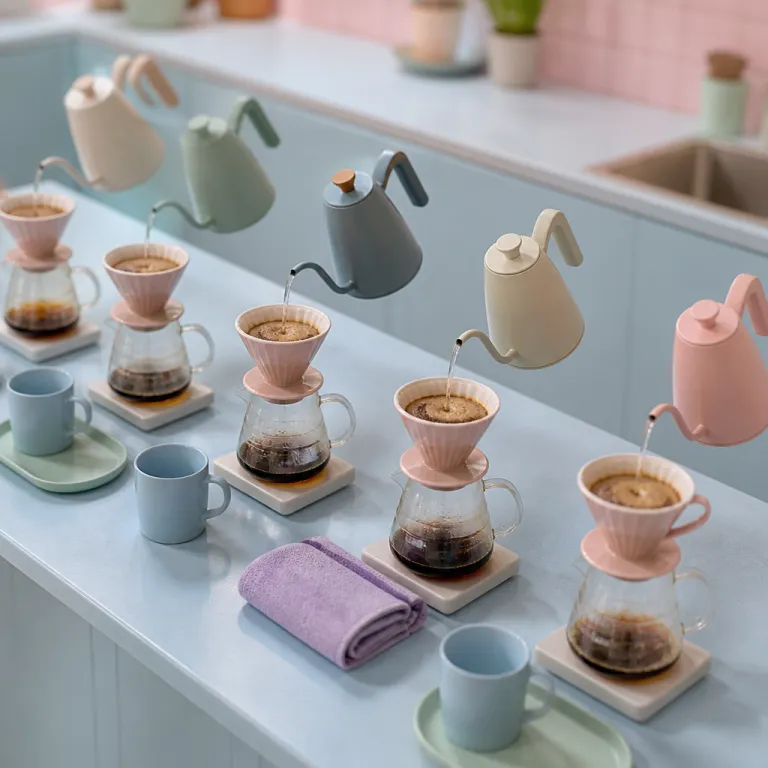
Why a budget gooseneck kettle in the UK can still pour precisely
A budget gooseneck kettle in the UK can absolutely deliver controlled pour coffee if you focus on spout design rather than marketing jargon. Many electric kettles under £50 now offer variable temperature control and a stable flow rate that rivals older premium models, which makes them ideal for careful brewing in small kitchens. For a first flat or student room, that balance of price, compact size and pour control matters more than shiny touchscreens.
When you compare budget gooseneck kettles, ignore vague claims about the kettle being “barista grade” and look at the spout geometry instead. A true gooseneck spout narrows towards the tip and curves down, which naturally limits water flow to roughly 4–8 millilitres per second and lets you pour coffee in tight circles without flooding the bed. That range is a practical rule of thumb drawn from a mix of manufacturer specifications and informal home tests using a kitchen scale and stopwatch, and it is a useful benchmark when you read reviews. If a supposed gooseneck kettle has a wide, stubby spout, you will fight the flow rate every morning and your brew will swing between under extracted and bitter.
Electric gooseneck kettles at this price usually hold between 0.8 and 1 litre of water, which is enough for one large V60 or two modest mugs of coffee. Stovetop gooseneck kettles such as the classic Hario Buono often stretch to 1.2 litres, but they give you no temperature control and no way to hold temperature between brews. For most UK renters paying close attention to every pound of the price, an electric kettle with basic temperature control is the kettle best suited to daily pour over brewing.
Electric versus stovetop: which budget gooseneck suits your brewing routine ?
Choosing between an electric gooseneck kettle and a stovetop gooseneck kettle under £50 comes down to how fussy you are about temperature. Electric kettles with variable temperature settings let you dial in 90–96 °C for pour over coffee, while stovetop kettles rely on guesswork and a separate thermometer. If you already own a basic electric kettle for tea, a stovetop pour kettle like the Hario Buono can be a cheap way to upgrade your brewing without duplicating appliances.
Electric gooseneck kettles in this budget range usually offer simple temperature control buttons rather than exact degree by degree adjustment, yet that is enough for most home brewing. Expect a temperature accuracy of roughly plus or minus 3 °C, based on typical manufacturer claims and comparative tests against a calibrated probe thermometer reported by reviewers, compared with the tighter plus or minus 0.5 °C on premium models such as the Fellow Stagg EKG or the EKG Pro. For everyday pour coffee, that small variance barely affects taste, especially if you grind consistently and keep your coffee to water ratio steady.
Stovetop gooseneck kettles win on capacity and durability, because a stainless steel body with no electric base tends to last longer in shared houses. They also avoid the risk of tripping a weak socket, which matters in older UK rentals where one overloaded extension lead can kill your morning brew. If you mainly drink filter coffee in summer, pairing a stovetop gooseneck with a separate variable temperature electric kettle for cold brew or flash chilled drinks can work well, and guides on using a variable temperature kettle for iced tea and coffee explain how to adapt your pour for cooler water.
Five UK budget gooseneck picks under £50 and how they pour
Among budget gooseneck kettles in the UK, the Hario Buono remains the reference stovetop option for controlled pour coffee. Its narrow gooseneck spout and gentle curve give a predictable flow rate that beginners can tame quickly, even though there is no built in temperature control. If you already own a separate electric kettle with a hold temperature feature, the Hario Buono becomes a pure pour kettle that focuses entirely on how water leaves the spout.
On the electric side, sub £50 models often borrow design cues from premium kettles like the Fellow Stagg EKG without matching their build quality. You will see angular handles, matte finishes and talk of “precision pour”, yet the real test is whether the gooseneck kettles keep a steady stream at low tilt. Some budget electric gooseneck designs gush when you tip past a certain angle, which makes it hard to brew coffee evenly across the bed.
If you want a detailed benchmark of how a reasonably priced electric gooseneck kettle behaves, reviews of the Dualit pour over fast boil gooseneck model with digital display show how UK brands are closing the gap with the Fellow Stagg. That Dualit kettle uses a stainless steel body, an 800 millilitre capacity and a shaped spout to mimic the best gooseneck profiles while still offering digital temperature control. It sits near the top of the budget bracket, so always check price carefully and watch for sales or refurbished units with free delivery to keep the total cost under £50. As of early 2024, typical UK retail prices for the Hario Buono and comparable Dualit gooseneck kettles hover between £35 and £55 depending on promotions, so checking current availability before you buy is essential.
| Model (UK) | Type | Capacity | Typical flow feel | Claimed temp control | Indicative price band* |
|---|---|---|---|---|---|
| Hario Buono V60 | Stovetop gooseneck | 1.0–1.2 L | Slow, very stable stream once tilted | None (relies on hob and thermometer) | ~£35–£45 |
| Dualit Pour Over Gooseneck | Electric gooseneck | 0.8 L | Controlled pour, can speed up at higher tilt | Digital presets with keep warm | ~£45–£55 |
| Typical budget electric gooseneck | Electric gooseneck | 0.8–1.0 L | Moderate flow, varies by spout shape | Step presets (e.g. 85–100 °C) | ~£30–£50 |
*Price ranges are approximate UK street prices in early 2024 and can shift with discounts and retailer offers.
Key specs that matter: flow rate, temperature control and build
For a budget gooseneck kettle in the UK, three specifications matter more than any others for pour over coffee. First is the spout diameter and curve, because that determines the flow rate and how easily you can trace slow circles over the coffee bed. Second is temperature control, which decides whether your electric kettle can hit the right brewing range for different coffees without constant guesswork.
Look for gooseneck kettles that advertise a controlled pour rather than just fast boiling, and pay attention to how reviewers describe the feel of the handle and spout. A good gooseneck kettle lets you start with a trickle of water and then increase the pour smoothly, instead of jumping from a drip to a flood. When you compare models, imagine how that flow will feel when you brew coffee at 7 in the morning with one eye half closed and a flatmate waiting for the bathroom.
Build quality also matters, even at this price. Stainless steel kettles tend to resist dents and limescale better than thin coated metal, and they cope with the knocks of a shared kitchen. If you are tempted by more decorative options, such as ceramic electric kettles that look beautiful on the worktop, remember that aesthetics do not fix a poor spout or unreliable temperature control, and a kettle best suited to daily brewing is the one that pours predictably every single time.
Living with a budget gooseneck: maintenance, safety and everyday use
Once you bring a budget gooseneck kettle into a UK flat, the way you maintain it will decide how long it keeps brewing well. Hard water in many British regions leaves limescale inside electric kettles and along the gooseneck spout, which slowly narrows the flow rate and makes the pour less predictable. A monthly descale with a citric acid solution keeps both stovetop and electric gooseneck kettles closer to their original performance.
Safety is another quiet but crucial factor, especially in student houses with overloaded sockets and trailing extension leads. An electric kettle with a reliable boil dry cut off and a stable base is worth a few extra pounds in price, because it reduces the risk of overheating when someone forgets to add water. Stovetop gooseneck kettles avoid electrical faults but demand more attention on the hob, and a distracted flatmate can still boil them dry if the coffee chat runs long.
Think about how the kettle fits into your daily brewing routine, including where you store coffee beans or bags and how you handle delivery of new supplies. If you use a coffee subscription that sends both regular and bags decaf, you may find yourself brewing several small batches each day, which makes a quick heating electric gooseneck with a hold temperature feature more convenient. Over time, the kettle that feels effortless to use will help you brew better coffee than a fancier model that annoys you every morning.
Do you really need premium features like the Fellow Stagg EKG ?
High end electric gooseneck kettles such as the Fellow Stagg EKG and the EKG Pro have set the benchmark for precise temperature control and beautifully balanced pour. They offer degree accurate variable temperature settings, rock solid hold temperature modes and a spout tuned for competition level brewing. For a first time buyer in a small UK kitchen, though, the question is whether those extras justify a price that can be three times higher than a solid budget gooseneck kettle.
In practice, a well designed budget electric kettle with simple temperature presets and a decent gooseneck spout will brew coffee that tastes very close to what you get from a Fellow Stagg. The main differences lie in how quickly the kettle reaches temperature, how quietly it operates and how precisely it can maintain that temperature over long brewing sessions. If you are not running back to back brews for guests, you may never notice the gap between a budget gooseneck and the best gooseneck models on the market.
Where premium kettles do pull ahead is in long term durability and small design touches, such as perfectly weighted handles and lids that never dribble when you pour. Yet for many UK students and first renters, the smarter move is to start with a sub £50 gooseneck kettle, learn how to brew consistently and only upgrade once you know exactly which features you miss. In other words, it is not the wattage that makes your coffee better, but the tenth kettle of limescale you never let build up.
Key figures on budget gooseneck kettles and home brewing
- In the UK, typical electric gooseneck kettles under £50 offer capacities between 0.8 and 1 litre, while stovetop gooseneck kettles such as the Hario Buono often reach 1.2 litres, giving roughly one extra large mug of coffee per boil compared with smaller electric models.
- Premium electric gooseneck kettles like the Fellow Stagg EKG usually claim temperature accuracy of about plus or minus 0.5 °C, whereas budget electric kettles tend to sit around plus or minus 3 °C, a difference that is noticeable in controlled tests but minor for everyday home brewing.
- Energy use for a 1 litre electric kettle boil in the UK is commonly estimated at around 0.1 kilowatt hours, based on typical 2–3 kW heating elements and measured boil times, so a daily pour over routine with a single boil adds roughly 3 kilowatt hours per month to a household bill, which keeps running costs low even for frequent coffee drinkers.
- Consumer testing by major UK review organisations has repeatedly shown that limescale build up can increase kettle boiling times by around 30 % or more, which means regular descaling is one of the simplest ways to keep both budget and premium gooseneck kettles efficient.
- Market surveys of home coffee equipment in the UK indicate that pour over brewing now accounts for a significant minority of at home coffee preparation, and this growth has pushed manufacturers to release more than a dozen new budget gooseneck kettle models in recent years aimed specifically at first time buyers.
FAQ
Is a budget gooseneck kettle under £50 good enough for serious pour over coffee ?
A well chosen budget gooseneck kettle under £50 in the UK is good enough for serious pour over coffee, as long as the spout design and flow rate are well controlled. You may not get perfect temperature accuracy or advanced hold temperature modes, but you will still be able to pour steadily and hit a reasonable brewing range. For most home brewers, that combination matters more than premium styling or app based controls.
Should I choose an electric gooseneck kettle or a stovetop model for a student flat ?
For a student flat with limited hob space and older sockets, an electric gooseneck kettle with basic safety features is usually the more practical choice. It heats water quickly, offers simple temperature control and can sit on a small worktop without needing a pan stand. A stovetop gooseneck kettle suits people who already have a reliable electric kettle and want a separate pour kettle purely for brewing coffee.
How important is variable temperature control on a budget gooseneck kettle ?
Variable temperature control is helpful but not essential on a budget gooseneck kettle, especially if you mostly brew medium roast coffee. Being able to select a preset around 94 °C reduces guesswork and makes your brews more repeatable, even if the kettle is only accurate to within a few degrees. If your budget is tight, prioritise a good gooseneck spout and safe build over very fine temperature adjustments.
How often should I descale a gooseneck kettle in a hard water area ?
In hard water areas of the UK, descaling a gooseneck kettle once a month is a sensible routine for anyone brewing coffee daily. Regular descaling keeps the flow rate consistent, prevents flakes of scale from entering your brew and helps the kettle reach temperature faster. If you notice white deposits inside the spout or slower boiling times, it is a sign to descale sooner.
Can I use a budget gooseneck kettle for tea as well as coffee ?
You can use a budget gooseneck kettle for both tea and coffee, though the smaller capacity may feel limiting for large teapots. If the electric kettle offers variable temperature presets, you can choose lower settings for green tea and higher ones for black tea or herbal infusions. Just remember to rinse the kettle regularly if you switch between strongly flavoured teas and delicate pour over coffee.