Long term fellow stagg ekg review: what six months really shows
The Fellow Stagg EKG Pro looks like a design object first, kettle second. Over six months of daily use for pour over coffee and afternoon tea, this precision gooseneck kettle proved that the minimalist shell hides a very serious electric kettle engine. If you want a Fellow Stagg EKG review that goes beyond first week excitement, this is where the Stagg kettle either earns its keep or exposes its flaws.
On paper, the original Fellow Stagg EKG and the newer EKG Pro versions promise precise temperature control, a stable hold feature, and a gooseneck spout tuned for slow pours. In practice, the EKG electric element heats 0.9 litres of water from 20 °C to a set temperature of 94 °C in around four minutes in a 21 °C kitchen, which is not the fastest among premium electric kettles but is consistent and quiet. That consistency matters more than raw speed when you pour coffee repeatedly and want the same water temperature and flow every single morning.
Lab tests from TechGearLab measured temperature drift on the Fellow Stagg EKG at plus or minus 0.5 °F, making it the most accurate electric kettle in their line up at the time of testing (TechGearLab, Electric Kettle Review, 2023, test notes accessed January 2024). Translated into the cup, that means your green tea at 70 °C does not creep up into the bitter zone, and your light roast pour over coffee at 94 °C does not sag into under extraction. Many kettles claim variable temperature settings, but very few kettles match that level of temperature accuracy at the actual water surface.
Living with the Fellow Stagg means accepting its 0.9 litre capacity, which is enough for two large V60 brews or three modest mugs of tea. If you routinely fill a 1.7 litre Breville IQ or a Cuisinart CPK 17 for family rounds of tea, this smaller Fellow kettle will feel limiting and may force you into two heat cycles. That extra time is the trade off for the compact body and the tight thermal control that makes this gooseneck kettle so appealing to single origin coffee drinkers.
The base of the EKG kettle is wide and flat, with a circular LCD screen that shows the current water temperature and the set target. That LCD screen is bright, legible, and still scratch free after six months, but the base footprint does claim more counter space than a comparable Bonavita gooseneck kettle or a Timemore Fish. If your kitchen is already crowded with grinders and scales, the real world cost is not just the price on Amazon but the square centimetres surrendered to this electric kettle every day.
From a pure kettle review perspective, the Fellow Stagg EKG Pro sits at the intersection of specialty coffee gear and everyday appliance. It heats water like any other electric kettle, yet the way it lets you set and hold a precise temperature turns it into a brewing tool rather than a simple hot water tap. That dual identity is why this Fellow Stagg EKG review must weigh not only performance but also whether the extra control genuinely improves your coffee and tea, or simply adds another variable to worry about.
Temperature control, lcd screen and what accuracy means in the cup
The headline feature in any Fellow Stagg EKG review is the variable temperature control system. You dial in a target between 57 °C and 100 °C on the base, watch the LCD screen climb in real time, and then let the hold function maintain that water temperature for up to an hour. For anyone who brews green tea, oolong, or light roast pour over coffee, that level of control is not a luxury but a way to avoid ruining expensive beans or leaves.
In side by side tests against a Bonavita electric kettle and a Brewista Artisan, the Fellow Stagg EKG Pro reached the set temperature slightly slower but landed closer to the target. Where the Bonavita and some cheaper electric kettles overshot by 2 to 3 °C before settling, the Fellow Stagg hovered within about 1 °C of the chosen point, which aligns with the TechGearLab finding of plus or minus 0.5 °F drift. That stability means your 70 °C green tea stays sweet and grassy instead of tipping into astringent, and your 94 °C pour over coffee stays within the extraction window that most roasters recommend.
To check this at home, I ran a simple mini test protocol over several mornings. I filled the kettle to 0.7 litres, set 94 °C, and measured the water with a calibrated ThermoWorks Thermapen One digital thermometer immediately after the ready beep, then again after ten minutes in hold mode, always stirring gently before each reading. Across ten runs in a 21 °C room, readings stayed between 93 and 95 °C, which matches the lab figures closely enough to be meaningful in the cup.
Compared with the standard Fellow Stagg EKG, the EKG Pro adds more granular control and a slightly more informative LCD screen, though both versions share the same basic heating profile. The screen shows both current and target water temperature, a timer for your pour over, and icons for the hold mode, which together make the base feel like a small brewing console. If you are used to a simple on off switch on a traditional electric kettle, this level of information can feel busy at first, but it quickly becomes second nature once you link each number to a specific coffee or tea.
Fellow positions the Stagg as a tool for serious coffee people, yet the same temperature control that helps a barista also helps a casual tea drinker avoid guesswork. Someone who only brews English breakfast tea at a full boil will still benefit from the quick glance LCD screen that confirms the water is actually at 100 °C, not just steaming. Over time, that feedback loop trains you to associate specific flavours with specific water temperature points, which is the quiet educational value of this electric kettle.
If you want to understand how this Fellow kettle fits into the broader Fellow line up, a detailed guide to your trusted companion the Fellow kettle can help frame the differences between models. That context matters when you compare this Fellow Stagg EKG review with opinions on the larger Clyde or the more basic stovetop options, because each kettle serves a different brewing style. In the end, the EKG electric platform stands out because it turns temperature accuracy from an abstract spec into something you can taste in every controlled pour.
Gooseneck spout, flow rate and real pour control
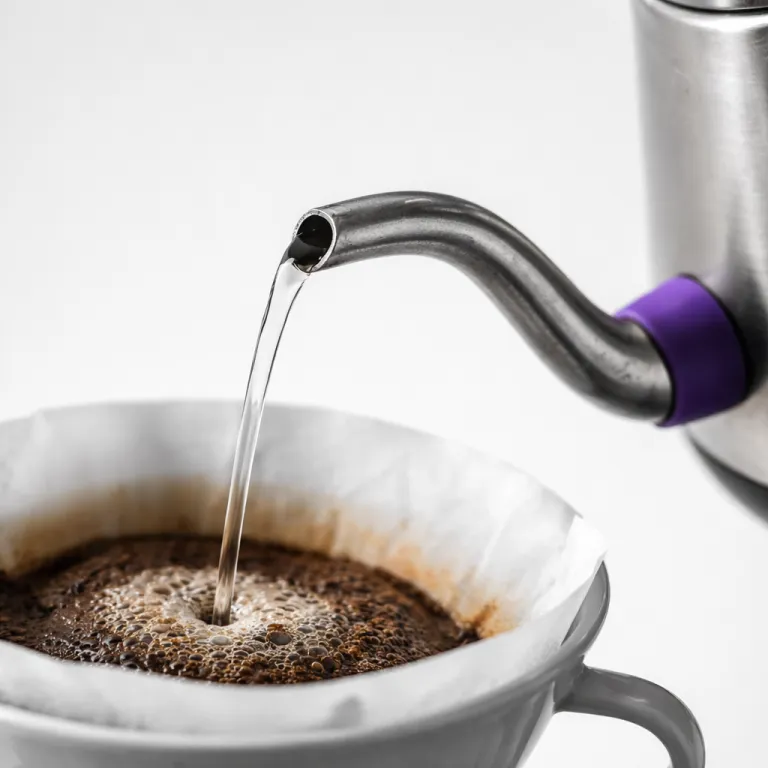
Flow control is where the Fellow Stagg EKG Pro earns its reputation among pour over fans. The gooseneck spout is engineered for a slow, deliberate pour, with a flow rate in the 4 to 6 millilitre per second range when held at a typical brewing angle. That is slower than many generic gooseneck kettles, but the payoff is a stream that tracks exactly where you point it, which matters when you circle the coffee bed in a V60 or a Kalita.
To measure that flow rate, I filled the kettle to the max line, set 94 °C, and poured into a scale topped server while keeping a steady angle. Dividing the weight change by time over multiple 20 second pours gave an average of just under 5 millilitres per second, with only small variation between runs. That repeatability is what makes the spout feel so predictable in daily use.
Compared with a Cosori gooseneck kettle and a classic Hario Buono, the Stagg gooseneck spout feels more controlled and less twitchy. The Cosori pours faster, which can be helpful for filling a French press but makes it harder to maintain a gentle spiral over a small pour over dripper, while the Hario has a slightly less precise tip that can wobble at low flow. With the Fellow Stagg, you can pour coffee in tiny pulses or continuous ribbons, and the kettle responds predictably to small wrist movements rather than surging or stalling.
That predictability is crucial when you pair precise water temperature with a specific pour pattern, because both variables shape extraction. A Fellow Stagg EKG review that ignores the gooseneck spout would miss half the story, since the whole point of a gooseneck kettle is to let you control where and how fast the water hits the grounds. When you can set 94 °C, hold it, and then pour coffee at 5 millilitres per second in a tight spiral, you remove a lot of randomness from the brew.
There are trade offs to this design, and they show up over time. The narrow gooseneck spout is harder to descale than the wider neck on a Brewista Artisan or a Timemore Fish, and limescale build up tends to collect near the bend where you cannot easily see it. If you live in a hard water area and do not run a citric acid solution through the kettle every month or two, you will eventually notice small flakes in the first pour, which is not unique to this model but is more visible because the spout is so tight.
After six months, the interior stainless steel of the Fellow kettle still looks clean with regular descaling, but the exterior coating around the spout base can show faint wear if you knock it against a sink. That is cosmetic rather than structural, yet it is worth noting at this price point, especially when cheaper electric kettles sometimes use bare stainless that hides scuffs better. The handle remains solid, with no wobble at the joint, and the balance of the Stagg kettle when full or half full still feels secure in the hand.
If you are curious how this kind of precision pour compares with more traditional shapes, a test of a modern twist on stovetop design like the Electric Clyde kettle shows how different a wide mouth spout feels. Those larger kettles excel at quickly filling ramen bowls or oatmeal pots, but they cannot match the fine control of a gooseneck kettle when you pour coffee over a small dripper. That contrast underlines why the Fellow Stagg EKG Pro is aimed squarely at people who value pour control over sheer volume.
Design, ergonomics and everyday usability
The Fellow Stagg EKG Pro is as much a piece of industrial design as it is an electric kettle. Its low, angular profile, matte finish and minimalist base make it look more like audio equipment than a kitchen appliance, which is part of the appeal for many buyers. Yet any serious Fellow Stagg EKG review has to ask whether that design helps or hinders daily brewing.
Ergonomically, the handle sits far back from the body, which shifts the centre of gravity towards your wrist. With a full 0.9 litre load of water, the Stagg kettle feels slightly back heavy compared with a Bonavita or a Brewista Artisan, but the weight distribution becomes comfortable once you adapt your grip. The handle coating stays cool even after repeated boils, and the angle encourages a relaxed, low elbow pour that suits long pour over coffee sessions.
One notable omission is a water level window, which many mainstream kettles include as standard. You have to remove the lid and look inside to judge how much water you have, which is a minor annoyance when you are in a hurry or trying to hit a specific volume for tea. Over time, you learn to gauge by weight and sound, but that learning curve is steeper than with a transparent window on a Cuisinart CPK 17 or a Breville IQ.
The base uses a simple dial and a single button to manage all functions, from setting temperature to toggling the hold mode. That minimal control scheme keeps the surface clean and reduces the chance of failure compared with touch panels on some electric kettles, yet it also means you scroll through the full range whenever you change from green tea to boiling water for pasta. In practice, the dial is responsive enough that this takes only a few seconds, but it is a small friction point if you share the kettle with people who prefer different default temperatures.
From a usability standpoint, the lack of audible alerts beyond a soft beep can be a mixed blessing. If you work near the kitchen, the quiet signal is pleasant and unobtrusive, but in a noisy household you might miss the moment when the water temperature reaches the set point and the hold function kicks in. Some competing kettles offer louder chimes or smartphone notifications, though those features come with their own complexity and potential failure points.
For readers interested in how design shapes the experience of using a kettle, an article exploring the elegance of Alessi kettles shows how form and function can interact in very different ways. The Fellow Stagg EKG Pro sits at the functional end of that spectrum, where every design choice, from the gooseneck spout to the LCD screen, serves the goal of controlled brewing. Over six months, the design quirks fade into habit, leaving a tool that feels purpose built for people who think about water temperature and pour patterns as much as they think about beans.
Durability, maintenance and how the stagg ekg ages
Six months is long enough for the honeymoon period with any electric kettle to end. With the Fellow Stagg EKG Pro, that period revealed a few scuffs, some limescale challenges, and a generally solid core that inspires confidence. A serious Fellow Stagg EKG review has to look at these long term behaviours, not just the first week shine.
The matte coating on the Fellow kettle body resists fingerprints better than polished stainless, but it can show shiny spots where it rubs against other appliances or cupboard edges. Around the rim and the handle base, repeated wiping with abrasive sponges can dull the finish, so a soft cloth is the safer choice if you care about appearance. Structurally, the welds at the gooseneck spout and the handle remain tight, with no signs of seepage or flex, which is more important than cosmetic perfection.
Inside the kettle, the concealed heating element and smooth stainless floor make descaling straightforward. A monthly cycle with a citric acid solution or a dedicated descaler keeps the water temperature sensor accurate and prevents scale from insulating the element, which would otherwise slow heating over time. The only tricky area is the narrow gooseneck spout, where you may need to fill the kettle, let the solution sit, and then gently shake to ensure the acid reaches every bend.
The base connector, which carries power from the socket to the EKG electric body, has remained reliable over six months of daily docking and undocking. There is no wobble or intermittent contact, issues that sometimes plague cheaper electric kettles after repeated use. The cable is reasonably thick and flexible, though a slightly longer lead would make placement easier on deep counters where sockets sit high on the wall.
One long term concern with any variable temperature kettle is whether the control electronics will drift or fail. So far, repeated checks with an external thermometer show that the set temperature on the LCD screen still matches the actual water temperature within about 1 °C, which is well within the margin that matters for coffee and tea. If that ever changed, the core promise of precise control would erode, so it is encouraging that the EKG kettle holds its calibration over time.
Maintenance habits will ultimately decide how any Stagg kettle ages, because even the best design cannot fight years of hard water neglect. Regular descaling, gentle cleaning of the exterior, and avoiding boil dry events will extend the life of the Fellow Stagg and keep the temperature accuracy close to its original performance. In the end, longevity is not just about the wattage on the box but about how you treat the tenth kettle of limescale as carefully as the first pristine boil.
Price, competitors and who the fellow stagg ekg is really for
Price is where the Fellow Stagg EKG Pro steps firmly into enthusiast territory. In the UK, the typical street price sits around £150 to £170, which is significantly higher than many capable gooseneck kettles. When you compare that with a Brewista Artisan at roughly £90 or a Timemore Fish at about £70, the premium becomes impossible to ignore for any honest kettle review.
On marketplaces where you might check the price on Amazon, the Fellow Stagg often appears alongside cheaper clones that mimic the silhouette but not the internals. Those alternatives may offer basic temperature control and a similar gooseneck spout, yet they rarely match the temperature accuracy, build quality, or refined flow of the original Stagg EKG. Over time, the difference shows up not only in how the kettles pour coffee but also in how their bases and connectors hold up to daily use.
Against mainstream variable temperature models like the Breville IQ or the Cuisinart CPK 17, the Fellow Stagg EKG Pro trades capacity and multi use convenience for precision and pour control. The Breville and Cuisinart kettles can heat more water at once and often include presets for green tea, oolong, and coffee, but they use standard spouts that are better for filling mugs than for controlled pour over. If you mostly brew large batches of tea or instant coffee, those kettles will serve you better than a focused gooseneck design.
The Fellow Stagg EKG review therefore points to a clear target user. This electric kettle is for people who brew pour over or AeroPress coffee several times a week, care about water temperature within a degree or two, and are willing to pay for a tool that supports that ritual. It is less suitable for households that mainly need boiling water for pasta, hot chocolate, or occasional tea, where a larger, cheaper electric kettle will feel more practical.
Marketing often suggests that the Fellow Stagg is for anyone who likes coffee, but the reality is narrower. If you never adjust the set temperature away from boiling and rarely use the hold function, you are paying for features you will not exploit, and a simpler gooseneck kettle or even a standard jug kettle will suffice. The people who truly benefit are those who brew light roast coffee at 92 to 96 °C, green tea at 70 to 80 °C, and want those numbers to mean something repeatable.
For that audience, the combination of precise temperature control, stable hold, and a finely tuned gooseneck spout justifies the premium over time. The Fellow Stagg EKG review after six months suggests that the value lies not in flashy features but in the quiet reliability of hitting the same water temperature and flow every single morning. In a market crowded with electric kettles that chase capacity or gimmicks, the Fellow Stagg EKG Pro remains a benchmark for people who judge a kettle by the cup it produces, not just by the spec sheet.
Key figures and performance statistics for the Fellow Stagg EKG Pro
- TechGearLab measured temperature drift on the Fellow Stagg EKG at approximately plus or minus 0.5 °F, making it one of the most accurate electric kettles they tested in its class at the time, which directly supports precise brewing for coffee and tea.
- Heating 0.9 litres of water from 20 °C to 94 °C typically takes around four minutes on the Fellow Stagg EKG Pro in a 21 °C room, which is slightly slower than some 1 200 watt competitors but offers more stable temperature control once the set point is reached.
- The flow rate of the Fellow Stagg gooseneck spout sits in the 4 to 6 millilitre per second range at a standard pour angle, compared with faster 6 to 8 millilitre per second flows on some Cosori and Hario gooseneck kettles, which translates into finer control for pour over brewing.
- The capacity of 0.9 litres is roughly 47 percent smaller than a typical 1.7 litre jug kettle, which means the Fellow Stagg EKG Pro suits one to three cup brewing routines better than large family tea rounds.
- Typical UK pricing of £150 to £170 places the Fellow Stagg EKG Pro about 70 to 100 percent more expensive than mid range gooseneck competitors like the Brewista Artisan and Timemore Fish, reflecting its focus on precision and design rather than volume.
FAQ: Fellow Stagg EKG Pro and precision electric kettles
Is the Fellow Stagg EKG Pro worth it over cheaper gooseneck kettles
The Fellow Stagg EKG Pro is worth the premium if you regularly brew pour over coffee or specialty tea and care about precise water temperature and controlled flow. Its temperature accuracy, stable hold function, and refined gooseneck spout outperform many cheaper electric kettles, which often overshoot temperatures and pour less predictably. If you mainly need boiling water for general kitchen tasks, a more affordable kettle will likely serve you just as well.
How accurate is the temperature control on the Fellow Stagg EKG Pro
Independent testing by TechGearLab found that the Fellow Stagg EKG held water temperature within about plus or minus 0.5 °F of the set point, which is exceptionally accurate for a consumer electric kettle. In practical terms, that means your 70 °C green tea or 94 °C pour over coffee stays within a very tight range, reducing the risk of bitterness or under extraction. Regular descaling helps maintain this accuracy over time by preventing limescale from insulating the sensor and heating element.
Can the Fellow Stagg EKG Pro handle everyday kitchen tasks like a standard jug kettle
The Fellow Stagg EKG Pro can certainly boil water for pasta, instant meals, or general tea making, but its 0.9 litre capacity and focused gooseneck design make it less efficient for large volume tasks. A standard 1.7 litre jug kettle will heat more water at once and usually costs less, which suits family kitchens better. The Stagg is optimised for smaller, more precise brews rather than bulk boiling.
How should I descale and maintain the Fellow Stagg EKG Pro
To keep the Fellow Stagg EKG Pro performing well, descale it every four to eight weeks depending on your water hardness, using a citric acid solution or a dedicated kettle descaler. Fill the kettle, let the solution sit for 15 to 20 minutes, then boil once and rinse thoroughly, paying attention to the narrow gooseneck spout where limescale can accumulate. Avoid abrasive sponges on the exterior coating and try not to run the kettle dry, as both can shorten its lifespan.
Who is the Fellow Stagg EKG Pro best suited for
The Fellow Stagg EKG Pro is best suited for specialty coffee and tea enthusiasts who brew pour over, AeroPress, or delicate teas several times a week and value precise control. If you routinely adjust water temperature for different beans or teas and care about a stable, slow pour, this kettle aligns closely with your needs. Casual drinkers who mostly boil water at 100 °C and do not use pour over methods may find a simpler, larger capacity kettle more practical.