Summary
Editor's rating
Value for money: mostly for design lovers and ritual nerds
Design: looks great, but you’re paying for it
Comfort and usability: easy to live with, especially for pour-overs
Materials and build: looks premium, feels a bit lighter than expected
Durability and long-term feel: good assembly, but some doubts at this price
Performance and temp control: does the job, with some nice extras
What you actually get out of the box
Pros
- Precise temperature control from 122°F to 212°F with 2-degree increments
- Comfortable handle and controlled spout that work well for pour-over and tea
- Ambient light and gentle sound make it pleasant to use and easy to see when it’s done
Cons
- High price for a 0.9 L kettle, especially considering the amount of plastic
- Feels lighter and less premium than expected at this price
- Smaller capacity not ideal for larger households or heavy tea drinkers

Specifications
View full product page →| Brand | BALMUDA |
A design kettle for people who actually care how water boils
I’ve been using the BALMUDA MoonKettle for a couple of weeks now, and the short version is: it’s a nice object first, a kettle second. It boils water just fine, but you’re clearly paying for the look, the lights, and the little sounds. If you just want hot water as fast and cheap as possible, this is not the smartest buy. If you’re the type who likes to make pour-over coffee slowly in the morning and you care what’s sitting on your counter, it starts to make more sense.
What pushed me to try it was the combo of precise temperature control and the whole “calm ritual” angle. I drink a lot of green tea and pour-over, and I was tired of kettles that only do “boiling or nothing.” So the 122°F–212°F range in 2-degree steps sounded handy. Also, I’ll admit it, I was curious about the ambient light and sound. It sounded a bit gimmicky, but also like something I might actually enjoy half-awake at 7 a.m.
After living with it, my feeling is mixed but not negative. It works well, looks good, but the price is hard to swallow. At full price, it’s in the same zone as Fellow Stagg EKG and similar high-end kettles, and those are frankly more polished on the pure functionality side. The MoonKettle fights back with more “personality”: the flame-like light, the chime when it’s done, the shape that looks like a traditional kettle.
If you’re trying to decide, don’t look at the marketing talk. Think about how you actually use a kettle. If you boil water ten times a day and don’t care what the thing looks like, skip it. If you’re the type who makes one or two careful brews and likes a bit of atmosphere in the kitchen, then it might fit you, especially if you catch it on sale like I did.
Value for money: mostly for design lovers and ritual nerds
Let’s talk price, because that’s the sticking point. At around $250+ full price, this is clearly in the premium zone for a 0.9 L kettle. You can get a basic electric kettle for under $30, and even pretty capable temperature-control kettles for around $70–$100. So you’re paying a big premium here for design, brand, and the whole “calm ritual” experience. Functionally, it’s good, but not several times better than cheaper options.
Where the value starts to make some sense is if you really care about three things: how it looks, the ambient light/sound, and the precise temp control. If those three boxes matter to you and you want something that feels a bit special in daily use, then yeah, it might be worth it—especially if you catch it on discount like some reviewers mentioned. At a lower sale price, it’s easier to justify as a “nice object I use every day” instead of just a fancy kettle.
If you look at competitors like Fellow kettles, they’re usually a bit more polished in pure performance and materials for a similar or slightly lower price. The MoonKettle counters with more character: softer aesthetics, cozy lighting, a bit of sound. For some people, that’s exactly what they want. For others, it’s just fluff on top of a normal kettle. You have to be honest with yourself about which camp you’re in.
So in terms of value, I’d rate it as decent but not great. It’s not a rip-off, but it’s definitely not a bargain. If money is tight or you don’t care about design, skip it and grab a cheaper temp-control kettle. If you like nice objects, spend a lot of time making tea or coffee, and enjoy small daily rituals, then it becomes easier to justify, especially if you can avoid paying full MSRP.
Design: looks great, but you’re paying for it
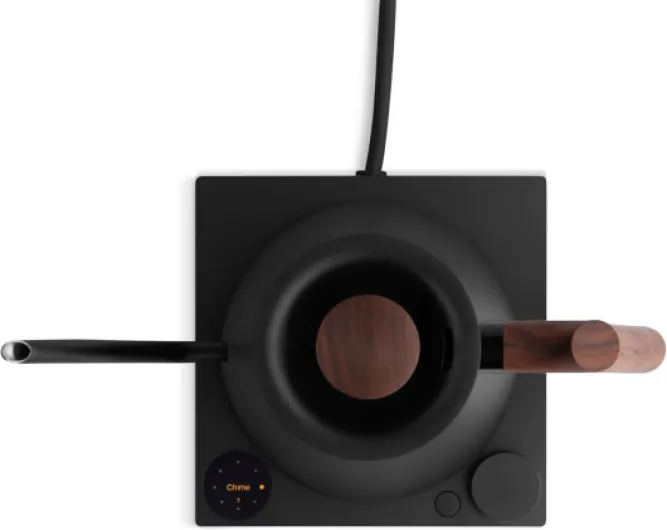
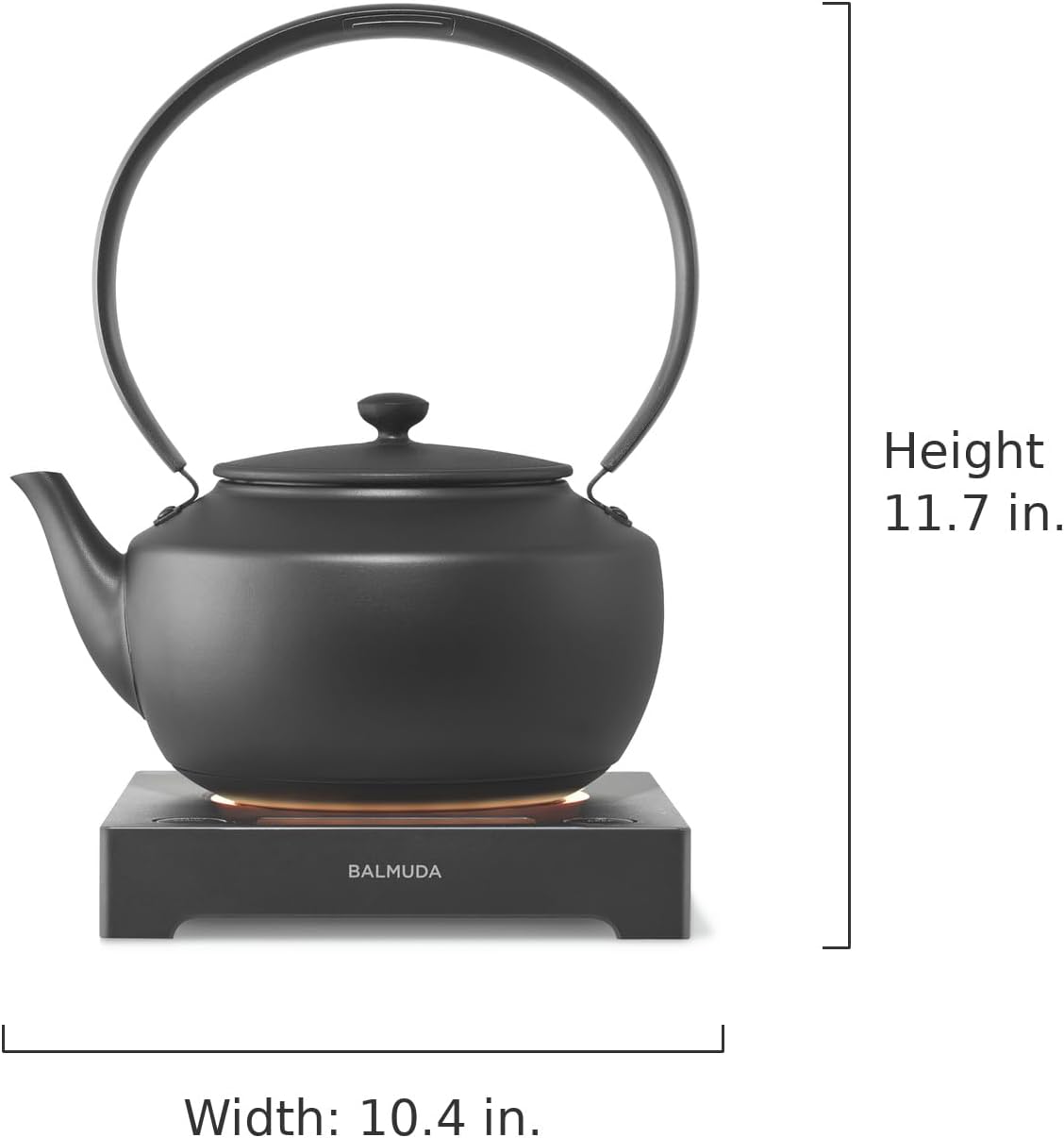
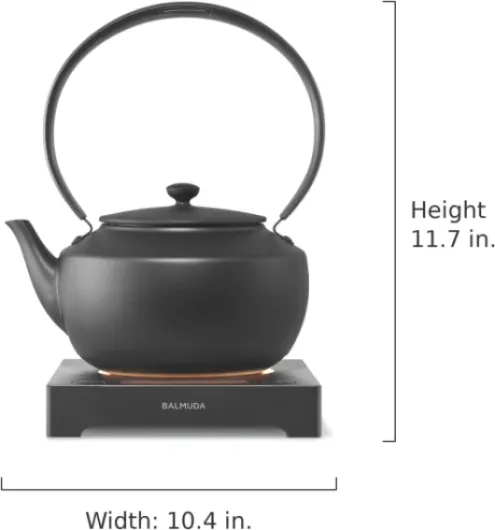
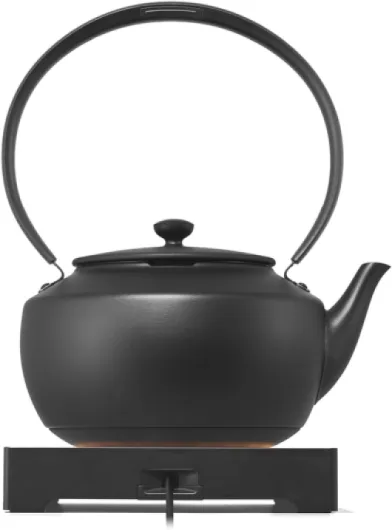
The design is clearly the main selling point. It looks good on the counter, no question. The shape is a nod to traditional Japanese kettles, with a rounded body and a lid that sits nicely without wobbling. The black finish is matte and doesn’t scream “cheap appliance,” at least from a distance. The base is minimal, with a simple dial and a small display, and the whole thing feels cohesive visually.
The part that stands out most is the ambient lighting. When it’s heating, you get a warm, flame-like light around the base. It’s not bright or annoying; it actually looks like a gas flame in a soft, stylized way. In a dim kitchen, it’s pretty nice. It’s more than just an indicator light; it gives the feeling that something is happening without having to stare at a screen. For people who like a slower morning routine, this is the kind of detail you might appreciate.
Then there’s the sound. When the water is ready, it plays a short little chime instead of a harsh beep. Personally, I liked it. It’s calm and not too loud. Some people might find any sound annoying, but compared to the shrill beeps of other kettles, this is much easier on the ears. You can adjust or mute it if it drives you crazy, but I left it on and got used to it quickly.
The downside of the design is that it’s clearly where a big chunk of the price goes. You’re basically paying a premium for a nice object with mood lighting and gentle sounds. If you don’t care about that and only want fast boiling and big capacity, this design is overkill. But if you’re picky about what sits permanently on your counter and you like objects that feel a bit more “thought out,” then the MoonKettle delivers on that front, even if the rest of the package is more normal.
Comfort and usability: easy to live with, especially for pour-overs
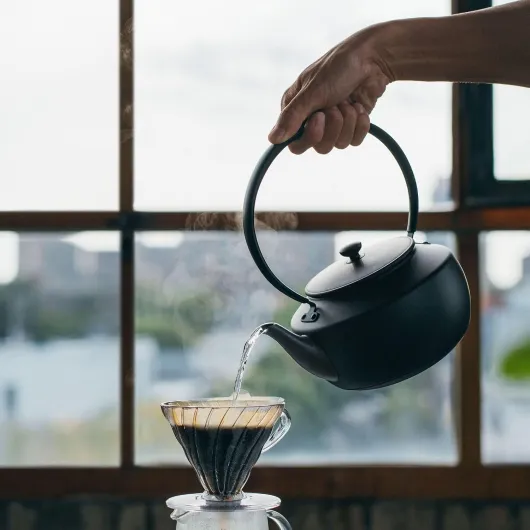
On the comfort side, the MoonKettle is actually pretty good. The fixed ergonomic handle is one of the better ones I’ve used. It’s well-balanced, and because the kettle is fairly light, it doesn’t strain your wrist even when full. The handle doesn’t get hot at all during use, so there’s no weird half-grab to avoid burning your fingers. You just grab it and pour, simple as that.
The precision pour spout is legit. It’s not a super thin gooseneck like some hardcore coffee kettles, but it’s controlled enough that you can pour slowly for pour-over or more quickly for filling a mug. I never had it suddenly gush or drip down the side, which is something cheaper kettles tend to do. For V60 or similar pour-over methods, I had no problem hitting the spots I wanted at the speed I wanted. It feels pretty natural after a day or two.
The controls are easy to get used to. You have a dial and a small display. Turn to set the temperature, press to confirm, and that’s it. No weird button combos. The ambient light and sound also help from a comfort perspective: you can see from across the room if it’s heating or done, and the chime is a gentle reminder instead of a jump-scare beep. If you’re the type who starts the kettle and walks away, this is actually useful.
Daily cleaning is simple: the outside wipes clean, and the inside is like any other stainless kettle—just rinse, and occasionally descale. No awkward corners inside, no exposed heating coil. So in terms of day-to-day comfort and ease of use, I’d say it’s very user-friendly and nice to handle. The only comfort downside is the smaller 0.9 L capacity; if you’re constantly refilling for multiple people, the convenience drops quickly.
Materials and build: looks premium, feels a bit lighter than expected
On paper, the materials are solid: stainless steel and polypropylene, made in Korea. In the hand, though, it doesn’t feel as hefty as you might expect for the price. The body is light, and when I first took it out of the box, my first thought was the same as one of the Amazon reviewers: this feels lighter and a bit more plasticky than I’d hoped. It’s not flimsy, but it doesn’t have that heavy, all-metal vibe you get from some other high-end kettles.
The outer finish is painted, and after a couple of weeks of daily use, I haven’t seen any chips or scratches. I’m not babying it, but I’m also not banging it on the sink. The handle is plastic (polypropylene), but it’s heat-resistant and doesn’t get hot, which matters more to me than the feel. It doesn’t creak or flex under normal use, so structurally it’s fine. It just doesn’t scream “luxury metal” when you grab it.
Inside, the stainless-steel interior looks clean and hasn’t stained yet. I used it with regular tap water (medium hardness) and I can already see the usual light limescale starting to form at the bottom, which is normal for any kettle. A quick vinegar rinse should handle that. The lid feels decent, not loose, and the hinge area doesn’t feel like it’s about to snap, but again, it’s more on the light side than the heavy-duty side.
So from a materials standpoint: it’s fine and feels well-assembled, but not as premium as the price suggests. If you’re sensitive to plastic, just know that a good part of what you touch (handle, some outer parts) is plastic, not metal. If you want that heavier, all-metal feel, something like a Fellow Stagg or a classic stainless steel kettle might fit you better. Here, you’re paying for design and electronics more than raw material mass.
Durability and long-term feel: good assembly, but some doubts at this price
Durability is always tricky to judge after only a couple of weeks, but there are some signs you can look at. Assembly quality seems good: no loose parts, no rattling when you shake it gently, the lid fits well, and the base doesn’t wobble on the counter. The cable feels like normal appliance cable, not super thick but not flimsy either. Nothing about it screams “this will break in a month.”
That said, the lightweight, plastic-heavy feel does raise some questions for the long term, especially at this price point. When you pay this much, you expect something that feels overbuilt. Here, it feels well-built, but not overbuilt. The handle and top areas are plastic, and while they seem sturdy now, I could see heavy-handed users potentially stressing them over time, especially around the lid if they’re rough with it.
Another thing is the electronics: with the ambient light, sounds, and temp control, there’s more that can theoretically go wrong compared to a basic mechanical kettle. So far, I haven’t had any glitches—no weird error codes, no random shutoffs—but you are trusting more circuitry here. BALMUDA isn’t some random no-name brand, so I’m not too worried, but still, I’d keep the box and proof of purchase just in case something fails in the first year.
Overall, my take: durability seems decent, but not bombproof, and the feel doesn’t fully match the premium price. If you’re careful with your appliances and don’t slam things around, it should be fine. If you’re rough on gear and want something that can survive a chaotic shared kitchen, I’d probably go for a chunkier, more metal-heavy kettle instead.
Performance and temp control: does the job, with some nice extras
In everyday use, the MoonKettle boils water at a decent speed, but it’s not the fastest thing I’ve ever used. At 1200 W and 0.9 L capacity, it’s okay. From room temperature to boiling a full kettle, I was getting roughly 4–5 minutes. Not slow, not super fast, just middle of the road. It’s also relatively quiet compared to some kettles that roar; you still hear the water, but it’s not obnoxious. You can have a conversation next to it without raising your voice.
The big feature is the temperature control from 122°F to 212°F in 2-degree increments. For tea and coffee, this is genuinely useful. For example, I set it to around 175°F for green tea, 195°F for pour-over, and 200°F+ for black tea. It actually hits and holds those temps fairly well. I checked with a separate thermometer a few times: it was usually within a few degrees of the target, which is totally acceptable for home use. You adjust the temp with a dial on the base and it’s straightforward once you’ve done it once or twice.
The HOLD function keeps the selected temperature for 30 minutes. In practice, this is one of the features I used the most. If I’m making coffee and then want a second cup later, I don’t have to re-boil from scratch. It doesn’t reheat endlessly, which is good for safety and taste, but 30 minutes is enough for normal use. It’s especially handy if you’re making multiple infusions of tea and don’t want to wait each time.
Overall, performance-wise, I’d say: it’s solid and consistent, but not mind-blowing. It does what it says—boils, holds temp, lets you pick exact temperatures—and it does it quietly, with some nice feedback from the light and sound. If you’re coming from a basic dumb kettle, you’ll notice the convenience. If you’re coming from another high-end temp-control kettle, you won’t see a huge upgrade in pure performance; it’s more of a sideways move with a different style.
What you actually get out of the box
Out of the box, the MoonKettle is pretty simple: kettle body, lid, power base, and a thin instruction manual. No extra filters, no fancy accessories, nothing complicated. The base is small and round, with a minimal control area where you set the temperature and toggle the HOLD function. It doesn’t take much space on the counter, which I appreciated compared to some wider bases I’ve had before.
The manual is straightforward and not overly long. You get the basics: how to set temperature, how to use HOLD, what the lights and sounds mean, cleaning tips, and some basic safety warnings. Nothing special, but clear enough. I didn’t have to Google anything, which is already better than some “smart” appliances. Setup was basically: plug it in, rinse the interior once, and you’re good to go.
Capacity is 0.9 L / about 30 fl oz, which is on the smaller side. For me, that’s fine: enough for two big mugs or a few small cups of tea. But if you’re used to 1.5–1.7 L kettles for a family or office, this will feel limited right away. It’s more of a personal or couple kettle than a big shared one. I wouldn’t buy this as the only kettle for a large household that drinks tea all day.
Overall first impression: clean look, compact, feels like a lifestyle object. No smart app, no Wi-Fi, no nonsense. At this price some might expect more high-tech stuff, but honestly I prefer that it just does water and temperature, and that’s it. The question is whether that simple package is worth the premium, and that depends a lot on how much you value the design and the little touches versus raw practicality.
Pros
- Precise temperature control from 122°F to 212°F with 2-degree increments
- Comfortable handle and controlled spout that work well for pour-over and tea
- Ambient light and gentle sound make it pleasant to use and easy to see when it’s done
Cons
- High price for a 0.9 L kettle, especially considering the amount of plastic
- Feels lighter and less premium than expected at this price
- Smaller capacity not ideal for larger households or heavy tea drinkers
Conclusion
Editor's rating
After using the BALMUDA MoonKettle regularly, my overall feeling is pretty clear: it’s a good kettle wrapped in a very nice design, sold at a high price. It boils water reliably, the temperature control actually works and is useful, the HOLD function is practical, and the pour is controlled enough for pour-over coffee and more delicate teas. On the usability side, it’s easy to live with and even a bit pleasant thanks to the ambient light and the soft sound when it’s done.
The weak points are also obvious. For the price, the materials and overall heft feel a bit light, with more plastic than you’d expect. Capacity is only 0.9 L, which is fine for one or two people but not great for larger households. And when you compare it to other high-end kettles like Fellow, you realize you’re mostly paying extra for the aesthetics and the vibe rather than a big jump in performance.
Who is it for? People who care a lot about how their kitchen looks, enjoy slow tea or coffee rituals, and are willing to pay a premium for an object that feels a bit special to use every day. Who should skip it? Anyone on a budget, anyone who needs big capacity, or anyone who just wants fast boiling and doesn’t care what the kettle looks like. In short, it’s a nice, slightly overpriced kettle that makes daily brewing more pleasant if you’re the right kind of user.