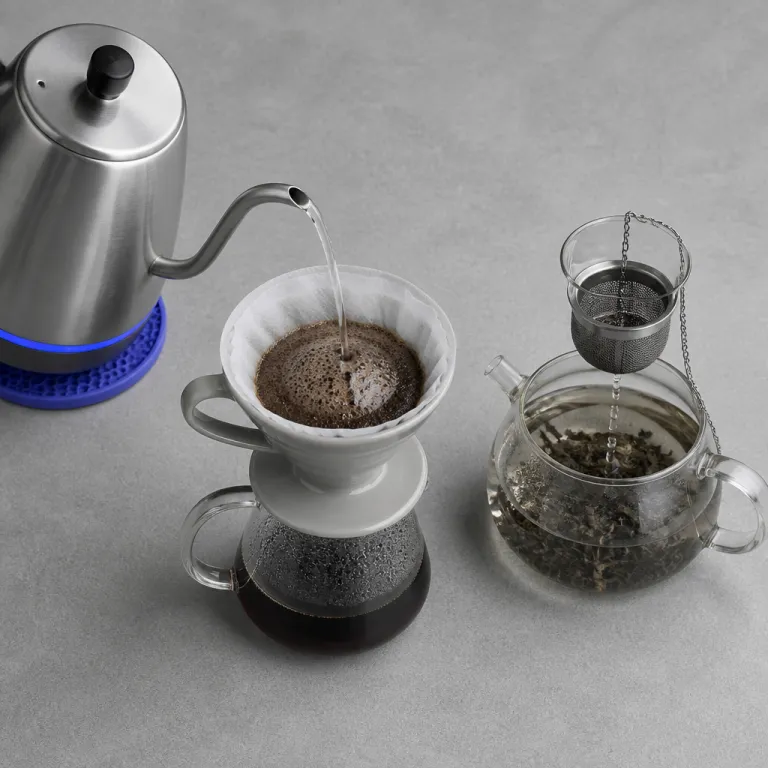
What a variable temperature electric kettle really does
A variable temperature electric kettle gives you precise heat for every drink. Instead of waiting for random boils, you set the exact temperature and let the electric kettle handle the rest with quiet, predictable control. This matters because different tea and coffee styles react very differently to hot water.
At its core, the kettle heats water through an electric base, then stops when the chosen temperature is reached. Many electric kettles now offer digital temperature control, letting you set 60 °C for delicate green tea, 90 °C for pour over coffee, or a full 100 °C boil for cooking. In comparative tests of popular models such as the Fellow Stagg EKG and Cuisinart CPK-17, reviewers at outlets like Wirecutter and Serious Eats have measured temperature accuracy within about 1–3 °C of the target setting, which consistently produces better flavor and less bitterness.
Most modern kettles use stainless steel, glass, or a mix of both materials. A stainless steel body is durable and keeps warm longer, while a glass electric kettle lets you watch as the water boils and then cools slightly to the programmed temperature. Whether you choose a one liter kettle or a larger capacity model, the principle stays the same, but the time to heat water changes with volume and power.
Key features that matter when you compare models
When you compare any variable temperature electric kettle, start with safety and accuracy. Look for boil dry protection systems that shut the kettle off when there is too little water, because these features prevent damage and reduce fire risk. A good electric tea kettle should also reach the set temperature quickly without overshooting by more than a few degrees.
Temperature control interfaces vary from simple buttons to full digital dials. Some kettles tested in independent labs show that preset buttons for green tea, black tea, and coffee help beginners avoid guesswork, while manual temperature settings give enthusiasts more freedom. In one side by side trial using a pour over cone, a basic on/off kettle produced a harsh, slightly burnt cup, while a stainless steel model with a double wall and 94 °C preset brewed the same beans with noticeably sweeter, more balanced flavor.
Build quality deserves close attention, especially for stainless steel and glass designs. A stainless interior without exposed heating elements is easier to clean and less likely to affect the taste of tea or coffee over time. For a deeper technical breakdown of a stainless steel model with wide temperature control, you can study this detailed test of a temperature control kettle and compare its performance to your current kettle.
Why gooseneck kettles reshape manual brewing rituals
For manual coffee and tea brewing, the shape of the kettle spout matters as much as temperature. A gooseneck kettle, with its long curved spout, gives you slow, precise pouring that a standard electric kettle cannot match. When you combine a gooseneck design with variable temperature control, you gain full command over both water flow and heat.
Gooseneck kettles shine in pour over coffee, where you wet the grounds in stages. Many baristas prefer electric gooseneck kettles because they keep warm at a stable 92–96 °C, which helps coffee bloom evenly and reduces sour or burnt notes. In a typical morning routine, you might preheat the filter, pour a 40 g bloom at 94 °C, then finish the brew in two slow spirals; the same gooseneck kettle can then be set to a lower temperature for green tea, giving you a gentler extraction that protects fragile leaves from scalding water.
Some gooseneck kettles now include smart features such as timers and memory functions. These tools let you set a precise time for each pour, then repeat the pattern every morning without thinking. To understand how a smart electric kettle reshapes the way you heat water and pour it, you can read this analysis of a smart temperature control kettle and compare its workflow to a basic tea kettle.
Materials, capacity, and how they influence taste and safety
The choice between stainless steel, glass, and plastic trimmed kettles affects both flavor and durability. A stainless steel electric kettle resists impacts and usually insulates better, while a glass kettle lets you see when water boils and when limescale builds up. Many readers who tested both materials report that high quality stainless interiors and borosilicate glass perform equally well for neutral taste when cleaned regularly.
Capacity also shapes your daily routine, because a one liter kettle heats faster but serves fewer cups. Larger electric kettles, often around 1.7 liters, suit families who brew tea and coffee several times a day and want to keep warm functions to avoid repeated boils. If you mostly drink tea alone or prepare a single mug of green tea, a compact liter kettle with accurate temperature settings may be more efficient and waste less water.
Safety features go beyond boil dry shutoff. Cool touch handles, secure lids, and stable bases reduce the risk of spills when the kettle boils water at full power. When you read product pages on large marketplaces such as Amazon, focus on long term user comments about leaks, rust, and plastic odors, because these issues often appear only after months of daily use.
How to match temperature settings to tea, coffee, and daily tasks
Precise temperature settings are the main reason people upgrade from basic kettles. Black tea usually tastes best when the kettle boils water fully, while green tea needs cooler water around 70–80 °C to avoid harsh bitterness. Coffee brewed with a pour over cone or French press often prefers a middle range, roughly 92–96 °C, which many electric kettles now offer as a preset.
Once you own a variable temperature electric kettle, you start to use it for more than drinks. Instant foods, baby formula, and cooking tasks all benefit when you can set a lower temperature and keep warm without constant reboiling. For example, you might heat water to 60 °C to warm a bottle safely, then raise the temperature to a full boil for pasta, using the same electric kettle within minutes.
Some models, including popular Hamilton Beach and Cuisinart kettle lines, provide dedicated buttons for keep warm modes. These functions maintain the chosen temperature for a set time, often 30 to 60 minutes, which saves energy compared with letting water cool and reheating it from room temperature. If you want to understand how a glass electric water kettle can change your daily tea and coffee habits, this guide to a glass electric water kettle offers a useful comparison with traditional stovetop kettles.
Buying advice, from budget picks to top pick contenders
When you shop for a variable temperature electric kettle on Amazon or in local stores, ignore flashy colors and start with specifications. Look for clear temperature control ranges, a reliable keep warm function, and strong user feedback about how accurately the kettle boils water to the set point. A model that has been carefully tested by independent reviewers is usually a safer long term choice than a cheaper, untested option.
Budget electric kettles often use simple step based temperature settings, such as 70, 80, 90, and 100 °C. Midrange kettles, including some Hamilton Beach and Cuisinart models, add finer control, better stainless steel interiors, and more robust boil dry protection circuits. Premium gooseneck kettles target coffee and tea enthusiasts who want both precise pouring and exact temperature control, sometimes with built in timers and advanced keep warm profiles.
Before you decide on your own top pick, read several long form reviews rather than only star ratings. Pay attention to how the kettle performs after months of use, whether the stainless finish stains, and whether the glass body stays clear or clouds with mineral deposits. If you brew both tea and coffee daily, a versatile electric tea kettle with multiple presets, a liter kettle capacity around 1.2–1.5 liters, and a dependable keep warm mode will usually serve you better than separate kettles for each drink.
Budget vs premium electric kettles at a glance
- Budget: Lower price, basic presets, adequate performance, but simpler materials and fewer durability reports.
- Midrange: Wider temperature range, sturdier stainless interiors, improved insulation, and more consistent accuracy.
- Premium: Gooseneck spouts, precise digital control, refined keep warm profiles, and features tailored to serious tea and coffee brewing.
Key statistics about variable temperature electric kettles
- According to the UK Energy Saving Trust, boiling only the water you need in an efficient electric kettle can cut kettle related electricity use by up to 30 percent compared with routinely filling to maximum capacity.
- Consumer testing by organizations such as Consumer Reports has found that variable temperature electric kettles can reach target temperatures within a margin of about 1–3 °C, while basic kettles often overshoot and then cool, leading to inconsistent brewing temperatures.
- Market research from firms like Statista indicates that electric kettles, including variable temperature and gooseneck models, now account for a majority of countertop water heating appliances in many European households, reflecting a shift away from stovetop kettles.
- Independent lab tests frequently show that stainless steel kettles with good insulation can keep warm at serving temperature for 30–60 minutes with significantly less energy than reheating cooled water from room temperature.
FAQ about variable temperature electric kettles
Are variable temperature electric kettles worth the extra cost ?
They are worth it if you regularly drink tea or coffee and care about flavor. Precise temperature control helps green tea stay sweet, keeps black tea from turning harsh, and lets coffee bloom properly. Over time, the energy savings from keep warm modes and boiling only what you need can also offset part of the higher purchase price.
What temperature should I use for different teas and coffee ?
Black tea usually works best with fully boiled water around 95–100 °C. Green tea prefers cooler water, typically 70–80 °C, while oolong tea often sits in the middle at about 85–90 °C. For most manual coffee methods, a range of 92–96 °C gives balanced extraction without burning the grounds.
Is stainless steel better than glass for an electric kettle ?
Stainless steel is more impact resistant and often keeps warm slightly longer, while glass lets you see the water level and the boiling process clearly. Both materials can be safe and neutral in taste when they use quality components and are cleaned regularly. Your choice mainly depends on whether you prioritize durability or visual feedback while the kettle boils water.
How important is boil dry protection in a kettle ?
Boil dry protection is essential for safety and for the lifespan of the appliance. It shuts the kettle off automatically when there is too little water, preventing overheating of the heating element. Without this safeguard, a forgotten kettle can be damaged quickly and may pose a fire risk.
Can one variable temperature electric kettle handle both tea and coffee ?
Yes, a single variable temperature electric kettle can handle tea, coffee, and general kitchen tasks if it offers a wide range of temperature settings. You can set lower temperatures for delicate green tea, higher ones for black tea, and a mid range for pour over coffee. Choosing a model with a reliable keep warm function makes it easier to serve several drinks in sequence without reheating from cold water.