Summary
Editor's rating
Is it really worth the premium price?
Looks like a showpiece, behaves like a normal kettle
Metal where it matters, but a few plastic compromises
Built to last… but repairs aren’t cheap
Boils fast, fairly quiet, and pours better than most
What you actually get for the money
Pros
- Fast boil with 3KW power and accurate dual measurement windows (cups and litres)
- Quieter than typical kettles and very clean, drip-free pouring
- Solid stainless steel construction with comfortable silicone handle and attractive copper trim
Cons
- High price for what is still a fairly simple appliance
- Plastic on/off switch feels like a weak point and reported repairs are expensive
- Water tends to sit in the bottom, encouraging limescale in hard water areas

Specifications
View full product page →| Brand | Dualit |
A £100+ kettle… seriously?
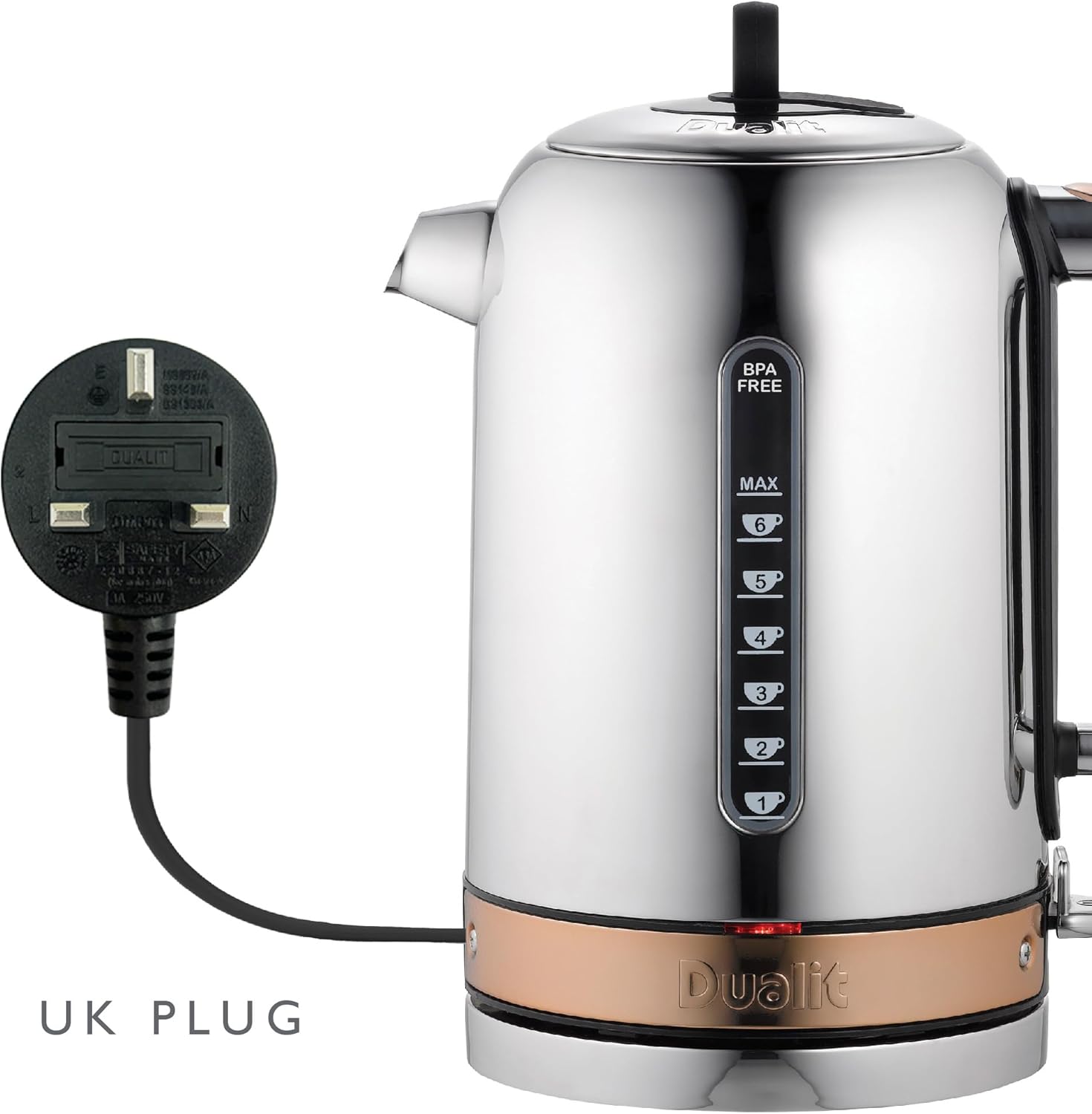
I’ve been using the Dualit Classic Kettle (polished stainless steel with copper trim, model 72820) for a few weeks, and I’ll be honest: I bought it mostly because I was fed up with cheap plasticky kettles dying every 18 months. This one is in a different price bracket completely, so I went into it thinking, “Alright, show me why you cost this much.” It’s marketed as quiet, fast, durable, and a bit of a design piece. So I treated it like a daily workhorse rather than a display item.
Day to day, I make multiple coffees and teas, plus I use the kettle for cooking (pasta water, instant noodles, etc.), so it gets used a lot. That means noise, speed, pour quality, and how hot the outside gets actually matter. I’ve also got hard water, so I was watching closely for limescale buildup and how annoying it is to clean. And of course, I kept asking myself: if this dies in two years like a £30 kettle, I’ll be pretty annoyed.
In practice, the Dualit does feel like a more serious bit of kit than the usual supermarket models. The boil is quieter, the pour is more controlled, and the build feels more solid than plastic kettles I’ve owned. But it’s not perfect. Some of the marketing is a bit optimistic (especially the “whisper quiet” part), and at this price I’m picky about every small flaw. Things like the plastic switch and the way water sits in the bottom after you pour are not deal breakers, but they’re not great either.
If you’re looking at this kettle, you’re probably already resigned to paying more than average. So in this review I’m not judging it like a budget kettle. I’m judging it as a premium one: does it justify the cost in real life use, or is it just a shiny object with a logo? Short version: it’s a good kettle that feels premium, especially on design and pour, but you’re paying heavily for looks and brand, and you should be aware of a few weak spots before clicking “buy”.
Is it really worth the premium price?
Let’s talk about the awkward bit: price. This is not a cheap kettle. You’re firmly in “premium kitchen toy” territory, and for many people, that alone will be a deal-breaker. Functionally, it boils water like any other kettle. It does it a bit nicer, a bit quieter, and looks a lot better than a budget model, but we’re not talking about a totally different experience. If you’re just trying to heat water as cheaply as possible, this is not the right product.
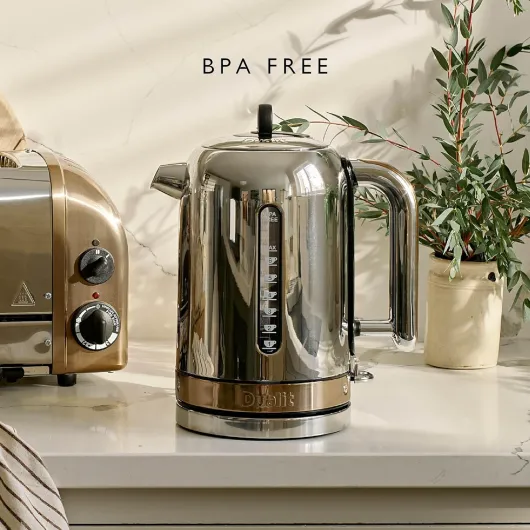
Where the value starts to make more sense is if you care about design and feel. On a countertop with other stainless or copper appliances, it looks good. If you already own a Dualit toaster, it matches nicely and gives your kitchen a more coherent look. On top of that, the solid build, controlled pour, and quieter boil do make daily use more pleasant. It’s not life-changing, but it’s one of those things you notice when you go back to a rattly plastic kettle at someone else’s house.
The problem is, for the price, you expect almost no compromises, and there are a few. The plastic switch with expensive repair costs, the water sitting in the bottom, the fact it’s made in China despite the heavy “British heritage” branding – all of that makes the price feel a bit padded by marketing. If this were £60–£70, I’d call it good value for a premium kettle. At around the £100+ mark, I’d say it’s a luxury purchase that you buy because you want it, not because it’s objectively the smartest use of money.
So, value-wise: if you’re on a tight budget, skip it, no question. If you have the money, care about how your kitchen looks, and like solid-feeling gear that should last, then it’s a justifiable indulgence – as long as you go in with your eyes open about the potential repair costs and the fact that, at the end of the day, it’s still just a kettle that boils water.
Looks like a showpiece, behaves like a normal kettle
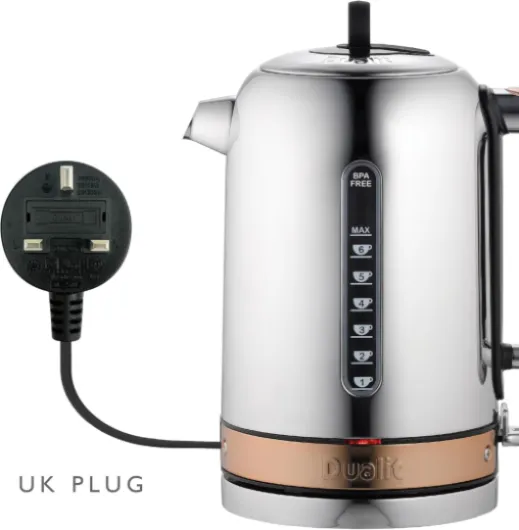
The first thing you notice is the look. The polished stainless steel body with the copper band at the base does stand out on the counter. It has that slightly industrial, almost “retro café” vibe, especially if you pair it with the matching Dualit toaster. If you like the copper trend, it fits right in. If you hate cleaning fingerprints, you might swear at it a bit because the shiny steel shows every smudge. I found myself wiping it more than any plastic kettle I’ve had before.
Shape-wise, it’s quite rounded and feels a bit like a chunky flask. The handle is thick with a soft silicone grip, which I liked. It feels secure even when the kettle is full. The lid is attached and has a heatproof ring and finger guard, which is practical, but the lid action is a bit stiff at first. You don’t just flick it open with one lazy finger; you have to give it a firm push. After some use it loosens slightly, but it’s still not what I’d call “smooth”. On the plus side, because it’s attached, you won’t misplace it or drop a hot metal lid on the counter.
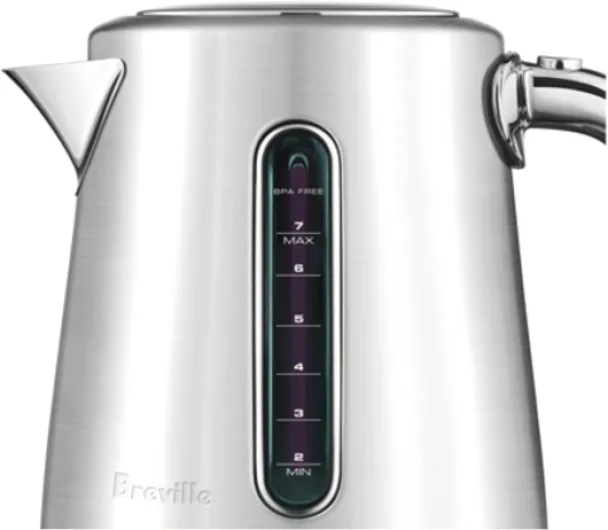
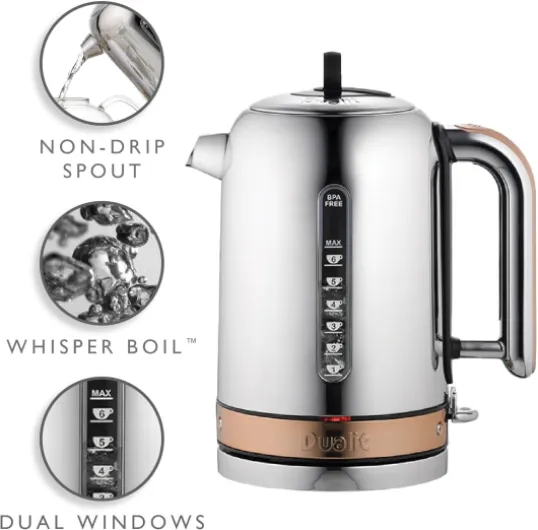
The dual water windows on either side are actually one of the more useful design details. Having cups on one side and litres on the other sounds like a gimmick, but in daily use it’s nice. I could quickly see “okay, that’s two cups” without bending down and squinting. The windows are BPA free and reasonably clear, but you’ll still get some limescale marks in hard water areas over time, which dulls the look a bit unless you descale regularly.
One thing worth mentioning: the on/off switch is plastic, and it doesn’t quite match the otherwise metal-heavy feel of the kettle. It works fine and feels okay out of the box, but when you’re paying this much and reading reports of switch failures that are expensive to fix, it does feel like a weak point in the design. The base is solid and stable though, with a decent cable tidy underneath. Overall, design-wise, it looks premium and feels thought-through, but it’s not flawless, and you need to be okay with regular wiping and babying it a bit if you want it to stay looking nice.
Metal where it matters, but a few plastic compromises
The main body is stainless steel, which is the big selling point compared to cheap plastic kettles. It feels solid in the hand and gives the impression that it’ll handle daily use for years. The polished finish and copper trim are mostly aesthetic, but the metal construction does have some practical benefits: there’s no plasticky smell when you first boil it, and it doesn’t feel flimsy when you tap it or pick it up full. At about 1.6kg empty, it’s not ultra-light, but that weight adds to the “solid” feel.
The handle has a soft silicone grip, which I liked more than I expected. When the kettle is full and you’re pouring slowly, that grip stops it from feeling slippery, even if your hands are a bit damp. The lid has a heatproof ring and a finger guard, so you don’t end up touching hot metal by accident when opening it. These small touches do help when you’re using it several times a day. I never felt like I was one slip away from burning myself, which has happened with flimsier lids on other kettles.
However, it’s not all metal luxury. The switch and some trim parts are plastic, and not the nicest-feeling plastic either. They’re fine functionally, but visually and to the touch, they slightly clash with the stainless steel body. When you read that fixing a broken switch can cost a lot, you start wishing they’d over-engineered that part too. Inside, the filter is basic but usable; it catches the bigger bits of limescale but won’t save you from regular descaling in hard water areas.
Another point: because it’s metal, the exterior does get warm. It doesn’t become untouchable everywhere, but it’s definitely hotter than a well-insulated plastic kettle. The handle stays comfortably cool, which is what matters most, but you wouldn’t want a toddler grabbing the body right after boiling. So in terms of materials, I’d say: good quality where it counts, with a few cheaper bits that feel out of place at this price. It’s still a step up from standard plastic kettles, but it’s not bulletproof luxury from top to bottom.
Built to last… but repairs aren’t cheap
Durability is the whole reason to even consider a kettle in this price range. The stainless steel body and general construction do feel like they’ll handle years of use. It doesn’t flex, the base feels secure, and nothing rattles. Compared to the flimsy feel of many plastic kettles, this one gives you more confidence that it won’t crack or warp easily. After regular daily use, I didn’t notice any early signs of wear beyond the usual water marks and fingerprints.
However, durability isn’t just about the shell. The switch and internal components are more of a question mark. There are user reports of the plastic switch failing and repairs costing around £80, plus you have to send the kettle off and be without it for a couple of weeks. That’s a lot of hassle and money for a part that, frankly, should be bombproof at this price. Dualit does at least allow repairs and has a replaceable element, which is better than the pure throwaway approach, but it’s not a cheap or painless process.
In hard water areas, you’ll also have to stay on top of limescale. Water tends to sit in the bottom even when you think you’ve emptied it, which is not ideal. I noticed limescale forming fairly quickly, so if your water is anything like mine, you’ll want to descale regularly or use filtered water. That’s not really a flaw unique to this kettle, but the way water pools in the base doesn’t help. It’s easy enough to rinse and descale, but ignoring it will make the interior look rough faster than you’d expect from a premium product.
So in terms of long-term value, I’d say: the construction gives you a good chance of keeping this kettle for years, but only if you accept the possibility of an expensive repair down the line and you’re willing to maintain it properly (descaling, cleaning, not abusing the switch). If you want a kettle you never think about and just replace when it dies, this is probably overkill. If you like the idea of repairing rather than binning, and you’re okay with the cost, then it fits that mindset better than most.
Boils fast, fairly quiet, and pours better than most
Performance-wise, this kettle does the basics well. At 3KW, it boils fast. From my own use, filling it for two mugs (somewhere around 500–600 ml), it hits boil in around the claimed 90 seconds. A full 1.7L obviously takes longer, but it’s still quick compared to older or lower-power kettles I’ve had. If you’re the impatient morning-coffee type, you’ll be satisfied with the speed. It’s not magic, but it’s on the faster end of what’s normal.
The noise level is where the marketing gets a bit optimistic. It’s definitely quieter than the cheap kettles I’ve used. The sound is more of a low rumble and less of a harsh roaring. You can have a conversation in the same room without raising your voice, which is nice. But “whisper boil” is pushing it. If you’re expecting near-silence, you’ll be disappointed. I’d call it “pleasantly muted” rather than genuinely quiet. You still know it’s on.
What impressed me most was the pouring. The spout is properly engineered, and it shows. No drips running down the side, no random splashes on the counter. You can pour slowly into a small mug or a cafetière without making a mess. The catch is that you do have to tip the kettle quite far to get the last of the water out, which feels slightly odd at first, but you get used to it. The controlled pour is especially nice when you’re making coffee with a specific water level or topping up a small teapot.
In daily use, the kettle switches off reliably at boil and doesn’t randomly re-boil or cut out early, which is more than I can say for some budget models I’ve owned. The water also seems to stay warm for a reasonable amount of time, thanks to the more solid construction, so if you pour a second cup soon after, it’s still hot enough. Overall, it performs like a solid, well-made kettle: fast, fairly quiet, and precise when pouring. There’s nothing revolutionary here, but it’s definitely nicer to use than a basic £20–£30 model.
What you actually get for the money
On paper, the Dualit Classic Kettle 72820 is pretty straightforward: 1.7L capacity, 3KW power, cordless base, stainless steel body with copper trim, and a couple of design features that are supposed to set it apart. There are dual measuring windows: one side marked in cups, the other in litres, which is more useful than I expected. If you only want one mug, you can actually fill it accurately instead of guessing. That does help reduce over-boiling water, which is a small win on energy use and speed.
The brand pushes the “quiet boiling” angle heavily. It’s advertised as their quietest kettle with a “whisper boil”. I’d say it is clearly quieter than a standard cheap kettle, especially at the end of the boil when most kettles roar. But it’s not silent. You still know it’s boiling, it’s just more of a low hum than a loud whoosh. If you’re making tea while someone’s watching TV in the next room, they’ll probably still hear it, but it’s less annoying than most I’ve used.
Another selling point is the replaceable element and the general “built to last” messaging. In theory, that’s good: instead of binning the kettle when the element goes, you replace that part. In reality, you’re dealing with repair costs, shipping, and downtime. I’ve seen people mention that a failed switch can cost around £80 to sort, which is pretty steep, especially when the kettle itself is already expensive. So yes, it’s more repair-friendly than a £20 throwaway kettle, but it’s not painless.
Overall, in terms of features, it’s not doing anything radically new. It’s a kettle that boils water quickly, a bit more quietly, with a nice spout and a premium look. The value you’re paying for is mainly in design, materials, and brand image, not in some wild new tech. If you’re expecting hidden advanced functions or smart features, you won’t find them here. It’s a pretty traditional kettle that’s been done to a higher standard than average, with a price tag to match.
Pros
- Fast boil with 3KW power and accurate dual measurement windows (cups and litres)
- Quieter than typical kettles and very clean, drip-free pouring
- Solid stainless steel construction with comfortable silicone handle and attractive copper trim
Cons
- High price for what is still a fairly simple appliance
- Plastic on/off switch feels like a weak point and reported repairs are expensive
- Water tends to sit in the bottom, encouraging limescale in hard water areas
Conclusion
Editor's rating
After living with the Dualit Classic Kettle 72820 for a while, my take is pretty simple: it’s a well-built, good-looking kettle that does its job very well, but you pay a serious premium for the looks and the badge. It boils fast, it’s noticeably quieter than cheap models, and the pour is one of the nicest I’ve used – no drips, good control, and a handle that feels secure even when it’s full. The stainless steel body and copper trim make it feel more like a piece of kit than a disposable appliance, and if you like that café-style aesthetic, it will make you smile a bit every time you use it.
On the downside, the high price exposes its weak spots. The plastic on/off switch feels like the most fragile part of the design, and reports of costly repairs aren’t reassuring. It also holds a bit of water in the base, which encourages limescale in hard water areas, so you’ll need to descale regularly or use filtered water. And while it’s quieter than the average kettle, the “whisper boil” claim is a stretch – it’s not silent, just less annoying.
I’d recommend this kettle to someone who cares about design, build feel, and brand and is willing to spend extra for those things, ideally paired with the matching toaster or a similar style kitchen. If you just need hot water and don’t care what’s on the counter, or you hate the idea of paying a lot for something that can still have a pricey failure, you’ll be better off with a mid-range stainless kettle from another brand. For me, it lands as a solid, premium-feeling product with a bit of overpricing attached, not a bad buy – but definitely a conscious splurge, not an obvious bargain.