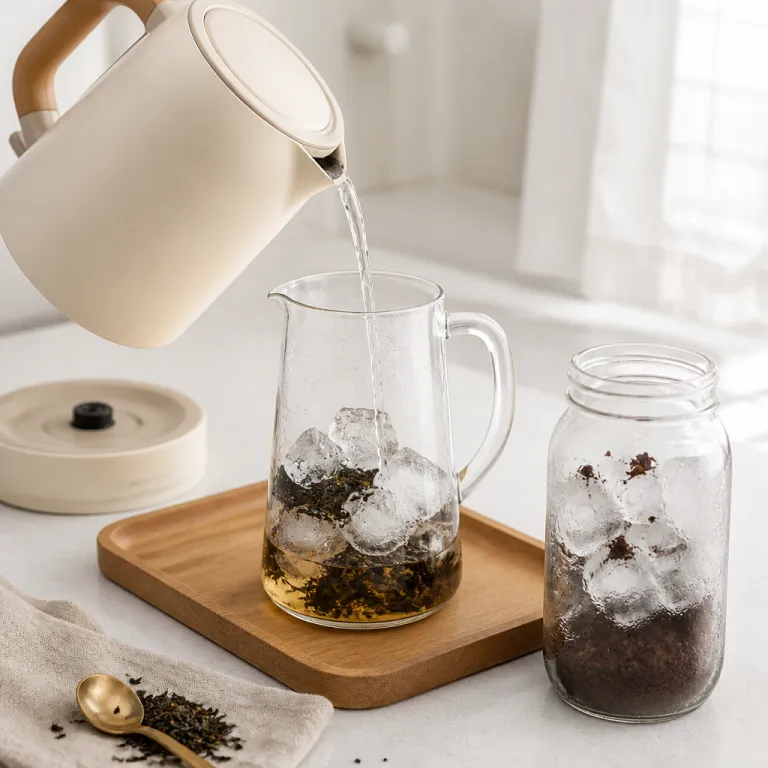
Electric kettle temperatures for iced tea and cold brew coffee in summer
Using an electric kettle as a precise temperature tool is the easiest way to make iced tea and cold brew coffee that taste clean, sweet and consistent, even in hot weather. The right heat level protects delicate flavours, reduces bitterness and keeps homemade drinks safer in a warm kitchen.
Why iced tea needs precise electric kettle temperatures in summer
Most people still drive their electric kettle to a full boil for iced tea, then wonder why the drink tastes harsh. When you brew green tea or other delicate loose leaf teas for chilled drinks with boiling water, you over-extract catechins and tannins, and that excess extraction at the wrong water temperature is what drives the bitterness that clings to the tongue. Food chemistry research on tea infusions shows that higher temperatures and longer steep times increase the rate at which these polyphenols dissolve into the water, which is why a modern electric kettle with temperature control lets you heat water to the exact heat level you need for iced tea, then keep it warm briefly if you are brewing several small batches for a family jug.
For green tea aimed at iced tea, target 70 to 80 °C (160 to 175 °F) in your electric kettle, because this lower temperature protects the grassy sweetness while still extracting enough flavour for a strong concentrate. White tea for summer iced tea prefers 75 to 85 °C (170 to 185 °F), while robust black tea and most blended loose leaf teas handle 95 to 100 °C (203 to 212 °F), and herbal infusions for caffeine free iced drinks are happiest with fully boiling water at around 100 °C (212 °F at sea level). At higher altitudes, where water boils below 100 °C, you may need slightly longer steep times to reach the same extraction. The key rule for kettle settings is simple: the more delicate the tea leaf, the lower the brewing temperature, and the more forgiving the tea, the closer you can go to a rolling boil.
In a British kitchen where the kettle boils ten times a day, a variable temperature electric kettle quietly becomes the best summer brewing tool. You can heat water to 80 °C (175 °F) for green tea, then immediately reheat and pour hot water at 95 °C (203 °F) for a peach iced black tea without guessing or dipping a kitchen thermometer. Even basic electric kettles without digital temperature control can work for iced tea if you learn your kettle’s rhythm, letting the water sit for two to three minutes after boiling before you pour over loose leaf tea for a gentler effective temperature.
Capacity matters more in hot weather than most people think, because every unnecessary boil wastes energy and warms the kitchen. For a single glass of iced tea, boil water in the 250 to 500 millilitre range (about 8 to 17 fl oz), not a full 1.7 litre kettle, since that spec sheet capacity rarely matches how much you actually pour into mugs or tall glasses. Smaller boils also mean your electric kettle reaches the target brewing temperature faster, which makes it easier to prepare several flavours back to back while the family drifts in and out of the kitchen on a warm afternoon.

| Tea style | Kettle temperature | Typical steep time for iced concentrate |
|---|---|---|
| Green tea | 70–80 °C (160–175 °F) | 1.5–3 minutes |
| White tea | 75–85 °C (170–185 °F) | 2–4 minutes |
| Oolong tea | 85–95 °C (185–203 °F) | 2–4 minutes |
| Black tea | 95–100 °C (203–212 °F) | 3–5 minutes |
| Herbal infusions | 95–100 °C (203–212 °F) | 5–7 minutes |
Flash chilled iced tea: using your electric kettle like a precision tool
The Japanese-style flash chill method turns your everyday tea kettle into a precision iced tea machine. You brew a concentrated tea at the correct hot-water setting, then pour that concentrate directly over a measured bed of ice in a glass jug, which cools the drink instantly without leaving it watery. This approach works beautifully with both stainless steel electric kettles and glass kettles, as long as you respect the right water temperature and do not overfill the jug when you pour.
For green tea flash chilled over ice, set your electric kettle to about 75 °C (170 °F), then steep double strength loose leaf for one and a half to two minutes before you pour over ice. White tea can go slightly hotter, around 80 to 85 °C (175 to 185 °F), while black tea for a classic British-style iced tea concentrate should be brewed with water just off the boil, around 95 °C (203 °F), to keep the flavour bold but not stewed. If your kettle lacks temperature control, boil water fully, wait three to four minutes for the kettle temperature to fall, then brew your tea, accepting a little variation but still avoiding the worst boiling water bitterness.
Once the hot tea hits the ice, stir firmly for ten to fifteen seconds, because that agitation helps the hot water and melting ice reach a stable chilled temperature quickly. This rapid cooling is not just about taste, since it also keeps brewed tea in a safer zone for fridge storage over the next few hours, which matters when the kitchen is already hot. Food-safety guidance for brewed tea and coffee generally recommends cooling quickly and refrigerating promptly to limit bacterial growth, so flash chilling is a practical way to follow that advice at home.
In practice, a variable temperature electric kettle with a keep warm feature is the easiest way to run several flash chilled batches in a row. You can hold 80 °C (175 °F) for green tea, then move to 95 °C (203 °F) for a hibiscus and black tea blend without waiting for repeated reheats, which keeps the brewing flow smooth when guests are asking for refills. Even if you bought your kettle at a regular price from a big retailer such as Amazon, the moment you start using temperature control for iced tea you realise that the real value is not the price tag but the precision and repeatability.
Cold brew coffee and summer kettles: bloom, chill and pour
Your electric kettle is just as important for summer coffee as it is for iced tea, even if the final drink is served cold. Here it helps to distinguish three approaches. Classic cold brew uses only cold water and a long steep in the fridge. Japanese iced coffee is brewed hot directly over ice for immediate drinking. The hybrid method in this guide starts with a brief hot bloom, then switches to cold water for an overnight steep, giving you some of the clarity of hot extraction with the smoothness of cold brew.
For this bloom-and-chill technique, you pour coffee grounds with hot water at around 95 °C (203 °F) for thirty seconds to release trapped gases and kick start extraction. This short bloom window is consistent with many manual brewing recipes, which use a similar timing to allow carbon dioxide to escape and improve flavour clarity. After that short bloom, you add cold water, stir, and refrigerate the mixture, turning what began as hot water from the kettle into a smooth overnight cold brew coffee that tastes cleaner and less muddy than a straight cold soak.
For this routine, a gooseneck kettle gives you better control over how you pour coffee onto the grounds, but a standard electric kettle still works if you pour slowly. Aim for a small volume of hot water, perhaps 60 to 100 millilitres (2 to 3.5 fl oz) for a typical 500 millilitre (17 fl oz) batch, so the overall brew still ends up cool once you top up with cold water. A model such as the Fellow Stagg EKG gooseneck kettle, or similar gooseneck kettles with precise temperature control, lets you dial in 95 °C (203 °F) exactly, then hold that kettle temperature while you prepare several jars of cold brew coffee for the week.
Some readers ask whether a glass electric kettle or a stainless steel electric kettle is better for this kind of summer routine. Glass kettles make it easy to see the water level and boiling point, while stainless steel models usually feel more robust and often have better insulation around the concealed element, so the choice comes down to how you like to monitor your heat water process. For a deeper dive into mastering the perfect tea temperature with your electric kettle, which also applies to coffee, see this overview of mastering the perfect tea temperature and then adapt the same temperature control habits to your cold brew coffee bloom.
Whatever kettle you use, keep the volumes modest in summer, because there is no point boiling a full litre if you only need enough hot water to bloom one jar of grounds. Boil water in short bursts, then let the kettle rest, which reduces wear on the boil dry safety switch and keeps your kitchen from feeling like a sauna. Once you start treating kettle temperature as a brewing ingredient rather than a background detail, your iced tea and cold brew coffee both gain clarity, sweetness and a more repeatable flavour from one batch to the next.
Choosing and maintaining an electric kettle for clean, fresh iced drinks
Summer exposes every weakness in a tired electric kettle, from limescale flakes in the first pour to faint metallic notes in your iced tea. When you are brewing delicate green tea at 75 °C (170 °F) or white tea at 80 °C (175 °F), any off flavour from the kettle, the water or the spout becomes painfully obvious in a chilled glass. That is why it pays to descale regularly, rinse thoroughly after each deep clean, and pay attention to whether your hot water suddenly tastes flat or metallic, in which case a detailed guide on kettle water that tastes metallic can help you fix the issue before it ruins a jug of iced tea.
From a buying perspective, ignore the noise of endless electric kettles on Amazon and focus on three things for summer use. First, look for accurate temperature control with clear markings at 70, 80, 90 and 100 °C (roughly 160, 175, 195 and 212 °F), because those steps map neatly to green tea, white tea, oolong and black or herbal tea, and they also suit the 95 °C (203 °F) you want for blooming coffee. Second, check that the keep warm or hold feature does not run for too long, since you only need ten to twenty minutes of hot water on standby for repeated iced tea batches, not an hour of gentle heating that slowly flattens the flavour.
Third, pay attention to build quality rather than chasing the lowest price, because a flimsy lid or a spout that dribbles will annoy you every single day. A well made stainless steel tea kettle or electric tea kettle with a tight fitting lid and a cleanly cut spout will pour more accurately over loose leaf and tea bags, and a good gooseneck kettle will pour coffee with the kind of control that keeps grounds evenly saturated. Whether you buy from a supermarket shelf or from a kettle Amazon listing, think about how often you will heat water, how many times you will boil water each day, and how much you value a quiet, stable pour over a flashy finish.
Once you have the right kettle, keep your iced tea safe and fresh by chilling it quickly and not hoarding it. Brew at an appropriate hot-water temperature for the tea style, flash chill over ice or cool rapidly, then refrigerate and aim to drink the tea within about eight to twenty-four hours for the best balance of flavour and food safety, especially in a warm British kitchen. Public health advice for homemade tea and coffee drinks typically treats this kind of short refrigerated window as a sensible upper limit, because quality and microbiological stability both decline over time. Simple summer recipes such as mint and cucumber cold brew green tea, peach iced black tea, or a hibiscus iced infusion all benefit from precise kettle temperature, clean hot water and a kettle that has been descaled often enough that scale build up never gets a chance to dominate the taste.
FAQ
What is the best electric kettle temperature for iced green tea ?
For iced green tea, aim for an electric kettle temperature between 70 and 80 °C (160 to 175 °F) rather than a full boil. This range extracts sweetness and aroma without pulling too many bitter catechins into the water. If your kettle lacks temperature control, let the water sit for three to four minutes after boiling before you pour over the tea.
Can I make iced tea without a variable temperature electric kettle ?
You can make good iced tea with a basic kettle, but you need to manage the water temperature manually. After the kettle reaches a boil, let it cool for several minutes before brewing delicate teas such as green or white, then adjust the resting time until the flavour tastes balanced. A simple kitchen thermometer helps you learn how quickly your specific kettle temperature drops after boiling.
How long can I keep homemade iced tea in the fridge ?
For the best flavour and safety, treat homemade iced tea as a short-term drink. Chill it quickly after brewing, then store it in the refrigerator and aim to finish it within about eight to twenty-four hours. Beyond that point, both the taste and the microbiological safety can start to drift in the wrong direction, especially in warm weather.
Is a gooseneck kettle worth it for summer coffee and tea ?
A gooseneck kettle is most useful if you regularly pour coffee using manual methods such as pour over or if you like precise control when brewing tea concentrates for flash chilled iced tea. The narrow spout lets you pour slowly and evenly, which improves extraction and reduces splashing over ice. For simple everyday iced tea, a standard electric kettle with decent temperature control is usually enough.
Does kettle material affect the taste of iced tea and cold brew coffee ?
Kettle material can influence taste, especially at lower brewing temperatures where delicate flavours are more exposed. Stainless steel kettles are durable and usually neutral, while glass kettles make it easy to spot limescale and keep the interior visually clean. If you notice metallic or plastic notes in your hot water, deep cleaning or replacing worn parts often solves the problem before it reaches your iced drinks.