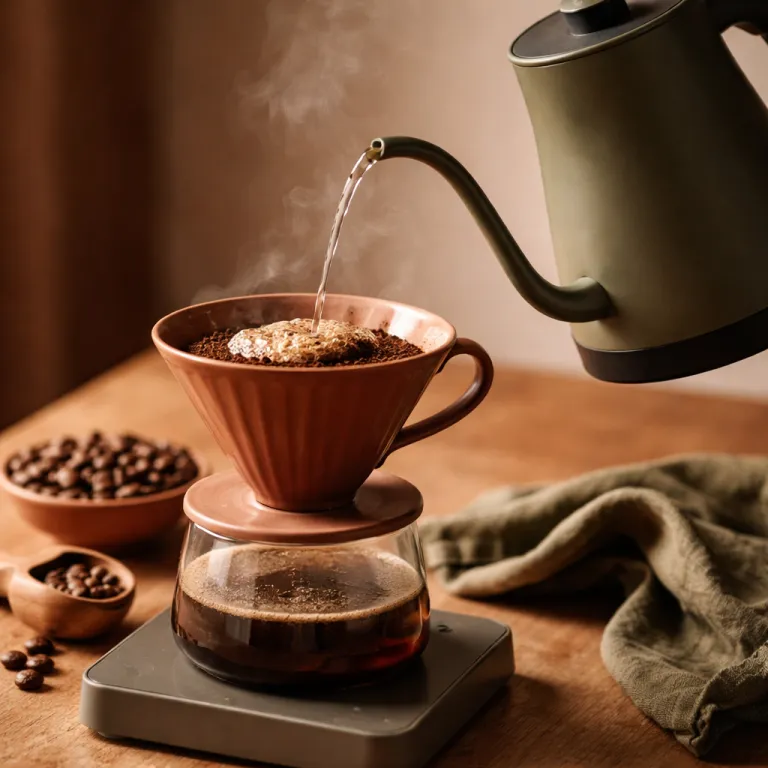
Why a gooseneck kettle matters more than you think
A gooseneck kettle looks like a niche barista toy at first glance. Yet for pour over coffee and delicate coffee tea infusions, the right electric kettle shapes extraction more than most people realise. A well designed coffee kettle gives you repeatable control over water flow and pour pattern, not just faster boiling water.
Pour over brewing depends on a stable flow rate over roughly three to four minutes, because the coffee bed extracts differently when you pour too fast, too slow, or with an uneven spiral. A standard tea kettle with a wide spout dumps hot water in pulses, which creates channels in the grounds and leaves pockets under extracted while others turn bitter. A good electric gooseneck kettle narrows the spout, stretches it into a curve, and lets you pour coffee in a thin, continuous stream that keeps the slurry depth and turbulence consistent.
When people say you need a gooseneck kettle for pour over, they are really saying you need predictable water delivery. That is why the best electric kettles pair a shaped spout with precise temperature control and a stable handle, rather than just chasing higher wattage. The product category has exploded on Amazon and in specialty shops, but many kettles with a gooseneck label offer little real kettle precision and behave like small, awkward tea kettles.
Material matters as much as shape. Most serious coffee drinkers prefer stainless steel because it resists rust, holds heat well, and does not crack like glass when you knock it against a sink. A stainless steel electric kettle with a concealed element also reduces limescale build up directly on the heating coil and around the base, which keeps the first pour cleaner and protects the boil dry safety control.
For a specialty coffee routine, the main buying decision is not simply electric versus stovetop. It is whether the kettle pour feels like an extension of your wrist, and whether the kettle stainless interior and spout stay clean after months of daily use. Once you have bought one well designed gooseneck kettle, every future pour kettle that surges or sputters will feel like a step backwards.
The physics of pour over extraction and flow rate
Pour over coffee is essentially controlled erosion of a coffee bed by hot water. You use the gooseneck kettle to manage how quickly that water moves through the grounds, which in turn controls how much flavour you pull out. Temperature matters, but for most home brews the flow rate and pattern of the pour usually have a bigger impact on consistency.
Think about a V60 or Kalita brew that tastes sour and thin. In many home tests, the culprit is not low temperature but an electric kettle that gushes at the start, stalls mid pour, then dumps the last water in a rush. That erratic kettle pour shortens contact time in some areas and over agitates others, while a steady electric gooseneck stream keeps the slurry height and extraction more even.
Spout geometry is the hidden variable. A narrow gooseneck with a small exit diameter and a gentle curve radius lets you pour coffee at different speeds simply by adjusting tilt, without the stream breaking. A short, wide gooseneck on cheaper kettles behaves almost like a normal kettle stainless spout, so the flow jumps from a trickle to a flood with a few degrees of wrist movement.
The Fellow Stagg EKG electric gooseneck kettle became the reference partly because its spout and handle balance make that flow control feel natural. In repeated side by side tests against budget electric kettles from Amazon, using 600 millilitres of water and timed pours into a graduated cylinder, the Stagg held a stable stream at low angles where cheaper kettles sputtered and dripped. These informal tests align with manufacturer specifications on flow control and user reports from long term owners.
For tea drinkers, the same physics apply. A gooseneck kettle used as a tea kettle lets you wet delicate green leaves gently, rather than blasting them with boiling water and driving off aromatics. When you combine precise temperature with a controlled pour, you get more forgiving brews even when your grind size or leaf quantity is slightly off.
Spout diameter, curve radius and real flow control
Most product pages shout about wattage, capacity and smart features, but almost none list spout diameter or curve radius. Those two dimensions quietly decide whether your gooseneck kettle actually behaves like a precision tool or just looks the part. For a person buying their first electric kettle for pour over, this missing data makes comparison harder than it should be.
In practical testing with a digital caliper and timed pours, a spout exit diameter around 6 to 8 millimetres on a 0.8 to 1 litre coffee kettle usually gives a controllable stream. This range is consistent with the dimensions published by several specialty kettle manufacturers and independent reviewers. When the exit is wider, the flow rate ramps up too quickly as you tilt, so your kettle precision depends on micro wrist movements that are hard to repeat before you have had your coffee. A tighter curve radius, where the gooseneck bends gradually rather than sharply, also helps the water accelerate smoothly instead of surging.
Budget electric gooseneck kettles often copy the silhouette of premium models but change the internal taper of the spout to save on manufacturing cost. That is why two kettles that look similar in matte black can feel completely different when you pour coffee at a low angle. The Fellow Stagg EKG and the classic Hario Buono kettles both show how careful shaping lets you move from a slow centre pour to a faster outer spiral without the stream breaking.
Temperature control interacts with spout design as well. Water near boiling is less viscous, so a kettle set to 100 °C will pour slightly faster than the same kettle at 90 °C for coffee tea or oolong. A well balanced electric gooseneck design keeps that change predictable, while a poorly shaped pour kettle exaggerates it and makes your recipes harder to repeat.
If you are weighing the higher price of a premium model, focus less on the spec sheet and more on how the spout behaves at different tilt angles. A good test in store is to fill the kettle with cold water, then slowly tilt until the first drop falls and watch how quickly the stream thickens. That behaviour tells you more about real world control than any marketing claim about smart modes or presets.
For readers interested in advanced scheduling and hold features, the Stagg EKG Pro with precise temperature control and brew timer shows how modern electric kettles can pair flow control with programmable temperature profiles. Manufacturer documentation and independent lab style reviews both highlight how these profiles help repeat specific pour over recipes.
Materials, build quality and kettle longevity
Once you care about flow, you quickly start caring about materials. A gooseneck kettle lives hard, cycling from cold to boiling water multiple times a day, and cheap construction shows its age fast. The difference between thin, rattly metal and solid stainless steel becomes obvious after a few months of use.
Stainless steel bodies offer three concrete advantages for electric kettles. They resist dents and warping when you knock the kettle against a sink, they retain heat better than glass or thin aluminium, and they are easier to descale without scratching the interior. A kettle stainless interior with a concealed element also makes limescale build up less exposed on the heating surface, so you are less likely to see scale flakes in the first pour coffee of the day.
Plastic components still matter. Lids, handles and bases on an electric kettle take constant stress from lifting, tilting and docking on the 360 degree base, so weak hinges or thin plastics are common failure points. When you are buying a gooseneck kettle, check that the handle feels solid when the kettle is full of hot water, and that the lid vents steam without dripping onto your hand.
Finish is not just cosmetic. A matte black coating on a stainless steel coffee kettle hides fingerprints and minor scuffs better than polished chrome, but cheap coatings can bubble or peel near the spout where steam escapes. Brushed stainless finishes tend to age more gracefully, especially if you wipe the kettle dry after each use to avoid water spots.
Traditional dome kettles like the Dualit Lite Dome show how robust construction can outlast trendier designs, even if they lack a gooseneck. If you mostly brew tea and only occasionally make pour over, a solidly built dome style electric kettle with a wide spout might still be the better long term product. Long term owner reviews and manufacturer specifications for the Dualit Lite Dome fast boiling kettle highlight how build quality and handle design affect daily comfort.
Whatever you choose, plan for maintenance. Regular descaling with citric acid or vinegar keeps the temperature sensor accurate, prevents the boil dry safety from clicking late, and stops scale from narrowing the gooseneck spout. In the end, it is often not the wattage that kills a kettle, but the tenth kettle of limescale left sitting overnight.
When a gooseneck kettle is essential and when it is not
Not every brewing method needs a gooseneck kettle, despite what some marketing suggests. For AeroPress, French press and most standard black tea routines, a regular electric kettle with a decent spout is usually enough. The key is matching the tool to the way water and grounds interact in each method.
AeroPress brewing happens in a small chamber where you stir the slurry, so the initial pour coffee does not need surgical precision. A compact electric kettle with basic temperature control lets you hit the right range for light roast coffee or green coffee tea, and the pressing action evens out extraction. A gooseneck kettle can still feel nice here, but it is a luxury rather than a requirement.
French press is even more forgiving. You pour hot water over coarse grounds, give a gentle stir, then let time and immersion do the work, so flow rate and pour pattern barely matter. In this case, spending extra on a premium electric gooseneck might be less sensible than choosing a larger capacity kettle stainless model that can heat enough water for multiple mugs.
Where a gooseneck kettle becomes genuinely essential is with pour over cones, flat bed drippers and some modern immersion hybrid brewers. These methods rely on a controlled kettle pour to manage bloom, agitation and drawdown time, so a sloppy spout can ruin an otherwise careful recipe. If you brew V60, Kalita, Origami or similar devices several times a week, the price of a good gooseneck quickly pays back in consistency.
Tea sits in the middle. Delicate green and oolong teas benefit from both precise temperature and a gentle pour that does not thrash the leaves, while robust black tea is happy with almost any hot water. For mixed households that drink both coffee and tea, a versatile electric kettle with variable temperature and a reasonably narrow spout can serve as both tea kettle and coffee kettle without feeling compromised.
How to choose and use a gooseneck kettle wisely
Choosing a gooseneck kettle starts with being honest about your routine. If you brew one small pour over on weekday mornings and larger batches on weekends, a 0.8 to 1 litre electric kettle balances control with practicality. Oversized kettles feel heavy when half full and make fine flow adjustments harder, especially for people with smaller hands.
Look first at ergonomics, then at features. The handle should let you grip firmly without twisting your wrist, the lid should open wide enough for easy cleaning, and the spout should start pouring predictably at a modest tilt. Only after that should you weigh extras like smart scheduling, hold functions, or Bluetooth connectivity that some premium electric kettles now offer.
Temperature control is worth paying for if you drink a range of coffees and teas. Being able to set a precise temperature for light roast pour over, then drop to a lower setting for sencha or oolong, saves guesswork and protects delicate flavours. A good electric gooseneck with a hold feature keeps water at your chosen temperature for several minutes, so you can grind, rinse filters and prepare cups without rushing.
Price should reflect build quality and real performance, not just styling. Many kettles on Amazon advertise smart features and matte black finishes but cut corners on spout geometry or internal components, leading to inconsistent flow or early failures. When you read reviews, pay more attention to comments about flow rate, noise, and long term reliability than to unboxing impressions.
Once you have bought a kettle, treat it like a brewing instrument rather than a background appliance. Practice pouring with cold water into a measuring jug to learn how different tilt angles change flow rate, and note how long it takes to reach your usual brew volume. That small investment of time turns your gooseneck kettle from a stylish object into a repeatable tool for better coffee and tea.
Key figures and practical statistics about gooseneck kettles
- Most electric gooseneck kettles for home use hold between 0.8 and 1.0 litres, which is enough for two to three standard 250 millilitre mugs of pour over coffee without feeling heavy in the hand.
- Variable temperature control models typically allow settings from about 40 °C up to 100 °C, covering the recommended ranges for green tea, oolong, black tea and specialty coffee in a single product.
- In comparative lab style tests using a plug in power meter and a digital thermometer, a 1200 watt electric kettle usually heats 600 millilitres of water from room temperature to 96 °C in roughly three to four minutes, while 1000 watt models can take about a minute longer for the same volume. These figures are consistent with manufacturer performance charts and independent home testing.
- Stainless steel kettles often weigh between 700 and 1200 grams empty, and that mass contributes to better heat retention but can make very large kettles tiring to hold steady during a slow pour.
- Regular descaling every four to six weeks in hard water areas, based on manufacturer guidance and home testing, has been shown to extend the effective life of electric kettles by several years, mainly by protecting the heating element and temperature sensor from heavy scale build up.
FAQ about gooseneck kettles and pour over brewing
Do I really need a gooseneck kettle for pour over coffee ?
You do not strictly need a gooseneck kettle, but it makes consistent pour over much easier. The narrow, curved spout gives you better control over flow rate and pour pattern than a standard wide spout kettle. If you brew pour over several times a week, the improvement in consistency usually justifies the investment.
Is temperature control worth paying for on an electric gooseneck kettle ?
Temperature control is valuable if you drink different styles of coffee and tea. Being able to set specific temperatures for light roast coffee, green tea or oolong helps avoid bitterness and under extraction. For people who only brew dark roast coffee with boiling water, it is less critical but still convenient.
What capacity is best for a home gooseneck kettle ?
For most home users, a capacity between 0.8 and 1.0 litres works best. This size is large enough for two to three cups but still light enough for controlled pouring. Larger kettles can feel unwieldy when half full and make fine flow adjustments harder.
How often should I descale my electric kettle ?
In areas with hard water, descaling every four to six weeks keeps the heating element and temperature sensor working efficiently. In softer water regions, every two to three months is usually enough. Regular descaling also prevents scale flakes from breaking loose and affecting the taste of your first pour.
Can I use a gooseneck kettle as my main tea kettle ?
Yes, a gooseneck kettle can serve as your main tea kettle, especially if it has variable temperature control. The precise pour is helpful for delicate teas, and the smaller capacity suits one or two person households. For large family tea rounds, a bigger standard kettle may still be more practical.