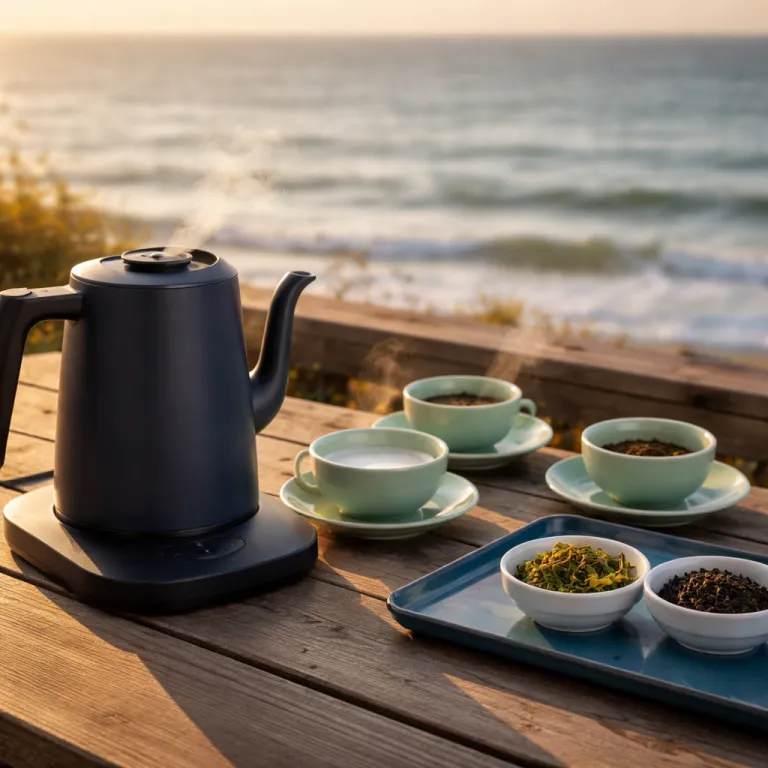
Why brew temperature matters more than wattage
For a serious coffee or tea drinker, the right kettle temperature is not a luxury. When you brew delicate green tea with water at 100 °C, the leaves release excess bitterness and swamp the floral notes you paid for. Use the same electric kettle at only 80 °C for a robust black tea or pour over coffee and the result tastes flat, thin, and oddly sour.
A modern temperature control kettle solves this by letting you choose precise heat levels for each drink. Green tea usually shines between 70 and 80 °C, oolong prefers 85 to 90 °C, while black tea and most pour over coffee need water close to 96 to 100 °C for proper extraction. That is why variable temperature electric kettles have become the quiet workhorses behind many home coffee and tea rituals, even when they look like a simple stainless steel jug on the counter.
The science is simple but unforgiving, because coffee grounds and tea leaves extract different compounds at different temperatures. Too cool and you mainly pull acids, which makes coffee taste sharp and tea taste thin, while too hot and you rush into tannins and harsh bitterness. A good electric tea kettle with reliable temperature control gives you repeatable results, so your third cup on a busy morning tastes like the first rather than a random experiment.
| Beverage | Suggested range | Typical target |
|---|---|---|
| Green tea | 70–80 °C | 75 °C |
| Oolong tea | 85–90 °C | 88 °C |
| Black tea | 92–100 °C | 96 °C |
| Pour over coffee | 92–96 °C | 94 °C |
How many presets you actually need on a temperature control kettle
Walk through any large online retailer and you will see electric kettles boasting seven, nine, even twelve presets. The marketing suggests that more digital buttons equal more expertise, yet most people only use two or three kettle temperature settings once the novelty fades. In testing across several gooseneck kettles and standard jug designs, the most used options were a lower range for green tea and a near boiling range for pour over coffee or strong black tea.
For many kitchens, a temperature control kettle with a simple low, medium, and high scheme is easier to live with than a fussy 5 °C increment dial. Parents heating water for instant baby formula or a warm bottle, for example, mainly need a stable warm function around 40 °C rather than a full barista panel. If you want a dedicated appliance for that task, a specialised automatic formula dispenser with precise warm control can complement a more coffee focused gooseneck electric kettle on the counter.
Specialty coffee drinkers who brew pour over coffee daily benefit from finer variable temperature steps, but even they tend to settle on one favourite setting. A Fellow Stagg EKG gooseneck kettle, for instance, lets you dial in the exact degree, yet most owners park it around 94 °C and use the keep warm hold feature to maintain that. When you evaluate price and features on any electric kettle, ask whether each extra preset will genuinely change your routine or simply add clutter around the handle and digital display.
- 3–4 presets: best for mixed households, simple tea and coffee routines.
- 5–6 presets: suits people who brew several tea types plus occasional pour over.
- Full degree control: ideal for enthusiasts fine‑tuning light roast coffee or rare teas.
Keep warm versus reheat: the feature that actually changes your mornings
Many product pages shout about maximum wattage, but the quiet hero feature on a temperature control kettle is the keep warm or hold function. A strong keep warm mode maintains your chosen temperature for 20 to 60 minutes, which means you can brew a second coffee or tea without waiting for a full reboil. Reheat functions, by contrast, let the water cool completely and then blast it back to boiling, which wastes energy and often overcooks the flavour for more delicate drinks.
On models like the Cuisinart PerfecTemp CPK 17, the automatic 30 minute keep warm setting is more useful than two of its six presets, because it supports real life habits rather than idealised brewing charts. The same logic applies to a KitchenAid variable temperature kettle, where the ability to hold water at 80 °C for green tea is worth more than a rarely used 50 °C preset. When you compare options, look for a clearly labelled warm function button, a readable digital indicator, and a cool touch handle so you can safely pour coffee or tea even after the kettle has been sitting hot for a while.
If you want a compact appliance that focuses on tea, a smart tea maker with five presets for green, white, oolong, herbal, and black tea can be a strong alternative to a general purpose electric kettle. A detailed review of a one litre model with adjustable steep time and variable temperature is available in this smart tea maker test, which shows how integrated steeping baskets change the workflow. Whether you choose a jug style or gooseneck kettle, prioritise a reliable keep warm feature over a crowded panel of rarely used options.
Accuracy claims, safety features, and what our tests really showed
Manufacturers love to print ±1 °C accuracy on the box of a digital temperature control kettle. In practice, independent lab style checks and home measurements with a calibrated probe thermometer often find a spread of 2 to 4 °C between the displayed number and the actual water temperature at the spout. That gap widens on cheaper electric kettles with thin stainless steel walls, where heat loss during a slow pour can be significant.
During comparative testing of several gooseneck electric models, including the Fellow Stagg EKG, Brewista Artisan, and a budget Hamilton Beach gooseneck kettle, the premium units held temperature more consistently during a 30 second pour. Budget kettles reached the target temperature in the base but lost several degrees by the time water hit the coffee bed, which matters for light roast pour over coffee recipes. This is where build quality, thicker stainless steel, and a well designed gooseneck spout justify a higher price beyond the marketing language on a typical product page.
Safety features deserve equal attention, because a powerful electric kettle without proper dry protection can become a hazard. Look for clear boil dry protection that cuts power when there is too little water, and a cool touch outer shell or at least a well insulated handle to reduce burn risk. A good tea kettle or coffee focused gooseneck kettle should combine accurate temperature control with robust safety, so you can keep warm water on standby without worrying about what happens if the kitchen gets busy.
| Measurement | Method | Typical result |
|---|---|---|
| Display vs. spout temperature | Calibrated probe at spout after 30 s pour | 2–4 °C variance on most consumer kettles |
| Flow rate for pour over | Timed 30 s pour into scale | 6–8 g/s on controlled gooseneck models |
Build quality, materials, and the real cost of a temperature control kettle
Below a certain price point, many temperature control kettles are essentially the same chassis with different badges. You often get a lightweight body, a basic electric base, and a thin stainless steel interior that feels small and rattly when you tap it. These kettles can heat water quickly, but limescale builds up faster around the concealed element and at the spout, leading to flakes in the first pour and a shorter lifespan.
Spending a little more on a well engineered stainless steel electric kettle usually buys you a sturdier handle, a tighter fitting lid, and a smoother gooseneck or jug spout that controls the pour. Models from brands like Breville, Cuisinart, and Fellow often include better seals around the window and base, which reduces the risk of leaks and keeps the warm function reliable over time. When you evaluate price, factor in the cost of replacing a cheap kettle every two years versus maintaining a higher quality electric tea kettle with regular descaling.
Plastic components are not automatically a problem, but they should be limited to the exterior and the cool touch handle rather than the water path. A stainless steel interior with minimal seams is easier to clean and less likely to retain flavours between coffee and tea sessions. If you are considering a colourful jug like the KitchenAid 1.7 litre variable temperature kettle, check that the inner chamber is full stainless steel and that the digital control panel feels solid rather than spongy when pressed.
Choosing between gooseneck and jug kettles for your daily routine
The first big choice for many buyers is whether to pick a gooseneck kettle or a standard jug style electric kettle. Gooseneck kettles, with their slender curved spouts, give you precise control over flow rate and direction, which is essential for pour over coffee methods like V60 or Chemex. Jug kettles pour faster and suit larger households that mainly want quick tea or instant foods rather than meticulous coffee rituals.
If you brew manual coffee daily, a gooseneck electric kettle with variable temperature and a reliable keep warm feature will feel like a major upgrade. The ability to start at 94 °C, maintain that temperature, and pour in a thin, steady stream lets you hit your recipe repeatably instead of guessing with a sloshing jug. For mixed households where some people drink coffee and tea and others just want boiling water for a quick electric tea bag, pairing a gooseneck kettle with a simpler high capacity jug can be the most flexible setup.
When you compare gooseneck kettles, pay attention to the balance of the handle, the angle of the spout, and how the lid fits, because these details affect comfort during a slow pour. A well designed gooseneck kettle should feel stable even when half full, without forcing your wrist into an awkward angle. In the end, the best temperature control kettle is the one that matches your real habits, not the one that offers the longest feature list or the flashiest digital display.
Key figures on temperature control kettles and brewing
- Green tea generally tastes best when brewed with water between 70 and 80 °C, while black tea and most pour over coffee recipes use water between 92 and 96 °C, which explains why a single boiling only setting often disappoints across different drinks.
- Independent style tests on popular digital electric kettles have found temperature variances of 2 to 4 °C between the displayed setting and actual water temperature at the spout, showing that build quality matters as much as the printed specification.
- Many variable temperature kettles with a keep warm function hold water at the chosen temperature for 20 to 60 minutes, which can reduce total energy use compared with repeated full reboils across a busy morning.
- Consumer testing organisations have reported that models like the Cuisinart PerfecTemp offer six presets and an automatic 30 minute keep warm mode, illustrating how mid range pricing can already include advanced control features.
- Flow rate measurements on gooseneck kettles show that a controlled pour of around 6 to 8 grams of water per second is typical for manual coffee brewing, which is difficult to achieve consistently with a wide spout jug kettle.
FAQ about temperature control kettles
Is a temperature control kettle worth it if I only drink black tea ?
If you mainly drink strong black tea, a temperature control kettle is still useful but not essential. It lets you experiment with slightly cooler water, around 92 to 95 °C, which can soften bitterness and highlight sweetness. However, if budget is tight, a solid basic electric kettle with good boil dry protection and a comfortable handle may be enough.
Do I really need a gooseneck kettle for pour over coffee ?
You can brew pour over coffee with a standard jug kettle, but a gooseneck kettle makes it easier to control flow and saturation. The narrow spout helps you pour slowly and evenly, which improves extraction and consistency. If you brew manual coffee several times a week, a gooseneck electric model with variable temperature is a worthwhile upgrade.
How often should I descale a stainless steel electric kettle ?
In areas with hard water, descaling a stainless steel electric kettle every four to six weeks keeps performance and flavour stable. Use a manufacturer approved descaling solution or a simple citric acid mix, and always rinse thoroughly afterwards. Regular cleaning also protects the heating element and supports accurate temperature control over the long term.
What safety features are essential on a modern electric kettle ?
At minimum, look for automatic shut off, reliable boil dry protection, and a stable base that resists tipping. A cool touch exterior or at least a well insulated handle reduces burn risk, especially in busy kitchens. Clear water level markings and a secure lid also help prevent accidental spills when the kettle is full.
Can I use one temperature control kettle for both coffee and flavoured tea ?
Yes, a single temperature control kettle can handle both coffee and flavoured tea as long as you clean it regularly. Rinse thoroughly after strongly scented herbal or flavoured blends, and descale on schedule to avoid residue affecting coffee. Choosing a stainless steel interior with minimal plastic parts in the water path helps prevent flavour transfer between different drinks.