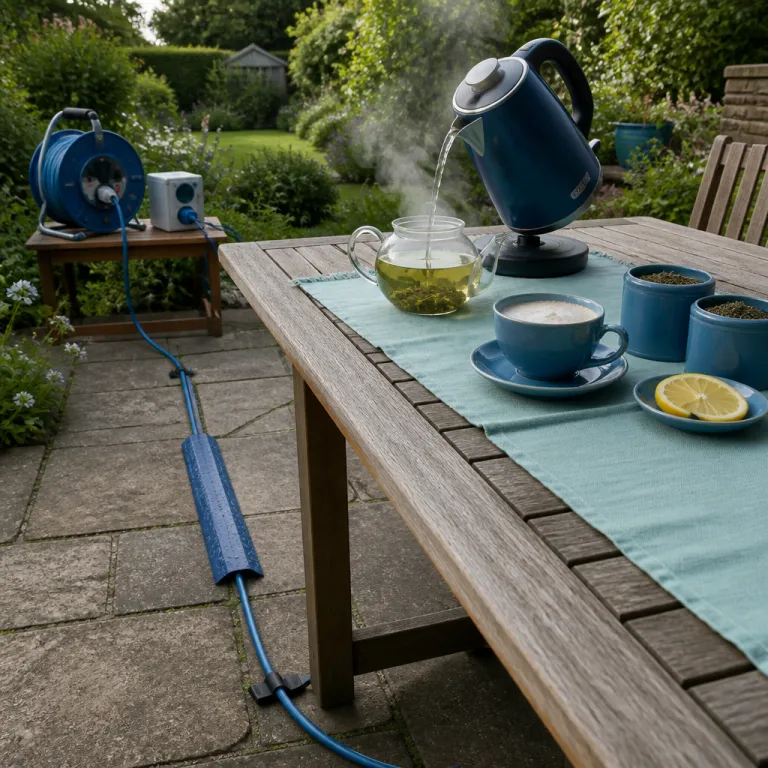
Why a portable kettle outdoor setup is different from your kitchen
Boiling water indoors feels routine, but moving an electric kettle outside changes the risk profile. A portable kettle outdoor arrangement has to manage rain, grass, children, and long cables while still delivering hot water fast enough for tea and coffee. Treat the garden as a semi hostile environment where every power source and water spill matters more than in your tiled kitchen.
Most standard electric kettles carry an IP20 rating, which means basic finger protection but no defence against splashes or condensation on the base. According to IEC 60529, the second digit in an IP code describes water resistance, and “0” means no protection at all. That is fine on a dry worktop, yet it becomes marginal when a portable electric kettle sits on a damp wooden table or metal tray in the garden. If you want the best balance of safety and convenience, think first about the surface, the cable route, and how quickly you can unplug the power if boiling water goes everywhere.
Start with the socket, not the pot, because outdoor power protection is non negotiable. Use an outdoor rated RCD protected outlet or a weatherproof extension reel fully uncoiled, and avoid the classic window crack with a cable pinched under the frame. UK guidance from organisations such as the Electrical Safety First charity recommends 30 mA RCD protection for outdoor appliances, because it can disconnect the supply quickly if a fault occurs. A portable kettle outdoor setup that relies on a cheap indoor extension lead across wet paving is not just clumsy, it is a realistic fire and shock risk when people carry hot water back and forth.
Then consider how many people you are serving, because that dictates whether one compact travel kettle is enough or whether you need something closer to a catering urn. For a couple of mugs of coffee tea on the patio, a 0.8 litre travel electric kettle with dual voltage support is practical and keeps the footprint small. For a family barbecue where everyone wants tea or instant coffee at once, repeated boiling water cycles in a tiny pot become tedious and tempt people to move the kettle to unstable spots.
Material choice matters outdoors as much as indoors, especially when the sun heats everything. Stainless steel kettles stay robust when knocked, but their metal sides get very hot and hold that heat longer than glass or plastic, which affects how you manage children near the table. A compact stainless steel travel kettle with a cool touch handle and reliable dry protection is usually safer than a big glass water kettle that looks pretty but shows every limescale flake in the first pour.
Finally, remember that a portable kettle outdoor session is seasonal and often spontaneous, which encourages shortcuts. People drag out an old electric kettle from the shed, ignore the crust of scale around the concealed element, and hope the boil dry cut off still works. That is how you end up with a tripped RCD, a scorched base, or a spout that spits instead of pouring clean hot water into your tea cups.
Choosing the right portable kettle for garden tea and coffee
For small summer gatherings, a compact travel kettle is usually the most practical portable kettle outdoor option. These travel kettles trade raw power for portability, so they boil water more slowly but sit neatly on a side table without dominating the space. A good travel electric kettle should still feel solid in the hand, with a lid that locks firmly so you can carry hot water safely across the patio.
Look for stainless steel or part stainless steel bodies, because thin plastic shells flex when filled and can feel unstable on uneven outdoor surfaces. Stainless steel travel kettles also cope better with repeated heating and cooling cycles, which is useful when you boil water five or six times during a long afternoon of coffee tea service. Models with a concealed element and an easy clean interior make it simpler to rinse out limescale before you take the kettle outside.
Dual voltage travel kettles are marketed mainly for hotels, yet the same feature helps when you plug into different power sources such as a caravan hook up or a generator. A dual voltage electric kettle will usually run at lower power in 110 volt mode, which means slower boiling water but less strain on marginal circuits. If you only ever use a standard UK outdoor socket, a single voltage travel electric kettle with around 1000 to 1500 watts is a sensible compromise between speed and safety.
Capacity is where spec sheets mislead, because a 0.8 litre pot rarely gives four full mugs of hot water. Think in real servings instead, and assume a compact water kettle will comfortably handle two large teas or three smaller coffees per boil. If you regularly host neighbours or extended family, consider pairing a small electric kettle with a large insulated flask so you boil water once and then pour from the flask at the table.
For readers setting up their first home, a compact indoor model that doubles as an occasional portable electric kettle can be smart. Guides to compact kettles that earn their worktop space explain how smaller capacities and lighter bodies help when you move the kettle between kitchen and garden. The same principles apply outdoors, where a lighter tea kettle with a shorter spout is easier to control when children weave between chairs.
Safety features deserve more attention than marketing buzzwords like rapid boil or one touch mode. A reliable boil dry cut off, sometimes called dry protection, stops the element if the water level drops too low, which is vital when people refill in a hurry during a busy garden party. Pair that with a stable 360 degree base and a cord that exits cleanly at the back, and your portable kettle outdoor setup becomes much less likely to tip or twist when someone catches the cable with a chair leg.
Extension leads, catering urns, and safer power for bigger groups
Once your guest list passes ten people, a single portable kettle outdoor setup starts to feel like a bottleneck. You either stand at the kitchen counter rebelling the electric kettle eight times, or you move the whole operation outside and risk a tangle of cables and steam. This is where thinking like a caterer, not a casual host, pays off.
For large garden parties, a catering urn from brands such as Buffalo or Burco is usually more practical than several small kettles. These urns hold between 6 and 20 litres of hot water, so you boil water once, then draw hot water from a tap for hours of tea and coffee service. Place the urn on a sturdy table, keep the power source close, and you avoid the constant shuffle of people carrying boiling water across the lawn.
Even with an urn, the extension lead is often the weakest link in the chain. Use a heavy duty outdoor reel with built in RCD protection, fully uncoiled to prevent heat build up, and keep all joins off the ground on a dry tray or crate. Never run a cable through standing water or across a path where guests will step on it with wet shoes, because crushed insulation and moisture are a bad mix for any electric kettles or urns.
For smaller groups who still want flexibility, consider a hybrid setup with one compact travel kettle and one insulated airpot. Boil water indoors with a reliable stainless steel electric kettle that has strong boil dry protection, then decant into the airpot and carry that to the garden table. This approach keeps the high power appliance near a safe indoor socket while still giving guests easy access to hot water for tea and instant coffee.
If you are tempted by mini kettles with retro styling, remember that looks do not change physics. Tests of compact models such as the Smeg KLF05 mini kettle show that anti slip bases and auto shut off help, but limited capacity means more frequent boiling water cycles outdoors. For a long afternoon of coffee tea and hot chocolate, a larger water kettle indoors plus a flask often beats a pretty but tiny pot on the patio.
Battery powered and 12 volt portable electric kettles aimed at campers are another option, though they come with trade offs. A 12 volt travel electric kettle plugged into a car socket or leisure battery draws modest power, so it can take 15 minutes or more to boil water, which frustrates guests used to a fast kitchen kettle. Treat these devices as backup or niche tools rather than the main hot water engine for a busy summer garden party.
Setup checklist, weather risks, and maintenance for outdoor tea service
Before the first guest arrives, walk your portable kettle outdoor route as if you were carrying a full pot of boiling water. Identify every wobble in the paving, every low chair arm, and every point where the cable might snag or lift off the ground. A few minutes of planning here does more for protection than any marketing claim about safety mode or smart temperature control.
Start with the surface, because a stable flat table is non negotiable for any electric kettle or urn. Avoid glass topped patio tables that flex, and instead use solid wood or metal with enough depth that the base of the kettle sits fully supported, not half on a slat. Keep the setup away from children’s play areas and ball games, and route the power cable along the back edge of the table with slack managed by clips or tape.
Weather adds another layer of complexity that indoor users rarely consider. Even on dry days, humid air can leave condensation on the base of kettles and on the 360 degree connector, which increases the risk of a short if water seeps into the contacts. Always place the base on a dry tray or mat, and never operate any water kettle in drizzle or under a parasol that drips onto the plug or socket.
Refilling routines matter too, because people get careless once the first round of tea and coffee is served. Designate one person to handle the kettle, carry the cold water jug, and manage the power source so guests are not constantly plugging and unplugging the lead with wet hands. Encourage everyone else to stay on the serving side of the table and treat the kettle area like a small hot zone in a café.
Maintenance is where you extend the life of both indoor and portable kettles, and it directly affects taste. Regular descaling keeps the concealed element efficient, reduces the time needed to boil water, and stops scale flakes from clouding your hot water in the first pour. Detailed tests of glass and stainless steel models with keep warm and temperature control features, such as those reviewed in this electric kettle with temperature control guide, show that easy clean designs are far less likely to shed limescale into your mug.
Finally, think about how you buy and store your gear, because that shapes behaviour on the day. Online retailers such as Amazon make it tempting to purchase the cheapest portable electric kettle with promises of free shipping or shipping included, yet flimsy lids and vague manuals often mean weak boil dry protection and unclear safety limits. A slightly more expensive stainless steel tea kettle with clear markings, a robust handle, and a proven auto shut off will serve you better through many summers of garden hosting than three bargain kettles that fail after one season.
FAQ
Is it safe to use a standard kitchen kettle outside on an extension lead?
Using a standard kitchen kettle outdoors can be safe if you control the environment carefully. You need an RCD protected outdoor rated socket, a fully uncoiled heavy duty extension reel, and a stable dry surface for the base. Avoid running the cable through windows or across wet grass, and keep all joins off the ground on a tray or crate.
What is the safest way to serve tea and coffee for a large garden party?
For more than ten guests, a catering urn on a sturdy table is usually safer and more efficient than repeated boiling with a small kettle. Boil water once, then use the tap on the urn to pour hot water into teapots or mugs while keeping the power source close and controlled. This reduces traffic with boiling water across the lawn and keeps the hot zone in one supervised area.
Are travel kettles powerful enough for regular outdoor use?
Travel kettles are powerful enough for small groups, but they boil more slowly than full size models. A compact dual voltage travel electric kettle is ideal for two or three people who want tea or instant coffee on the patio. For frequent large gatherings, pair a travel kettle with an insulated flask or upgrade to a larger stainless steel model indoors and carry hot water out instead.
Should I choose stainless steel or plastic for an outdoor kettle?
Stainless steel kettles are more durable and handle knocks better, which suits outdoor use, but their sides get very hot and stay hot longer. Plastic bodied kettles stay cooler to the touch yet can flex on uneven tables and may age faster in strong sunlight. A stainless steel kettle with a cool touch handle and stable base offers a good compromise for most garden setups.
How often should I descale a kettle used for outdoor garden hosting?
A kettle used heavily during summer garden hosting should be descaled every few weeks in hard water areas. Regular descaling keeps the element efficient, shortens boiling times, and prevents scale flakes from clouding your hot water. If you notice a white ring inside the pot or a dull taste in tea and coffee, it is time to descale before your next gathering.