Summary
Editor's rating
Value for money: are you paying for function or for the look?
Design: looks great, but with some quirks
Materials and build: solid, but not bombproof
Durability: built to last, if you use it properly
Performance and everyday use: does it actually work well?
What you actually get when you unbox it
Pros
- Attractive, iconic design that looks good on the hob
- Heats water reasonably quickly, especially on induction
- Solid stainless steel body with spare parts available for many years
Cons
- Tight lid and bird whistle can be fiddly and affect the whistle sound
- Handle can get warm and there is no auto shut-off
- High price compared with more practical, basic kettles

Specifications
View full product page →| Brand | Alessi |
A fancy kettle for people who are bored of electric ones
I’ve been using the Alessi Blue Bird Whistle Hob Kettle for a few weeks on a gas hob, after years of only using basic electric kettles. I picked it up mainly because I was tired of cables on the worktop and, let’s be honest, because this thing looks cool in photos. It’s not cheap for a simple hob kettle, so I went into it wondering if I’d just paid extra for a nice ornament.
In day-to-day use, it behaves like a fairly normal stovetop kettle with a few quirks. It heats water at a decent speed, the whistle does work when everything is fitted properly, and it feels solid enough in the hand. But you quickly notice that this is not about raw practicality. There’s no auto shut-off, the lid is tight, and the bird whistle needs a bit of attention if you don’t want steam going everywhere.
Compared with a standard electric kettle, it’s clearly less convenient, but that’s obvious from the start. Where I really judged it was on three things: how fast it boils on a hob, whether it’s annoying to use several times a day, and if the build feels good enough to justify the price. On those points it does fairly well, but it’s not flawless.
If you’re thinking about switching from electric to hob like I did, this review will give you the practical side: how it pours, how the whistle behaves in real life, how annoying the lid actually is, and whether the whole designer-kettle idea makes sense for everyday tea and coffee. Short version: it’s nice, it works, but you need to accept a few compromises for the look and the brand name.
Value for money: are you paying for function or for the look?
This is where things get a bit mixed. As a pure kettle, you can get something that boils water just as well for a fraction of the price. A basic stainless steel hob kettle or a mid-range electric model will be cheaper and often more convenient. So if your goal is only “hot water as fast and as simply as possible”, then no, this is not the best value for money. You’re clearly paying a premium for the Alessi brand and the design.
Where the value makes more sense is if you actually care about how your kitchen looks and you want fewer cables and plastic on the worktop. In that context, the price is less crazy. You’re buying an object that doubles as a piece of decor and a functional tool. If you compare it with other designer kitchen items rather than supermarket kettles, the price feels more in line. Also, having 10 years of spare parts available suggests they see it as a long-term product, not something you replace every two years.
From my own use, I’d say it’s good value only if you’re going to use it daily and you genuinely like the design. If it’s just going to sit there as a backup to your electric kettle, then it’s a waste of money. If you fully switch to hob kettle life, boil water several times a day, and enjoy looking at it on your stove, the cost spreads out and feels more acceptable. The Amazon rating of around 4.2/5 matches how I feel: most people are satisfied, but there are enough niggles that you can’t call it perfect.
So overall, in terms of value, I’d say: decent but not amazing. You can do better on price-to-function, but if the look matters to you and you’re okay with the quirks, it’s a reasonable buy. Just go into it knowing you’re paying for style and brand as much as for performance.
Design: looks great, but with some quirks
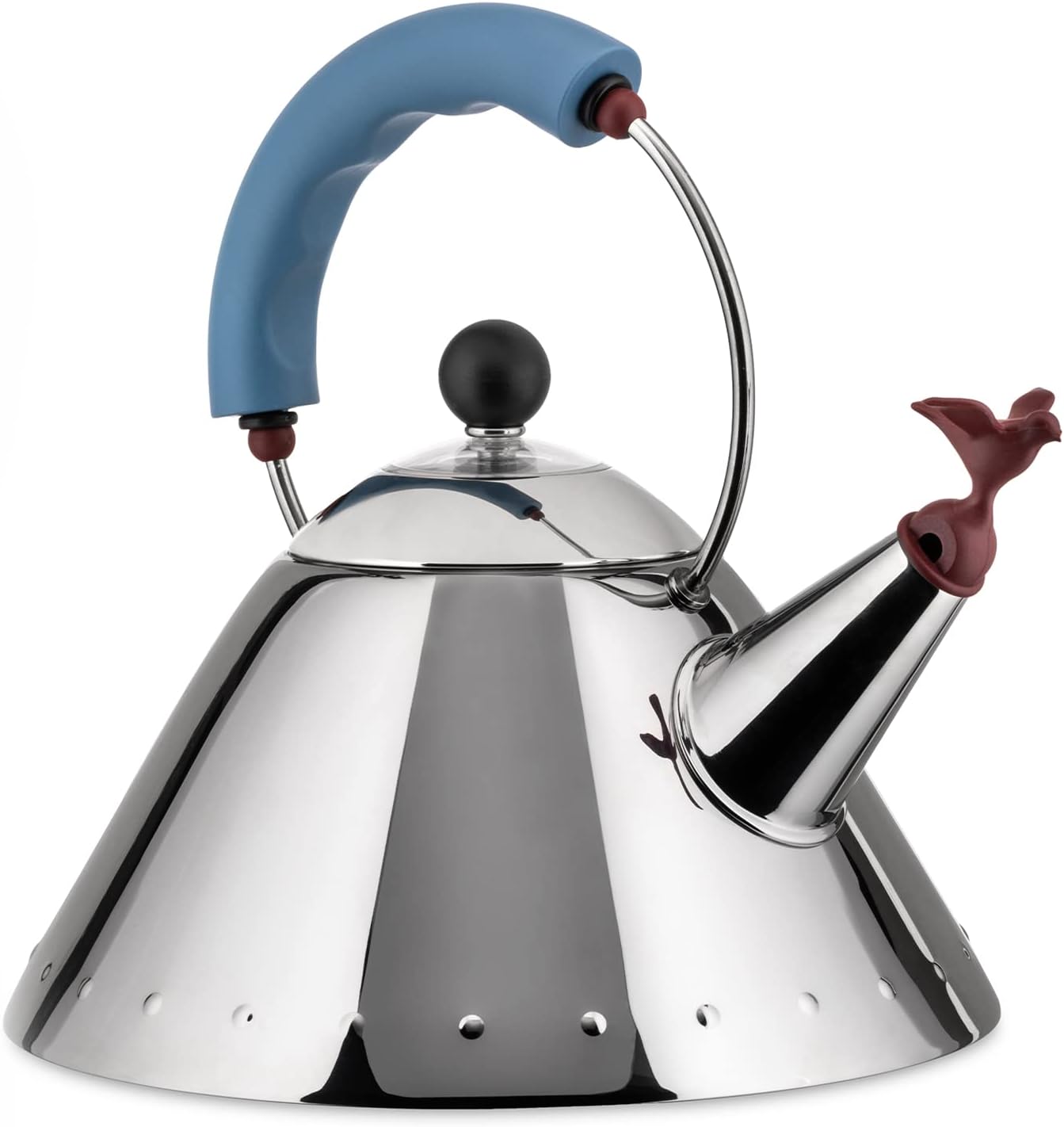
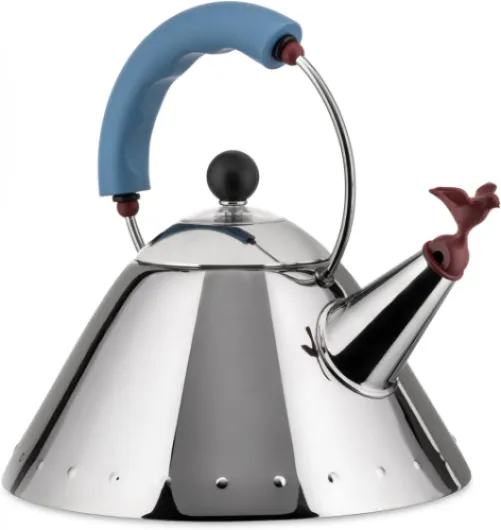
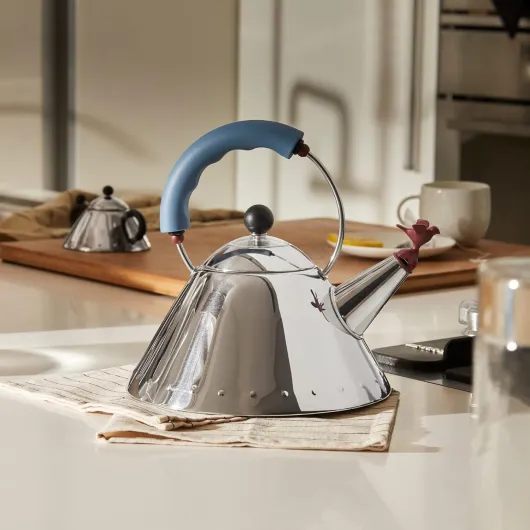
This is clearly a design object first and a workhorse kettle second. The blue stainless steel body with the little bird on the spout looks good on the hob. Friends noticed it right away, which never happens with a normal kettle. If you like that slightly retro, slightly playful look, you’ll be happy. It doesn’t feel cheap or plasticky when you see it in person; the stainless steel has a nice, even finish and the colour is clean, not tacky.
That said, the design choices bring a few trade-offs. The lid fits very tightly. On paper that’s good for steam, but in practice it means you often need two hands to pull it off, especially when it’s new. A couple of Amazon reviewers had the same experience. If you have weaker grip or joint issues, this might get annoying fast. Once you get used to it, you kind of accept it, but it’s not as effortless as just flicking open an electric kettle lid.
The bird whistle is the other big design feature. It’s cute, and when it works properly it gives a clear but not deafening whistle. The problem is that the whole whistle system depends on two things: the lid sealing properly and the bird being pushed on firmly. If either of those is slightly off, steam escapes around the lid or the spout and the whistle is weak or completely silent. I had one boil where I realised the bird wasn’t fully seated, and instead of a whistle I just had steam pouring sideways.
From a usability angle, the handle shape is okay but not perfect. It’s metal and can get warm if you leave the kettle on the hob too long after boiling, especially on gas where flames lick around the sides. You learn to grab it closer to the top and not too close to the body. It’s not dangerous, but it’s not as forgiving as a fully insulated plastic handle on a cheap kettle. Overall, the design is nice to look at and decent to use, but you can feel that some choices were made for looks rather than pure practicality.
Materials and build: solid, but not bombproof
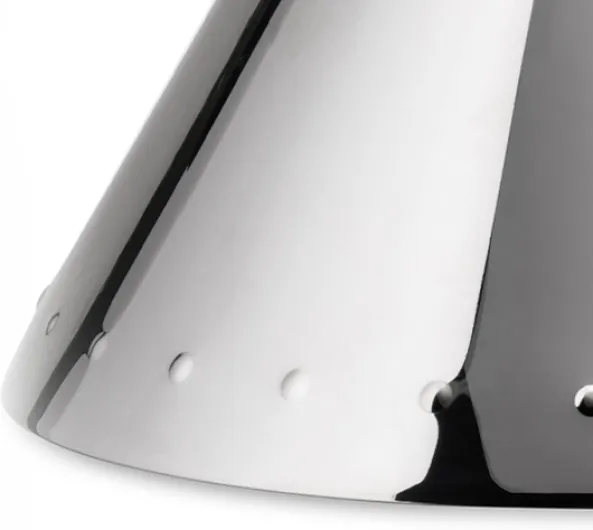
The kettle is all about stainless steel, and on that front it feels pretty solid. The body doesn’t flex when you press it, the base is flat and sits nicely on the hob, and the finish looks consistent. It doesn’t feel like thin tin that’s going to dent if you tap it against the sink. After a few weeks of daily use, I don’t see any discoloration or weird marks on the blue coating, even with gas flames around it.
The handle and lid are also metal. That looks good but has a downside: heat transfer. On my gas hob, if I leave the kettle boiling too long, the handle gets warm enough that I’d rather use a tea towel. If I take it off the hob as soon as it whistles, it’s usually fine to grab with bare hands. So it’s manageable, but you do need to pay attention. On induction, people report it heats quickly and the handle doesn’t get as hot, which makes sense because the flames aren’t climbing up the sides.
The bird whistle is the weak point from a materials perspective. It’s a small piece that has to deal with direct steam regularly. Some Amazon users mention it melting if you leave the kettle boiling for ages or if you don’t remove it correctly. I didn’t destroy mine, but I can see how it could happen if you forget the kettle and let it rage on the hob. It’s not a heavy-duty industrial part; you need to treat it with a bit of care. At this price, I would have liked something that feels a bit more robust in that area.
On the positive side, the stainless steel inside is easy to rinse and doesn’t pick up smells. I’m in a hard water area and, like one reviewer, I mostly use filtered water. So far, no visible limescale on the bottom. If you used straight tap water, you’d probably need to descale it now and then, but that’s normal for any kettle. Overall, the materials are decent and feel long-lasting if you use the kettle properly, but the whistle and heat on the handle are the two clear compromises.
Durability: built to last, if you use it properly
I obviously haven’t had it for 11 years like one of the Amazon reviewers, but there are enough long-term user comments to get a decent idea. People who’ve had it for many years and treat it reasonably are still happy with it. The stainless steel body seems to hold up well over time, both inside and out. No major rust issues are being reported, and the colour doesn’t seem to peel off if you’re not abusing it with harsh scrubbers or letting it burn dry.
The main durability risks are all user-related: boiling it dry, leaving it on full heat for ages after it whistles, and mishandling the bird. Those are the cases where you see reports of melted whistles or lids not sealing well anymore because of heat warping. If you’re the type who starts the kettle and then forgets it while you scroll your phone for 20 minutes, this design is going to punish you more than an electric model with auto shut-off.
The good news is the official note about 10 years of spare part availability in the EU. That means if the bird whistle or another small piece fails, you should be able to replace it rather than binning the whole thing. For a design kettle at this price, that’s important. It makes it feel more like a long-term item rather than a disposable gadget, as long as you’re willing to chase parts if needed.
After a few weeks of solid use (several boils per day), I don’t see any early warning signs: no loose handle, no rattling lid, no wobble on the base. If you’re careful with heat and don’t treat it like a camping pot, I can see it easily lasting years. But it’s not indestructible, and the weak point is clearly that little bird and the way the lid and spout depend on everything being aligned. So in terms of durability, I’d call it good, but with some conditions on how you actually use it.
Performance and everyday use: does it actually work well?
On performance, I’d say it’s pretty solid but not mind-blowing. On my gas hob, it boils a litre of water reasonably fast. It’s not as quick as a strong 3 kW electric kettle, but it’s not painfully slow either. The wide base helps catch the heat, which you really feel on gas. Users with induction hobs say it heats very quickly there, and that lines up with how stainless steel usually behaves on induction. So if you’re on induction, you’ll probably be pleased with the boil time.
The whistle is where opinions split. In my case, the whistle works, but it’s not loud like some classic camping kettles. It’s more of a medium-level sound. You’ll hear it if you’re in the kitchen or nearby, but if you’re upstairs with the door closed, you might miss it. The volume also depends a lot on how much water you put in. Like one reviewer said, it works best if you don’t fill it much above the base of the spout. Overfill it and the whistle gets weaker or wetter-sounding, and steam can start escaping from around the lid.
Day to day, the kettle is fine once you understand its “rules”: push the lid down firmly until it clicks, make sure the bird is properly seated, don’t overfill, and don’t leave it boiling forever. If you ignore those points, you get the problems that the 1-star review mentioned: steam everywhere, no whistle, and the risk of melting the plastic bird. There’s also no auto shut-off, obviously, so you need to be the shut-off. For some people that’s a deal-breaker; for others it’s just how a hob kettle works.
Poor use can also make it feel worse than it is. For example, if you try to grab the bird or lid while steam is blasting out, you’ll burn yourself. That’s not really the kettle’s fault, but it’s easier to forget when you’re used to safe electric kettles that just click off. In short: performance is decent, but it’s a kettle that asks you to pay attention and learn its quirks. If you want something idiot-proof, this isn’t it. If you’re okay with a bit of habit change, it does the job well enough.
What you actually get when you unbox it
Out of the box, it’s very simple: you get the kettle, and that’s it. No extra parts, no spare whistle, no cleaning brush, nothing. The product listing says “Number of pieces: One” and that’s accurate. So if you melt or lose the bird whistle, you’re dealing with Alessi spare parts later, not something included in the package. The box itself is basic, protective enough, but nothing fancy. It arrived without dents or scratches in my case.
The kettle is listed as 2 litres / 200 cl capacity, but in real use you don’t fill it all the way to the top unless you like boiling water spitting out of the spout. Realistic working capacity is closer to 1.5–1.7 L if you want a safe boil and a decent whistle. That’s still enough for several mugs or a full teapot. The dimensions in the description are a bit all over the place, but in practice it’s a medium-sized kettle: big enough for a family, not huge, and it doesn’t dominate the hob.
The handle and lid are metal, the body is stainless steel, and the overall weight is surprisingly light for something that looks so solid in photos. The listing says 270 g, which feels about right in the hand when empty. Once it’s full of water, of course, it’s heavier, but the base is wide and stable, so I never felt like it was going to tip, even when sliding it around on the hob.
One useful point: the Amazon page mentions “EU Spare Part Availability Duration: 10 Years”. That’s reassuring, because the whistle and possibly the handle trim are the bits most likely to suffer over time. So you’re not buying some one-off design that becomes useless if one small plastic piece gives up. Presentation-wise, it’s straightforward: you get a good-looking kettle, no extras, and you rely on Alessi’s ecosystem if something small breaks later.
Pros
- Attractive, iconic design that looks good on the hob
- Heats water reasonably quickly, especially on induction
- Solid stainless steel body with spare parts available for many years
Cons
- Tight lid and bird whistle can be fiddly and affect the whistle sound
- Handle can get warm and there is no auto shut-off
- High price compared with more practical, basic kettles
Conclusion
Editor's rating
The Alessi Blue Bird Whistle Hob Kettle is the kind of product you buy with your eyes first and your practical brain second. As a simple tool to boil water, it gets the job done: it heats reasonably fast on gas and induction, the whistle works if you seat everything properly, and the stainless steel body feels solid. In everyday use, once you learn its small rules (tight lid, don’t overfill, don’t leave it boiling forever), it’s easy enough to live with.
But it’s not perfect, and it’s definitely not the most convenient option compared with a decent electric kettle. The lid is quite tight, the handle can get warm, the whistle isn’t very loud, and there’s no safety net like auto shut-off. You have to pay attention, and if you’re careless with heat, you can damage the bird whistle. For the price, those small annoyances are worth keeping in mind.
I’d recommend it to people who care about how their kitchen looks, prefer fewer cables, and don’t mind a slightly more hands-on routine for making tea and coffee. If you like design objects that also have a real function, this fits that profile. On the other hand, if you just want fast, idiot-proof boiling and don’t care about aesthetics, you’ll probably be happier and richer with a simpler, cheaper kettle. Overall, it’s a good-looking, decent-performing kettle with some quirks that you either accept or you don’t.