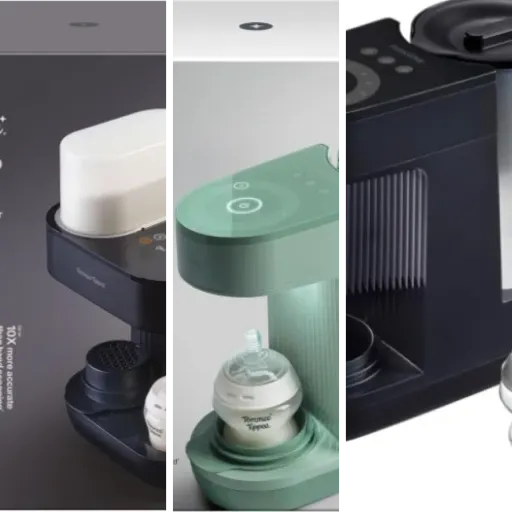
Summary
Editor's rating
Is it worth the money plus filters?
Chunky kitchen gadget, but thought through
Build, filter system and how it holds up to real use
Unboxing and first setup experience
Speed, accuracy and what it’s like at 3 a.m.
What the Perfect Prep Pro actually does day to day
Does it really make feeds safer and easier?
Pros
- Prepares bottles quickly with consistent temperature, ideal for night feeds
- Integrated scales remove the need to count scoops and reduce dosing errors
- Antibacterial filter and hot shot system follow a safe prep method similar to official guidance
Cons
- High initial price plus ongoing cost of replacement filters
- Bulky on the countertop and not dishwasher safe, so cleaning is fully manual

Specifications
View full product page →| Brand | Tommee Tippee |
Does this thing really beat the kettle?
I’ve been using the Tommee Tippee Perfect Prep Pro for a few weeks now, with a newborn who thinks night feeds are a hobby. Before this, I was doing the classic kettle + cooling under the tap routine. It works, but at 3 a.m. it feels like it takes a year. So I wanted to see if this machine was just another bulky gadget, or if it actually makes life easier when you’re half-asleep and covered in spit-up.
On paper, it sounds pretty solid: it weighs the formula for you, does a hot shot to kill bacteria, then tops up with cooler filtered water to get the bottle to a drinkable temperature. No scooping, no counting, and supposedly more accurate than doing it by hand. It also connects to an app, which I’ll be honest, sounded a bit overkill for making a bottle, but I gave it a try anyway.
In daily use, I’ve mainly focused on three things: speed in the middle of the night, how accurate the feeds feel, and how annoying the cleaning and maintenance is. Because if it’s fast but a pain to clean, it’ll end up gathering dust next to the steriliser graveyard. I’ve tried it with a few different bottle sizes and two different formulas to see how flexible it really is.
Overall, it’s not perfect, and there are a couple of details that bug me, especially the price and the filter situation. But it does genuinely change how you handle feeds (in a practical sense, not in a marketing sense). In this review I’ll go through what works well, what’s just “meh but fine”, and what might annoy you enough to skip it.
Is it worth the money plus filters?
Let’s talk bluntly about money. The Perfect Prep Pro isn’t cheap, especially when you look at it next to a basic kettle that costs a fraction of the price. On top of the initial cost, you also have the ongoing cost of filters, which you need to replace regularly to keep the antibacterial side working properly. So this is not a one-off purchase; you’re kind of committing to a small running cost during the whole formula stage.
For me, the question is: what are you actually buying? You’re paying for speed, consistency, and reduced mental load, especially at night. If you and your partner both work, or you’re alone with the baby, that time and brainpower saved is not nothing. After a couple of weeks, I noticed that night feeds felt less like a big operation. I go to the kitchen, press a few buttons, and a couple of minutes later I’m back in the bedroom feeding. That’s hard to put a price on, but when you’re exhausted, it does matter.
Compared to cheaper prep methods (kettle, thermos, pre-boiled water routines), this is obviously more expensive. Compared to some other baby gadgets I’ve bought that ended up on Facebook Marketplace after a month, this one actually gets used several times a day. So in terms of cost per use, it starts to look more reasonable if you use formula for many months. The high Amazon rating (around 4.7/5 from a lot of reviews) also lines up with my experience: not perfect, but pretty solid and clearly useful for most people who buy it.
If your budget is tight and you’re comfortable with the manual prep method, you can absolutely live without this machine. It’s not essential. But if you can afford the initial price and the filters, and you value anything that makes night feeds less of a hassle, then the value is there. I’d call it good value if you’re going to use it daily for at least a year; questionable value if you’re only occasionally using formula or you’re already near the end of the bottle-feeding stage.
Chunky kitchen gadget, but thought through
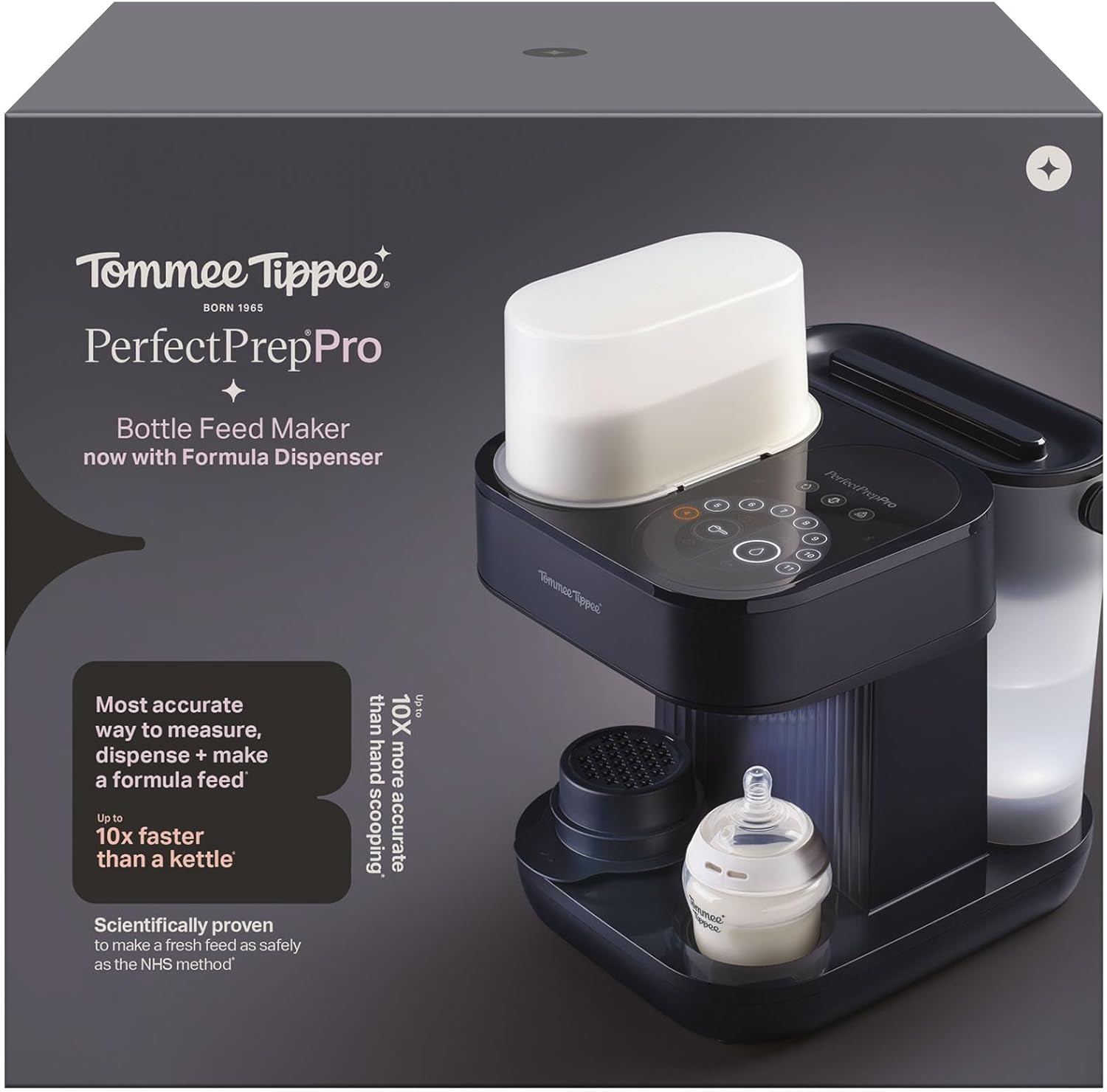
Design-wise, the Perfect Prep Pro is basically a small countertop machine, roughly the size of a compact coffee maker. I tested the black version, which looks fine and doesn’t scream “baby gear” as much as some white plastic stuff. It’s still clearly a baby product, but it blends in better on a kitchen counter than I expected. If your counter space is already packed, you’ll need to shuffle things around, because this isn’t something you’ll be moving in and out of a cupboard ten times a day.
The front layout is straightforward: a small screen, a few buttons, and the bottle area with an adjustable tray to fit different bottle sizes. The adjustable tray is actually one of those small things that matters. With my smaller bottles, I could raise the tray so the hot shot doesn’t splash everywhere, and with bigger bottles I just drop it down. It’s not fancy, but it’s practical and it doesn’t feel wobbly when you place a full bottle on it.
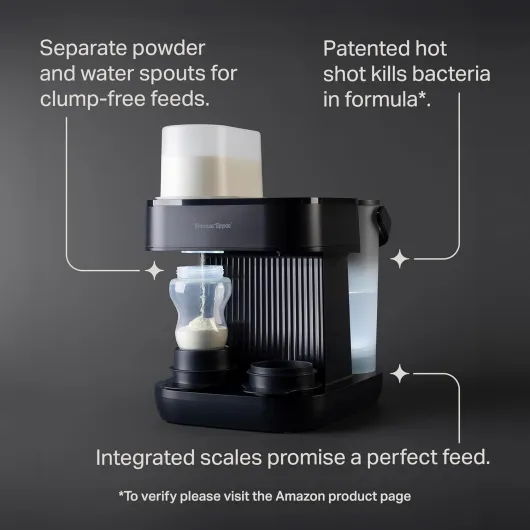
One thing I appreciated is the separate spouts for powder and water. It’s a simple design choice but it keeps the mixing cleaner and helps avoid clumps sticking to one area. The water tank is at the back, which makes the machine look cleaner from the front, but also means if you keep it tucked under a cupboard you’ll be dragging it forward to refill. The tank itself is easy enough to remove and click back in, so it’s not a deal-breaker, just something to know.
Build quality feels decent: it’s mostly plastic, but not the flimsy kind that bends when you press a button. It’s not premium, but for a baby product that will probably live in formula dust and water splashes, I’d rather have solid plastic than something too fancy and fragile. The only design thing I’m not a fan of is the general bulk. If you live in a small flat or have a tiny kitchen, this machine will feel big. It’s not huge, but it’s not compact either, and you basically have to accept that it gets a permanent spot on the counter for the baby months (or years if you keep using formula longer).
Build, filter system and how it holds up to real use
The machine is made of BPA-free plastic, which is standard for baby gear. It doesn’t feel luxury, but it also doesn’t feel cheap. After a few weeks of daily use, nothing creaks, the buttons still click properly, and the tray hasn’t started wobbling. You can tell it’s designed to be wiped more than admired. Everything you touch regularly – buttons, tray, tank – feels sturdy enough for one-handed, sleep-deprived use.
The key part, in my opinion, is the antibacterial water filter and the internal water path. The filter is supposed to be as effective as boiling water in terms of removing nasties. You slot the filter into the tank, and the machine tracks its usage so it can tell you when to change it. This is where the running cost sneaks in: filters aren’t free, and you’re basically locked into replacing them regularly if you want to keep using the machine safely. If you’re on a tight budget, that’s something to factor in versus just using a kettle.
Cleaning-wise, the materials are smooth and easy to wipe, but not everything is dishwasher safe. In fact, the product is listed as not dishwasher safe, so you’re mostly doing manual cleaning. That means regular wiping of the exterior, cleaning out any formula powder that might spill, and following the descaling routine when needed. If you’re used to coffee machines, it’s a similar idea: skip the cleaning and you’ll pay for it later with weird tastes or reduced performance.
In daily use, the materials handle spills and splashes fine. Formula powder is sticky and annoying, but it doesn’t get trapped in awkward textures or seams here. The only spot that can get a bit gross if you ignore it is around the powder dispensing area, so you do need to give that a wipe now and then. Overall, the materials are more functional than pretty, but that’s exactly what I want from something that will be used several times a day, including in the dark when you’re not being gentle.
Unboxing and first setup experience
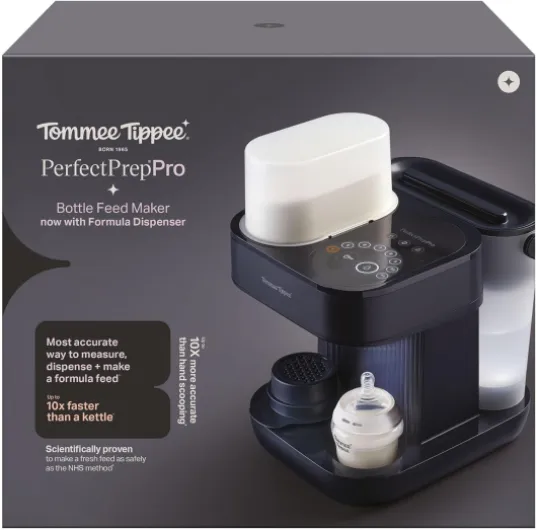
The packaging is pretty standard baby product stuff: branded box, molded cardboard/polystyrene to hold the machine, and the usual pile of leaflets. Nothing fancy, but everything arrived in good condition and protected. The machine is fairly bulky, so the box is not small, but it’s not ridiculous either. You’ll probably keep the box if you plan to store or resell it later, but it’s not some collector-level packaging you’ll admire.
Inside the box you get the machine, the water tank, a filter, and the documentation. There’s no unnecessary junk, which I appreciate. Setup is straightforward but not instant. You do need to read the quick start guide at least once, especially for the initial cleaning and priming of the filter. It’s not complicated, but you can’t just plug it in and make a bottle in 30 seconds. Expect to spend maybe 15–20 minutes doing the first clean cycle and getting the filter ready.
I did try scanning the QR code to check out the app support while setting it up. The app gives you setup guides, step-by-step instructions, and feed tracking if you’re into logging everything. It’s not mandatory to use the app – the machine works fine without it – but for the first setup it’s handy to have visual steps instead of just the paper leaflet. For someone who doesn’t like reading manuals, that’s a plus.
Overall, the packaging and setup experience are practical and clear, not flashy. It feels like they focused on getting you from box to first bottle without confusion, which is what matters. Just don’t expect to unbox it and use it in under five minutes; you need that initial cleaning step. Once it’s done, though, daily use is simple and you can forget the manual exists.
Speed, accuracy and what it’s like at 3 a.m.
Performance is where this thing actually earns its place. In short: it’s fast, and it’s consistent. From pressing the first button to having a ready-to-feed bottle is usually under two minutes for me. The hot shot comes out quickly, you swirl, and then the rest of the cooler water tops it up. By the time I’ve put the lid on and given it a final swirl, the temperature is in that “feed now” range without having to test it ten times on my wrist.
The integrated scales are honestly the standout feature. No more counting scoops or wondering if you levelled them properly. You pick the feed size (4–11 oz) and it dispenses the exact amount of powder. I double-checked a couple of times by weighing the powder separately, and it was accurate enough that I stopped worrying about it. For tired parents, removing that mental load is worth a lot. It also means every feed is consistent, which is better for the baby’s digestion than random variations because you miscounted scoops.
The temperature side has also been reliable. Feeds come out warm, not hot, and my baby has taken them straight away without fuss. Compared to the kettle method, where sometimes I’d go too hot and then stand at the sink cooling it under running water, this is just simpler. No guessing, no waiting. The separate water and powder spouts also help with clump-free feeds. I’ve had far fewer annoying lumps stuck at the bottom of the bottle compared to manually pouring hot water onto a heap of powder.
There are a few minor annoyances. The machine isn’t silent – there’s a bit of whirring and dispensing noise. It’s not crazy loud, but if your kitchen is near the bedroom and your doors are thin, you’ll hear it at night. Also, if you don’t keep the water tank topped up or forget about the filter change, the machine will stop you and throw warnings, which is good for safety but annoying when you’re in a rush. Overall though, in terms of actual performance for making bottles quickly and safely, it does the job very well and beats my old “kettle plus guesswork” routine easily.
What the Perfect Prep Pro actually does day to day
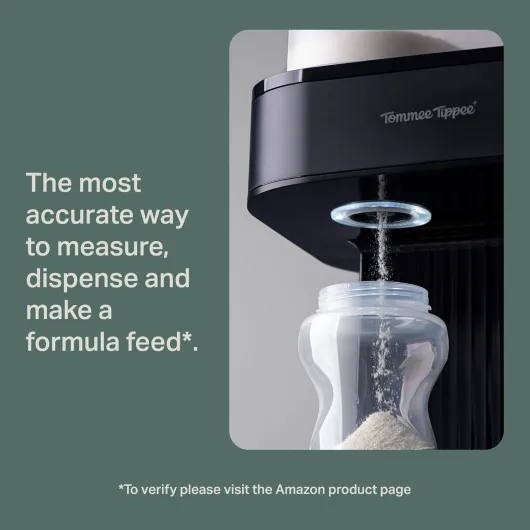
The basic idea is simple: you pour cold water into the tank, you put your bottle under the spout, and the machine handles the rest in two steps. First, it dispenses the right amount of formula powder using its built-in scales. Then it gives a short hot shot of water, you swirl the bottle, and finally it tops up with cooler filtered water to bring the feed to a safe drinking temperature. No waiting for water to cool, no guessing if it’s too hot for the baby.
In practice, from “I need a bottle” to “bottle is ready to feed” takes around 1–2 minutes once you know the buttons. That’s clearly faster than the kettle method, where you’re easily at 10–15 minutes by the time the water boils, you mix, and then you cool it down enough so your baby doesn’t scream when it touches their lips. The machine lets you choose feed sizes between 4–11 oz, and the interface is basically a couple of buttons and a little screen. Nothing fancy, but you don’t need a manual every time either.
What I liked is that the integrated scales remove the whole “did I count 5 scoops or 6?” panic, especially at night. You just hit the formula button, choose the size, and it drops the right amount in. It also has separate spouts for water and powder, which helps avoid clumps and weird paste at the bottom of the bottle. You still need to swirl the bottle properly, but I’ve had fewer clumps than when I was doing it by hand.
On the downside, it’s not a magic robot nanny. You still have to keep the tank filled, change the antibacterial filter, wipe it down, and follow the cleaning routine. And if you’re very particular about following the official NHS or manufacturer method to the letter, you might need to convince yourself you’re okay trusting a machine. But in day-to-day use, it does what it says: it makes feeds faster and more consistent, especially when you’re tired and not thinking straight.
Does it really make feeds safer and easier?
The big selling point here is safety: the patented hot shot that’s supposed to kill bacteria in the formula, and the antibacterial filter that makes the water as safe as boiling. From a user point of view, I can’t run lab tests, but I can say this: it follows the same logic as the official advice (hot water to kill bacteria, then cool to feeding temperature), just in a more automated way. My baby has had no tummy issues or weird reactions since we started using it, and feeds have been very consistent.
In terms of ease, it’s a clear step up from doing everything manually. No counting scoops, no watching the clock for cooling times, no trying to remember when you last sterilised the kettle. The machine walks you through the steps: formula first, hot shot, swirl, top up. Once you’ve done it a few times, it becomes muscle memory. For night feeds especially, the effectiveness is less about pure hygiene (which you can achieve with a kettle) and more about removing human error when you’re half-awake. The chances of messing up the ratio or temperature are just lower.
One thing I noticed over a couple of weeks is that feeds are more predictable. Same amount, same temperature, same time every time. That’s not something you appreciate on day one, but over dozens of feeds, it reduces stress. The baby also seems more settled because there’s no random “too hot, now too cold” cycle while you faff around with cold water at the sink. It’s just press, wait, feed.
On the downside, the machine does add another thing you have to maintain. If you ignore the cleaning instructions or don’t replace the filter when needed, you’re basically undoing the safety benefits. So it’s not a magic safety shield; you still have to be a responsible adult and follow the routine. And if you’re someone who travels a lot or does feeds away from home, this doesn’t replace the need to know how to prep formula the old-fashioned way. It’s very effective at home, less useful once you’re out and about.
Pros
- Prepares bottles quickly with consistent temperature, ideal for night feeds
- Integrated scales remove the need to count scoops and reduce dosing errors
- Antibacterial filter and hot shot system follow a safe prep method similar to official guidance
Cons
- High initial price plus ongoing cost of replacement filters
- Bulky on the countertop and not dishwasher safe, so cleaning is fully manual
Conclusion
Editor's rating
After using the Tommee Tippee Perfect Prep Pro regularly, my conclusion is pretty simple: it’s not essential, but it’s very handy. If you’re making several formula bottles a day, especially at night, it genuinely cuts down the hassle. The speed, the built-in scales, and the consistent temperature all add up to a calmer feeding routine. You still have to clean it, change filters, and keep some basic discipline, but the actual bottle prep becomes almost brainless, which is exactly what you want when you’re exhausted.
Who is it for? Parents who rely on formula daily, who have the counter space, and who are willing to pay both the initial price and the ongoing filter cost. If you’re in that group, you’ll probably be happy with it and use it a lot. Who should skip it? People who only use formula occasionally, those on a tight budget, or anyone with a very small kitchen who can’t spare the space. The kettle method still works fine; it’s just slower and more manual. For me, the machine hits a good balance: solid performance, decent build, and real everyday usefulness, with the main downside being the total cost of ownership and the bulk.