Summary
Editor's rating
Is it worth the price or just an expensive way to boil water?
Chunky, retro look that feels like a small metal tank
Stainless steel body, double wall, and a generally solid build
Feels built to last, but time will tell with the electronics
Boils fast, quieter than average, and temperature control actually useful
What you actually get with this KitchenAid kettle
Pros
- Adjustable temperature from 50–100°C, very handy for tea and coffee
- Double-wall design makes it quieter and keeps water hot longer while staying cooler to the touch
- Solid stainless-steel build with a three-year warranty and a useful temperature gauge
Cons
- High price compared to basic kettles that also boil water
- Heavy and a bit bulky, not ideal for small kitchens or people with weak wrists

Specifications
View full product page →| Brand | KitchenAid |
A fancy kettle for people who actually care about water temperature
I’ve been using the KitchenAid Artisan 5KEK1522BOB kettle (the 1.5L one with temperature control in Onyx Black) for a few weeks now. I didn’t get it as a gift or anything, I paid for it myself, mainly because I drink a lot of tea and was tired of boiling water to 100°C all the time. I came from a basic £30 plastic kettle, so the jump in price was pretty big and I was honestly a bit sceptical at first.
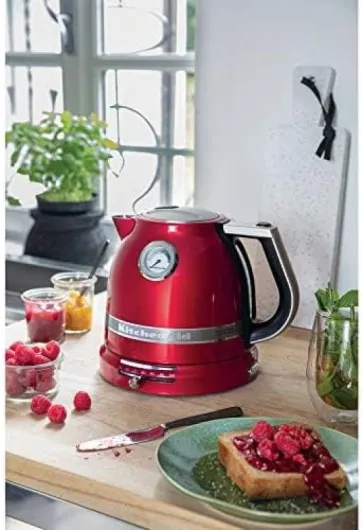
The first impression when you unbox it is simple: this thing is heavy and chunky. It’s not some light plastic jug, it feels more like a small metal pot with a handle. It looks nice on the counter, but you immediately realise you’re dealing with a more “serious” bit of kit. The double wall, the metal body, the analog temperature gauge on the side – all of that gives a more appliance-like vibe than a cheap kettle you replace every year.
In daily use, the two things that stood out fastest were the temperature control and the noise level. Being able to set 50–100°C is actually useful if you drink green tea, coffee with pour-over, or just don’t want boiling hot water for instant stuff. And yes, it’s quieter than my old Bosch kettle – you still hear it, but it doesn’t roar. The double wall also keeps the water warm for a while, which I noticed when I came back 20 minutes later and the water was still plenty hot for a second cup.
It’s not perfect though. The price is high, it’s fairly heavy, and it takes up a bit of space on the counter. Also, the “premium” feel is there, but at the end of the day, it’s still just a kettle. It boils water. If you just want cheap hot water as fast as possible, there are cheaper options that do the basic job. If you care about build, temperature control and a quieter boil, then it starts to make more sense.
Is it worth the price or just an expensive way to boil water?
Let’s talk money, because that’s the main sticking point with this kettle. It’s clearly on the higher end of the price range for an electric kettle. You can get a basic model for a fraction of the price that will still boil water just fine. So the real question is: are you actually getting enough extra for the extra cost? For me, the added value comes from a mix of things: temperature control, quieter operation, build quality, and the three-year warranty.
If you only drink black tea or just need boiling water for pasta and instant noodles, I’d say this is probably overkill. A £30–£40 kettle will do the job. Where this one starts to make sense is if you’re into green tea, coffee (especially pour-over or French press), or you make hot drinks all day and care a bit about noise and feel. Being able to choose 70, 80, or 90°C without faffing around with cooling times is genuinely practical. The double-wall insulation also means you’re not reboiling from cold each time, which should help a bit with energy use over time.
Compared to something like a Smeg or other design-focused brands, this KitchenAid feels less like paying just for the logo and more for actual function. It’s still not cheap, but it feels like a proper appliance that will last several years rather than a disposable gadget. If I spread the cost over, say, five years of daily use, it starts to feel more reasonable. It’s the same logic as buying a better pan or knife: more expensive upfront, but you don’t replace it as quickly.
On the downside, if your budget is tight, this is definitely not the first place I’d spend extra in the kitchen. It’s a nice upgrade, not a necessity. There are also mid-range kettles with basic temperature presets that cost less. They might not be as quiet or as solid, but they exist. So in terms of value, I’d say: good value for someone who really uses the features and cares about build quality, mediocre value if you just want cheap hot water.
Chunky, retro look that feels like a small metal tank
Design-wise, this kettle is more “small metal tank” than “sleek gadget”. The shape is very round and a bit squat, with a wide body and a sturdy handle. On the counter, it definitely looks more premium than a standard supermarket kettle. The Onyx Black colour is a deep, slightly satin black that hides fingerprints better than shiny chrome. It doesn’t scream for attention, but people do notice it because it looks more like a piece of kit than a plastic jug.
The handle is big and easy to grip, even with wet hands. I never felt like it was going to slip, even when the kettle was full. The lid opens wide enough to fill it easily from the tap, and the spout is shaped so that it pours in a clean stream without splashing everywhere. I tested it pouring into a narrow mug and a teapot, and it stayed precise – no annoying dribbles down the side. The base is pretty compact and the cord wraps underneath, so you can adjust the length a bit to avoid cable mess on the worktop.
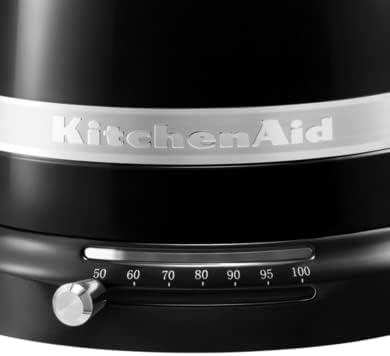
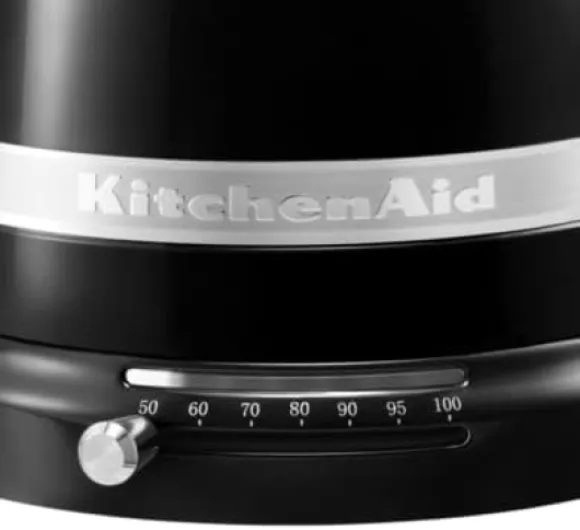
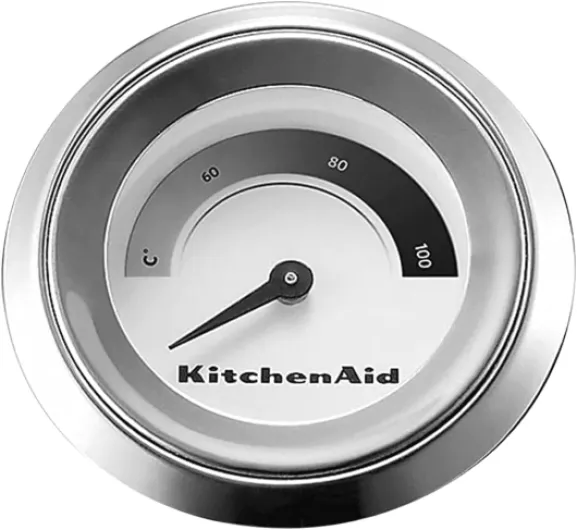
The analog temperature gauge on the side is actually useful, not just decorative. After boiling, you can see how fast the water cools down, which helps if you want 80°C water for green tea and you overshot to 100°C. The gauge isn’t ultra-precise to the degree, but it’s good enough to know if you’re around 60, 80, or 100°C. I found myself using it more than I expected, especially when I’d boiled the kettle earlier and wanted to know if I needed to reheat or not.
On the downside, the design has one obvious drawback: it’s heavy and quite chunky. If you have a tiny kitchen or weak wrists, this might annoy you. My old plastic kettle felt feather-light compared to this. Also, because of the round, retro look, it takes up a bit more visual space than a slim modern kettle. Personally, I like the solid look, but if you want something minimal and very discreet, this might feel a bit too bold on the counter.
Stainless steel body, double wall, and a generally solid build
The materials are probably one of the main reasons this kettle feels so solid. The body is stainless steel with a painted finish, and the double-wall construction gives it a dense, insulated feel. When you tap it, you don’t get the hollow plastic sound you hear on cheaper kettles. The handle feels robust, no flexing or creaking when it’s full. After several weeks of daily use, I don’t see any peeling or discoloration on the painted surface, and the Onyx Black still looks like new once wiped.
Inside, it’s stainless steel as well, with a heating element that’s not exposed like very old kettles. There’s a removable limescale filter at the spout, which is handy if you live in a hard-water area. It’s not magic – you still need to descale – but it catches the bigger bits and stops them ending up in your mug. I pulled the filter out once a week, gave it a quick rinse and scrub, and it was fine. The lid mechanism also feels sturdy; it opens and closes with a firm click, not a flimsy hinge that feels like it will snap in a year.
The double wall is the main material-related feature. In practice, that means the outside gets warm but not scorching hot, and the water inside stays hotter for longer. After boiling to 100°C, I checked the gauge about 20–30 minutes later and it was still around 70–80°C, which is enough for a second cup without starting from cold. That won’t replace a proper thermos, but it’s better than normal single-wall kettles that lose heat faster. It also makes the kettle quieter because a lot of the noise is dampened by the insulation.
On the flip side, all this metal and insulation is what makes it heavy. At 2.8 kg empty, plus up to 1.5 kg of water, you’re lifting over 4 kg when it’s full. That’s fine for most people, but if you have wrist or grip issues, it’s worth thinking about. Also, even if the materials feel solid, at this price I would have liked to see absolutely zero plastic inside near the water, and there are still some plastic parts around the filter and lid. Nothing alarming, but it’s not 100% metal everywhere.
Feels built to last, but time will tell with the electronics
In terms of durability, I obviously haven’t had this kettle for years yet, but I can comment on the build and what I’ve seen so far. The whole thing feels solid: no rattling parts, no flimsy plastic bits, and nothing loose. The base sits flat, the handle is firmly attached, and the lid mechanism hasn’t loosened at all after constant opening and closing. Compared to cheaper kettles I’ve owned that started to feel wobbly after a few months, this one clearly plays in another league in terms of basic sturdiness.
The reviews from other users also hint at decent lifespan. Some people say it’s their second one after the first lasted years, others mention that after a year it still looks almost new. The paint on mine hasn’t chipped or scratched yet, even though I occasionally bump it against the tap when filling it. The double-wall design also means less heat stress on the outer shell, which should help it keep its appearance over time. The limescale filter is easy to remove and clean, so you’re not likely to break it just trying to maintain it.
Now, the honest part: there are still electronics and a temperature control system in there, so there is more that can go wrong compared to a super basic on/off kettle. The temperature slider and sensor are extra components, and like any electric appliance, failures can happen. That’s where the three-year warranty is important. It’s longer than many brands offer, and it gives at least some safety net if the electronics start acting up prematurely. If this were a one-year warranty at this price, I’d be more hesitant.
So far, after several weeks of daily use (multiple boils a day), I haven’t noticed any degradation: no weird noises, no inconsistent shut-offs, and no plastic smell or taste. The only thing I’d keep an eye on long-term is the temperature gauge accuracy and the slider – if you’re rough with it, I can imagine it becoming less precise over time. But purely from the feel and other users’ comments, I’d say the durability looks pretty solid, especially compared to the usual “buy a new one every 18 months” plastic kettles.
Boils fast, quieter than average, and temperature control actually useful
On performance, the 3000W rating shows. This kettle boils water quickly. From roughly half full (around 0.75L) at room temperature, I got a full boil in about 2.5–3 minutes. That’s in line with other 3000W kettles, so it’s not some miracle, but it’s definitely fast enough. The difference is more in the noise level. Compared to my previous Bosch plastic kettle, this one is noticeably quieter. You still hear the familiar “about to boil” sound, but it’s more of a low hum than a loud roar. If you have an open kitchen and you’re trying not to wake people early in the morning, this helps.
The adjustable temperature from 50°C to 100°C is the main extra. There’s a slider where you can pick different levels (50, 60, 70, 80, 90, 100). For tea and coffee, this is genuinely handy. For example: green tea around 70–80°C, instant coffee or herbal tea around 90°C, boiling for pasta or stock at 100°C. Before, I was constantly boiling to 100°C and then waiting or guessing. Here, you just set it and it stops at the chosen level. The water doesn’t overshoot wildly either – you don’t get massive bubbling at 80°C, it just heats to the set point and stops.
The temperature gauge on the side is a nice backup to the slider. After the kettle finishes, you can see where the water is and decide whether you want to heat again or use it as is. It also keeps the temperature for a decent amount of time thanks to the double wall. It doesn’t actively keep it warm like a keep-warm function, but passive insulation does a decent job. I often boiled to 90°C, made a drink, and came back 15–20 minutes later to find the water still hot enough for another drink without a full reboil.
On the downside, there’s no ultra-precise digital control, timer, or keep-warm mode. If you’re a hardcore coffee geek who wants exact 93°C water with a timer, you might prefer a gooseneck kettle with digital control. Also, the chime when it’s done is nice but not very loud – in another room you might miss it. Overall, though, for normal home use, the performance is strong: fast boil, quieter than many kettles, and temperature options that actually matter if you drink more than just builder’s tea.
What you actually get with this KitchenAid kettle
On paper, the KitchenAid Artisan 5KEK1522BOB is a 1.5 litre, 3000W electric kettle with adjustable temperature from 50°C to 100°C. It has a double-wall stainless steel construction, a removable limescale filter, and a three-year warranty. It’s made in China, weighs about 2.8 kg, and runs on 240V. So yeah, it’s not some ultralight gadget – it’s a proper countertop appliance. The finish on this Onyx Black version is painted metal with a sort of satin look, not glossy plastic.
The key features in practice are: temperature control slider at the base, a temperature gauge on the side that shows the current water temperature even off the base, and the double wall that keeps the outside cooler and the water hotter for longer. There’s also a soft chime when it reaches temperature and a blue light that comes on when it’s heating. Nothing life-changing, but these small touches make it a bit nicer to live with than a cheap, bare-bones kettle.
In the box, you get the kettle, the 360° base, and the removable limescale filter already fitted in the spout. No extra accessories, no fancy cleaning tools. The manual is straightforward: basic safety stuff, how to set the temperature, and some care instructions (mainly wiping the outside and descaling as usual). The manufacturer backs it with a three-year warranty, which is longer than the one year you see on many budget kettles, so that did reassure me a bit about the price.
Function-wise, it’s still simple: fill water, put it on the base, set the temperature, and press the lever. No app, no Wi‑Fi, no smart nonsense. If you’re expecting some connected device, this isn’t it. If you want a solid, fairly traditional kettle with more control over water temperature, that’s exactly what it offers. The product page makes it sound a bit fancy, but in daily life it’s just a heavier, quieter kettle that lets you choose how hot you want your water.
Pros
- Adjustable temperature from 50–100°C, very handy for tea and coffee
- Double-wall design makes it quieter and keeps water hot longer while staying cooler to the touch
- Solid stainless-steel build with a three-year warranty and a useful temperature gauge
Cons
- High price compared to basic kettles that also boil water
- Heavy and a bit bulky, not ideal for small kitchens or people with weak wrists
Conclusion
Editor's rating
Overall, the KitchenAid Artisan 5KEK1522BOB is a pretty solid choice if you actually care about how your kettle behaves day to day. It boils fast, it’s noticeably quieter than many standard kettles, and the adjustable temperature is genuinely useful if you drink more than just basic black tea. The double-wall construction keeps the outside cooler and the water hotter for longer, and the whole thing feels like a sturdy, well-built appliance rather than a flimsy plastic jug. The temperature gauge on the side is more than a gimmick – it helps you reuse hot water sensibly instead of constantly reboiling from cold.
That said, it’s not for everyone. It’s heavy, it takes up a fair bit of space, and the price is clearly higher than average. If your only requirement is “boil water as cheaply as possible”, this is not the smartest way to spend your money. But if you’re the type who drinks a lot of tea or coffee, hates noisy kettles, and wants something that feels solid and should last several years, then it starts to make sense. I’d recommend it to people who value build quality and temperature control, and I’d tell budget-focused buyers or those with wrist issues to look at lighter, cheaper models instead.