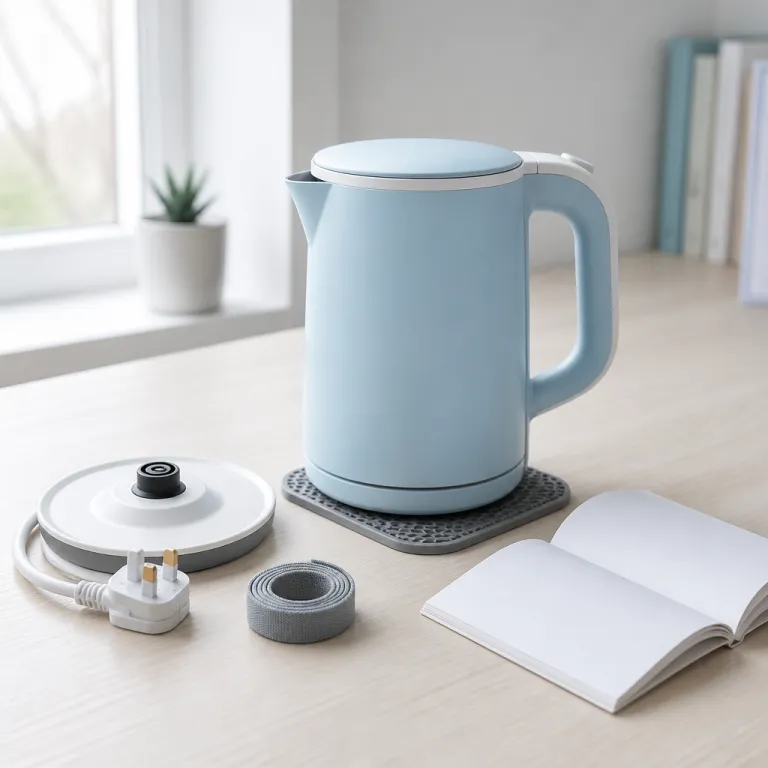
Student kettle choices for university halls: rules before shopping
Rules for student kettles in university halls shape what you can safely buy. Before you even think about colours or brands, read your residence hall handbook and any university housing appliance list with care. Those few pages decide whether your kettle quietly passes inspection or gets confiscated during the first safety check.
Most residence halls apply a standard limit on total socket load per room, so a compact kettle under about 2 kilowatts usually keeps you well below the typical 2 to 3 kilowatt ceiling. In a small room where one double socket powers your desk lamp, laptop and maybe a coffee pot, a 3 kilowatt jug can trip breakers every time someone else in nearby rooms boils water. In older housing blocks, wiring can be fragile and billing rates for electricity may be folded into rent, so repeated trips quickly annoy both flatmates and staff.
Many university housing teams ban appliances with exposed heating coils, so your hall-safe kettle must use a concealed element under a flat stainless base. That design reduces limescale flakes swirling into mugs and improves safety if someone splashes water while filling in cramped rooms. Auto shut off and boil dry protection are not marketing extras here; they are core safety requirements that inspectors will check during routine hall rounds, in line with common electrical safety guidance and portable appliance testing (PAT) practices used in student accommodation.
Some residence halls also restrict where you can actually use a kettle, insisting it stays in the shared kitchen rather than on a desk beside twin sheets and textbooks. In that case, note rooms that already have items provided, such as a communal kettle, and consider bringing only a compact travel model for weekends away. When rules allow a kettle in your own room, keep it on a stable top surface away from the bed or loft bed ladder, and never balance it on window coverings or cluttered shelves.
Compact and travel kettles that actually fit student spaces
Students buying kettles for university accommodation rarely have generous worktops, so footprint matters more than glossy finishes. In many residence halls, the only clear area is a narrow desk corner between a laptop and a stack of cleaning supplies, leaving maybe 20 centimetres of width for any appliances. That is why compact kettles such as the Breville VKJ755 HotCup or Russell Hobbs Compact 23840, both with small circular bases, suit tight spaces far better than tall, wobbly jugs.
When your provided room barely fits a bed, a wardrobe and a desk, a full size 1.7 litre kettle feels absurdly large. A 0.8 to 1 litre compact model boils enough water for noodles and tea without dominating the room or blocking air flow around sockets. One cup rapid boilers in this size range can heat a single mug in under ninety seconds, which saves both time and energy during late night study sessions.
Travel friendly designs help if you regularly move between home, campus and internships, and a foldable electric kettle for camping style use can double as your backup hall kettle. A silicone travel kettle such as the Loutytuo Collapsible Electric Kettle packs into a drawer when not needed. Just confirm that your residence hall allows travel kettles in rooms, because some policies only permit them for off site trips or require them to stay in shared kitchens.
In shared housing where several students squeeze kettles, coffee pots and electric grills onto one counter, a small base with cord storage reduces tripping hazards. You should also consider bringing a soft case or box so the kettle can slide under loft beds or into wardrobe spaces when not in use. Whatever you choose, keep the main content of your decision focused on safety, compactness and compliance, not just colour or brand hype.
Hall safe features: wattage, safety cutoffs and real energy costs
Every shortlist of kettles for student halls should start with wattage, because that single number decides whether your lights stay on. A 1500 watt compact kettle such as the Russell Hobbs Compact Home 0.8L (around 1530 watts) usually sits comfortably within most hall limits. By contrast, stacking a 3000 watt jug on the same extension as a microwave and a mini fridge in cramped rooms is a recipe for tripped breakers and irritated neighbours.
Auto shut off and boil dry protection are non negotiable safety features in any residence hall, because people will inevitably walk away mid boil. A locking lid prevents boiling water from sloshing out if someone bumps the desk or knocks the kettle while reaching for items provided on nearby shelves. Concealed elements also make cleaning easier, because limescale builds up on a flat plate rather than around exposed coils that flake into every pour.
Energy cost awareness matters when you share billing rates through all inclusive rent or prepaid meters, since waste affects everyone. At an electricity price where boiling a full 1.7 litre kettle costs several pence, repeatedly heating more water than you need for one mug quietly drains your budget over a term. Boiling only what you need in a compact kettle halves that cost and reduces steam in small rooms with limited air conditioning or no air conditioners at all.
Some university housing teams publish a list of approved appliances, and your chosen hall kettle should match that document line by line. When you read those PDFs, skip main marketing claims and go straight to the technical specifications for wattage, auto shut off and concealed elements. If your residence hall requires portable appliance testing under national electrical regulations, keep the receipt and manual in a safe place on your desk so staff can confirm the provided safety features quickly.
Fitting a kettle into real hall life: layouts, storage and daily use
Life in residence halls rarely matches glossy prospectus photos, and kettles feel that reality first. In many blocks, note rooms that are long and narrow, with a bed pushed under a window and a tiny desk squeezed beside a wardrobe. That layout leaves almost no top surface for appliances, so you must plan exactly where your kettle will live before you buy it.
Think about how you move through the room from door to bed to desk, and avoid placing the kettle where people naturally swing bags or jackets. A stable corner away from the main path reduces the risk of catching the cord and spilling boiling water, especially when friends crowd into small spaces. Never balance a kettle on window coverings, the edge of a loft bed frame or stacked textbooks, because any wobble becomes dangerous when the jug is full.
Storage matters just as much as boiling performance when you live in compact student housing. Many students slide kettles under loft beds or into wardrobe corners between twin sheets and spare shoes, which works only if the base and cord detach neatly. Others keep them in shared kitchens, labelled clearly so they do not vanish among communal items and cleaning supplies.
When you consider bringing a kettle, check which items provided already exist in the shared hall kitchen, such as a communal coffee pot or microwave. If a decent kettle is already provided, your university accommodation kettle budget might be better spent on quality mugs or food storage instead. Whatever you choose, always leave enough air around the kettle while boiling, because steam trapped under shelves or low ceilings can damage paint and trigger moisture alarms.
Specific model advice: what actually works in student halls
Choosing a kettle for university halls is easier when you match real products to real constraints. For most first year students, a compact 1 litre kettle with a concealed element, auto shut off and a wattage around 1500 to 2000 watts hits the sweet spot between speed and safety. That size boils two large mugs or a pot of instant noodles without overloading typical residence hall sockets.
In testing, many reviewers find that 1.7 litre capacity is a spec sheet number, not a real four mug pour, because you rarely fill to the brim in daily use. A compact jug such as the Russell Hobbs Inspire 1.7L Fast Boil (about 3000 watts) can still work in halls if you respect wattage limits and socket sharing. For very tight rooms, a travel kettle or a 0.8 litre jug often feels more practical than a full size model, especially when your desk already hosts a laptop, lamp and textbooks.
When you move into university housing, staff sometimes walk you through a provided room checklist that covers items provided, from mattress and twin sheets to window coverings and basic furniture. Use that moment to ask directly about kettles, electric grills and other appliances, because policies vary sharply between halls on the same campus. Some blocks allow kettles only in kitchens, while others permit them in rooms as long as they meet safety standards and do not exceed specified wattage.
Whatever you buy, keep the kettle clean by descaling regularly, because limescale build up around the spout and filter can cause scale flakes in the first pour. A dirty kettle also boils less efficiently, quietly increasing energy use and stretching boil times during busy mornings. In the end, the best student kettle for halls is the one that fits your room layout, respects hall rules and still makes that late night tea without drama.
| Model | Capacity | Approx. wattage | Pros | Cons |
|---|---|---|---|---|
| Compact 1L BPA free kettle | 1.0 L | 1500 W | Hall friendly wattage, small footprint, auto shut off and boil dry protection | Too small for big group brews, needs more frequent refills |
| Russell Hobbs Inspire 1.7L Fast Boil | 1.7 L | 3000 W | Very quick boil, good for shared kitchens, anti scale filter | High power draw, may exceed some socket or hall limits |
| Silicone foldable travel kettle | 0.6–0.8 L | 600–800 W | Folds for storage, light to carry between home and campus | Slow boil, not ideal as the only kettle in a busy flat |
For quick checks, use this safety checklist before buying or plugging in any hall kettle: keep wattage within your residence limit, insist on auto shut off and boil dry protection, choose a concealed element, place the base on a stable heat resistant surface with clear air space, avoid overloaded extensions and store the kettle dry when not in use.
FAQ
Can I keep a kettle in my university room or only in the kitchen ?
Policies differ between residence halls, so you must read your specific residence hall handbook. Some halls allow a personal kettle in your own room if it meets wattage and safety rules, while others restrict all kettles to shared kitchens. Always check with university housing staff during check in rather than assuming last year’s rules still apply.
What kettle wattage is safe for student accommodation sockets ?
Most university housing teams design sockets for a total load of around 2 to 3 kilowatts per outlet, shared between all plugged in items. A kettle between 1500 and 2000 watts is usually a safer choice than a 3000 watt jug, especially when you also run a laptop or lamp from the same point. Never daisy chain high power appliances through cheap extensions, because that increases fire risk in small rooms.
Are travel kettles a good idea for university halls ?
Travel kettles can work well in tiny rooms or if you move frequently between home and campus. Their smaller capacity and foldable designs fit easily into desk drawers or under beds, and they usually draw less power than full size jugs. You still need auto shut off, boil dry protection and a concealed element, so treat them like any other hall appliance purchase.
How often should I descale a kettle in student accommodation ?
In hard water areas, descaling every four to six weeks keeps your hall kettle efficient and reduces limescale flakes in drinks. If you notice white deposits on the concealed element or around the spout, it is time for a clean. Using filtered water slows build up, but it does not remove the need for regular maintenance.
What should I consider bringing for a safe hot drink setup in halls ?
Alongside a compliant kettle, consider bringing a heat resistant mat, a couple of sturdy mugs and a small tub for cleaning supplies. Place the kettle on a stable top surface away from the bed and main walking paths, and keep cords tidy to avoid trips. Check which items provided already exist in the kitchen, such as a communal coffee pot, so you do not waste money or space on duplicates.