Compact designs and folding options for tight RV spaces
Space is the constant enemy when selecting the best electric kettles for RV and travel. A traditional home kettle can dominate a small galley, while a compact travel kettle or collapsible model slips easily into a drawer. When you handle boiling water in a moving vehicle, a low, stable base and a short spout often matter more than stylish curves.
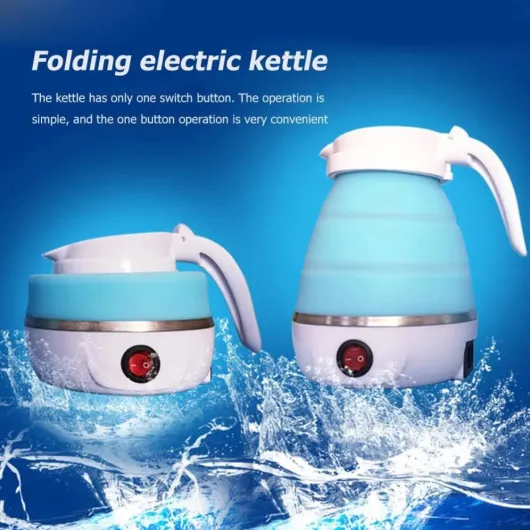
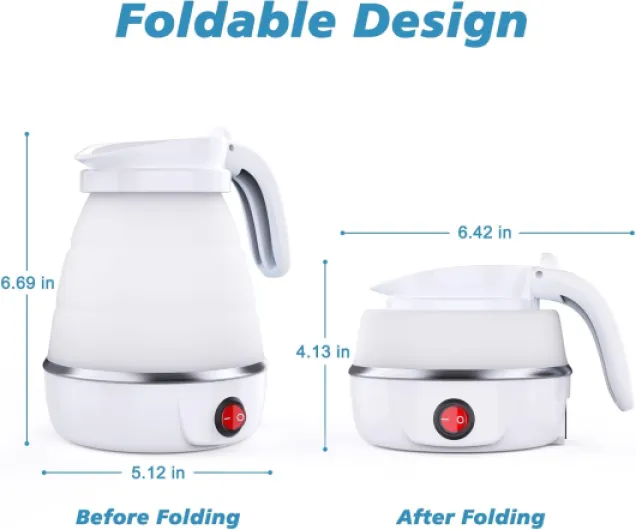
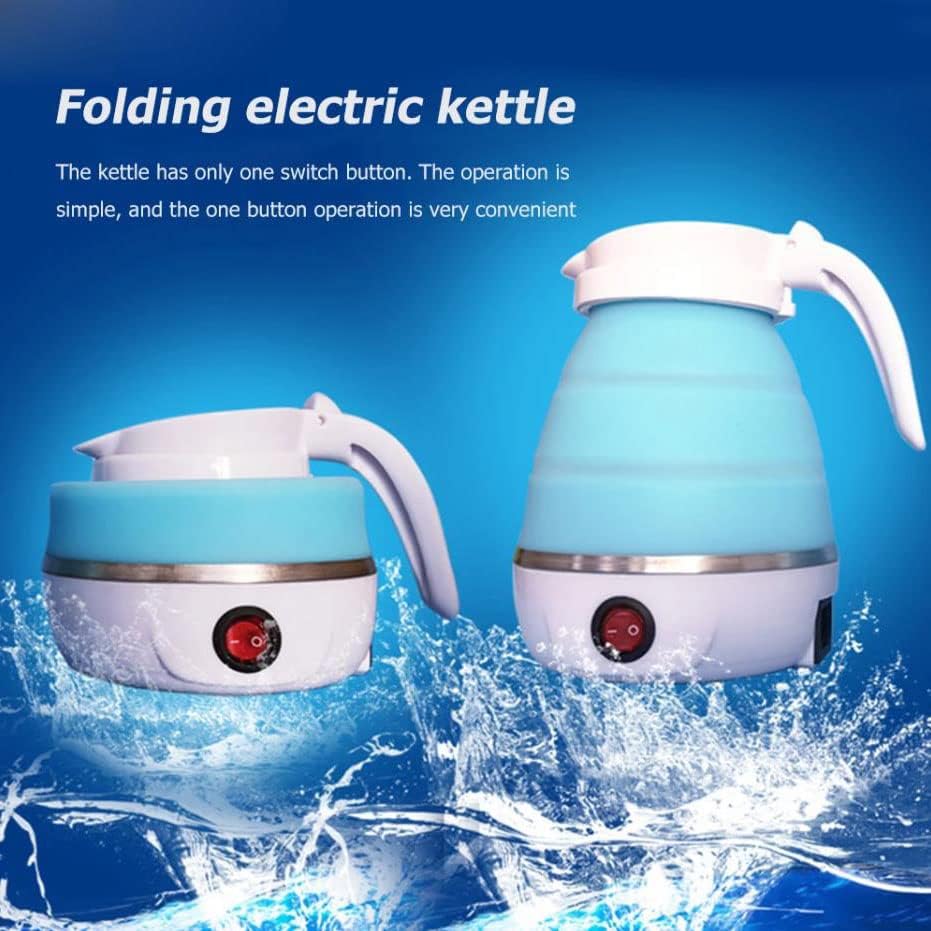
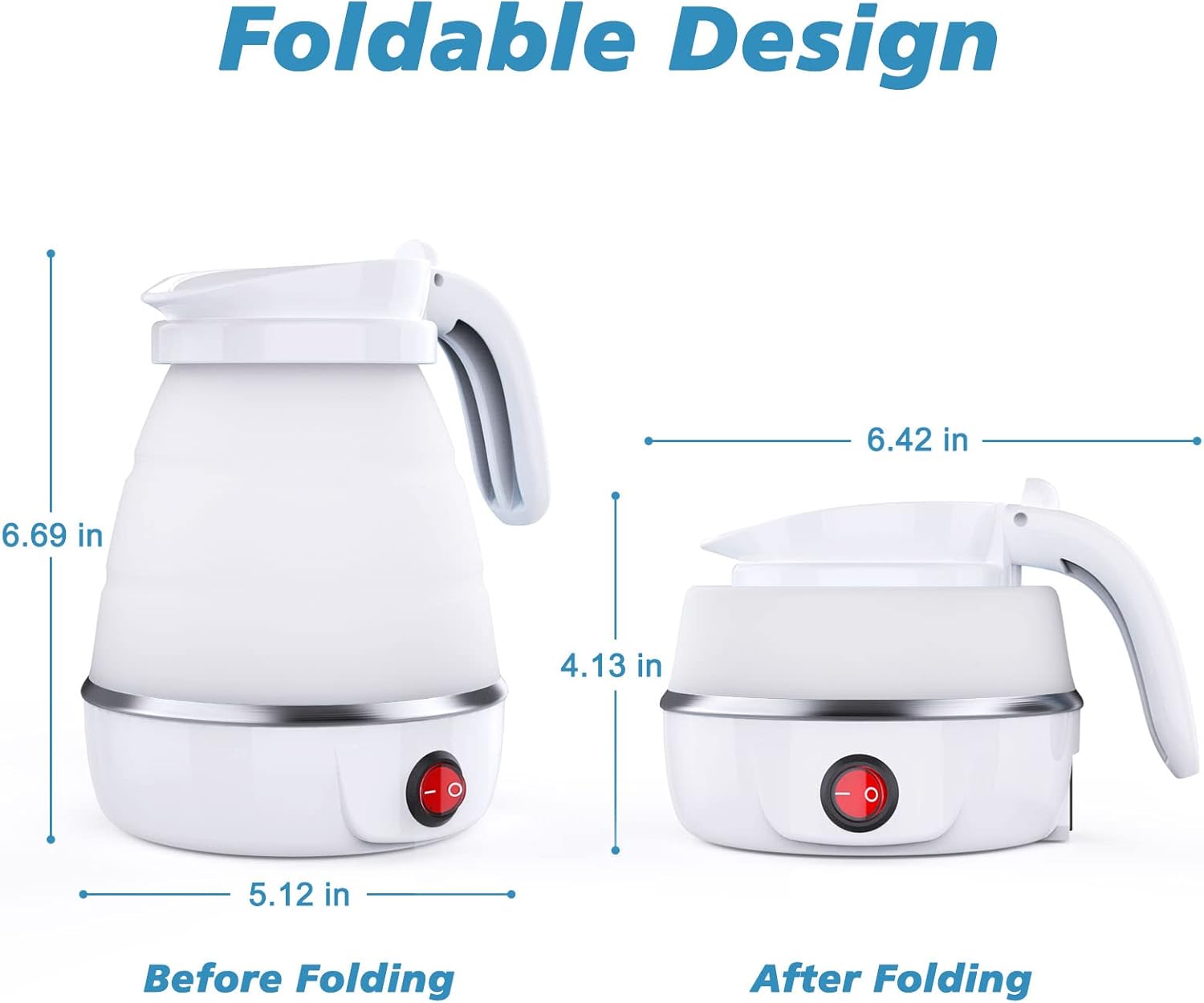
Collapsible silicone kettles and mini stainless steel designs both target the same need for portable electric convenience. A foldable travel electric kettle can shrink to half its height, leaving more room for food, cups, and a coffee pot in the cupboard. Tests on mini foldable electric kettles by consumer magazines such as Which? and Consumer Reports suggest that a 0.6 litre capacity usually provides enough hot water for two tea or coffee servings without hogging counter space.
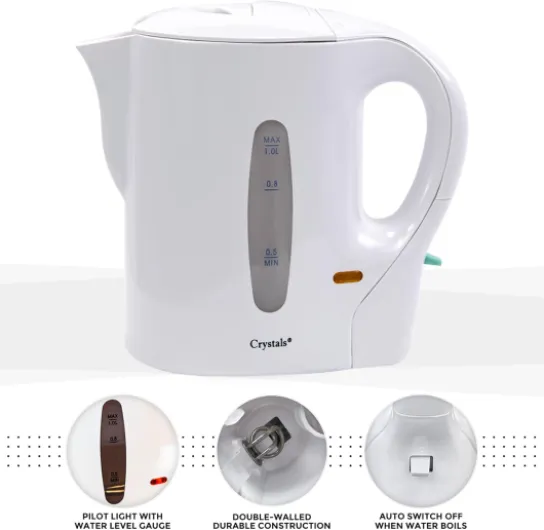
Weight also plays a role, because every kilogram counts when you load an RV for long travel. Lightweight plastic shells around a stainless interior can keep a travel kettle under 700 g, which helps when you pack it into a backpack for day trips. Some owners keep one electric kettle permanently in the vehicle and a second portable model in a bag for hotel or hostel stays.
Handle design and lid mechanisms deserve attention, especially when you pour boiling water in a cramped space. A wide, cool touch handle and a lid that opens slowly reduce the chance of steam burns while you prepare tea or coffee. Many compact kettles now include a button operated lid that stays shut during travel, then opens gently when you are ready to boil.
For readers comparing specific products, independent tests of a mini foldable electric kettle suitable for home, travel, and camping highlight how much usability depends on thoughtful engineering. Reviews of this type of collapsible kettle often praise the balance between fast boiling performance and a modest electric draw. When you read user feedback on platforms such as Amazon, focus on comments about lid strength, hinge durability, and how well the kettle survives repeated folding.
Storage strategy completes the picture, because even the smallest kettles can rattle or tip during sharp turns. Many RV owners keep their travel tea kettle inside a padded bag or a soft box with cups and a small coffee pot. This simple habit protects the stainless finish, prevents accidental power switch activation, and keeps the cord from snagging on other gear while you travel.
Power source, dual voltage, and electrical safety on the road
Electrical compatibility often separates the best electric kettles for RV and travel from ordinary kitchen models. A kettle that works perfectly at home may overload a small inverter or struggle with campsite voltage drops. Understanding your power source and its limits is essential before you plug in any electric kettle in an RV.
Many compact travel kettles are designed for dual voltage use, typically supporting both 110–120 V and 220–240 V grids. Dual voltage capability is invaluable for international travel, because it lets you use the same travel electric kettle in North America and Europe with only a plug adapter. In contrast, a single voltage tea kettle may require a heavy transformer, which adds weight and reduces efficiency when boiling water abroad.
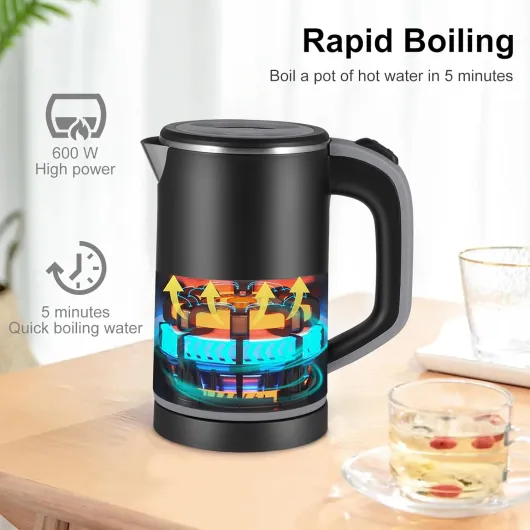
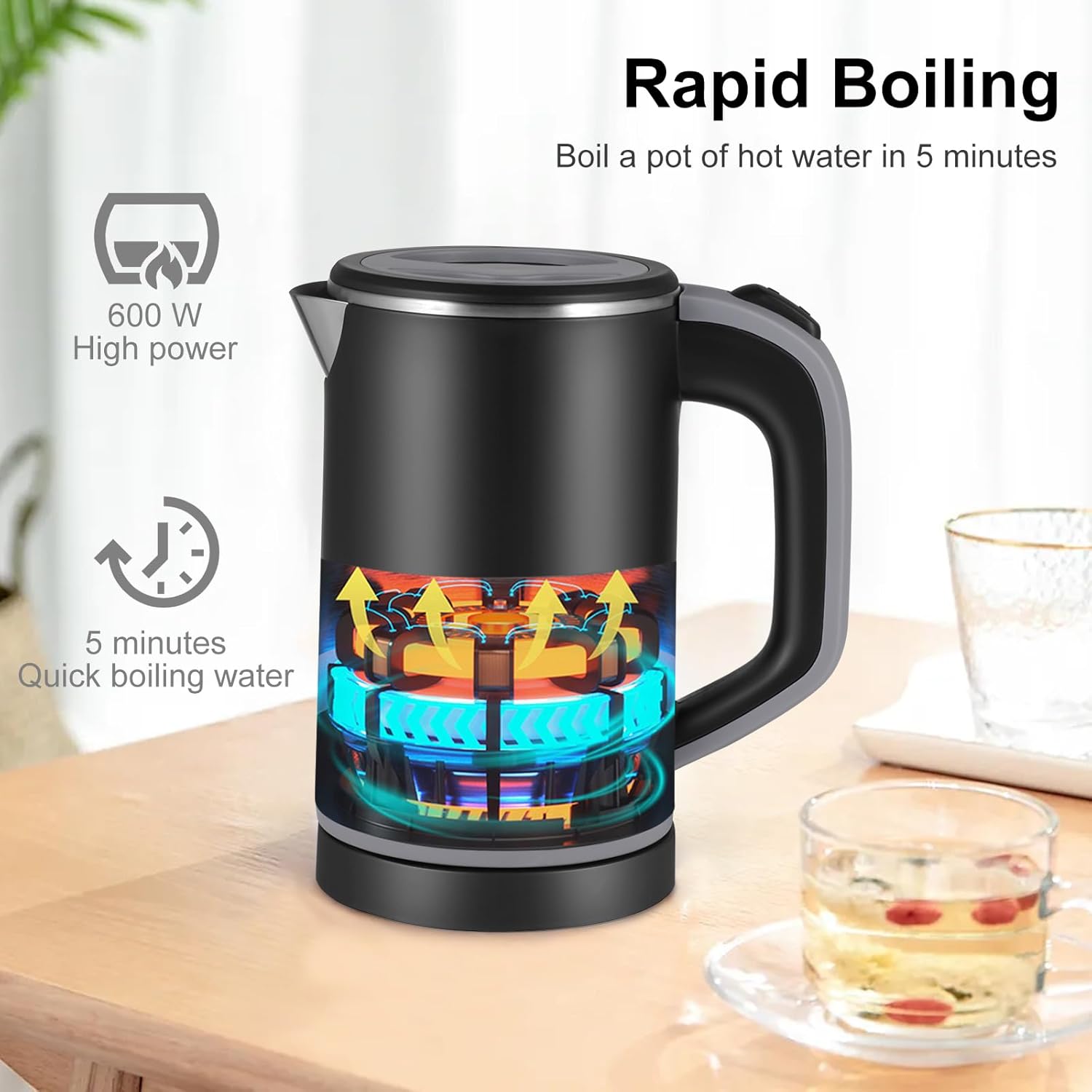
Inverters and generators introduce another layer of complexity for RV owners. A 600–800 W portable electric kettle usually pairs well with a modest inverter, while a 1 500 W model can cause overloads or shut offs. When several kettles, air conditioners, and chargers run together, a lower wattage electric tea kettle with efficient heating technology can still deliver hot water without tripping breakers.
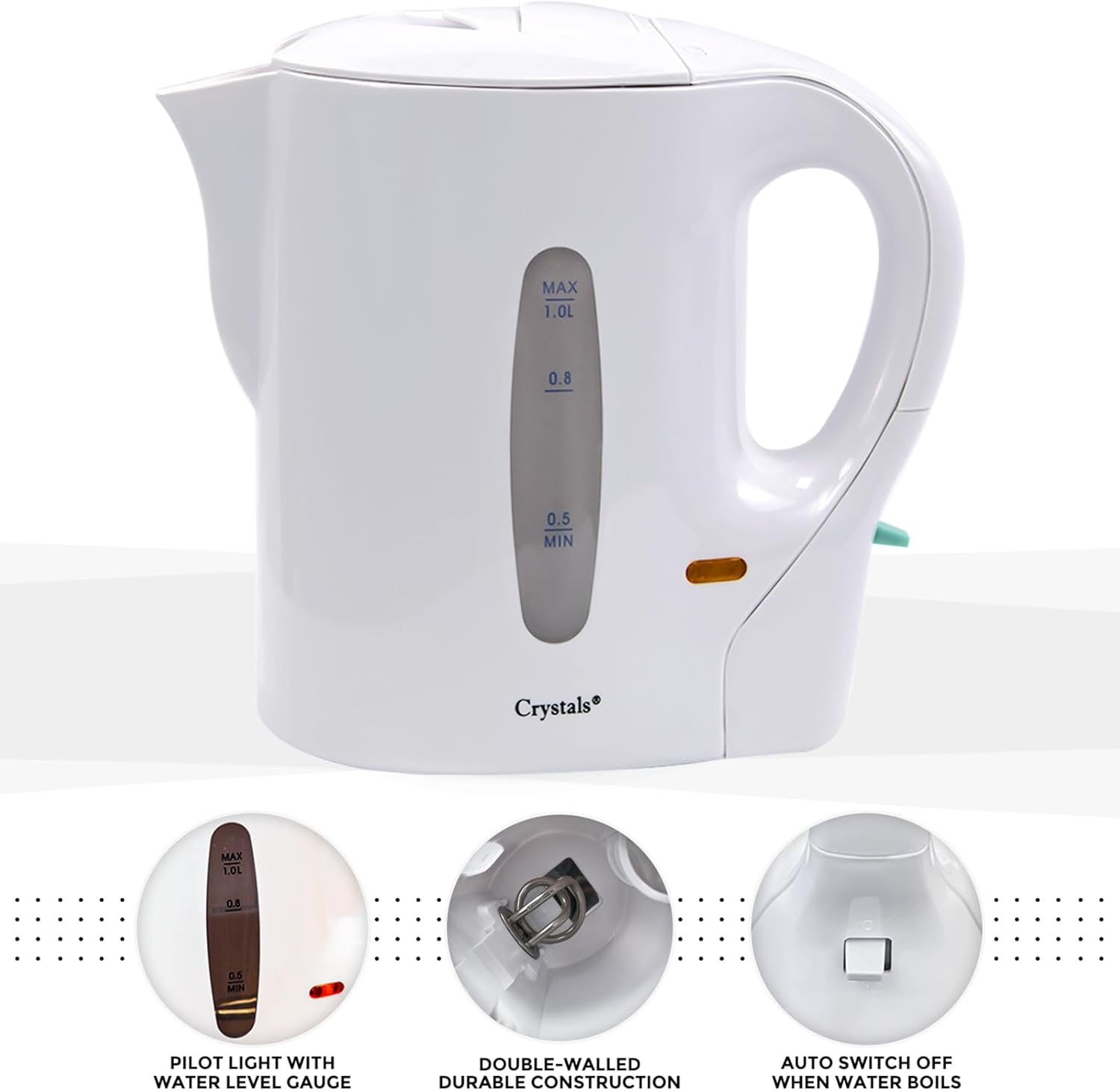
Safety features such as auto shut and boil dry protection become even more critical when power quality fluctuates. Auto shut systems cut power once the water reaches boiling temperature, preventing overheating of the stainless steel base. Boil dry sensors detect when no water remains in the pot and trigger dry protection, which protects both the kettle and surrounding surfaces.
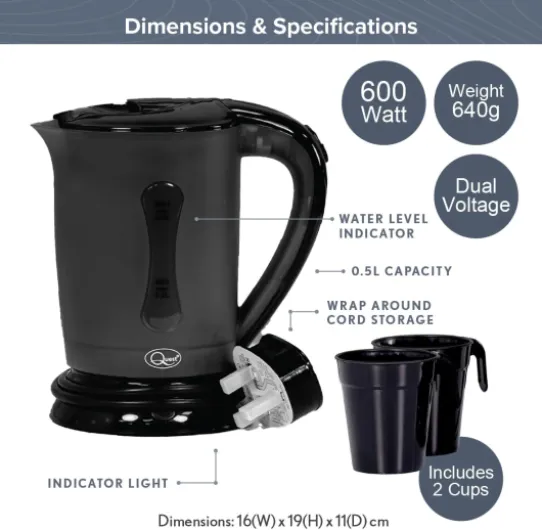
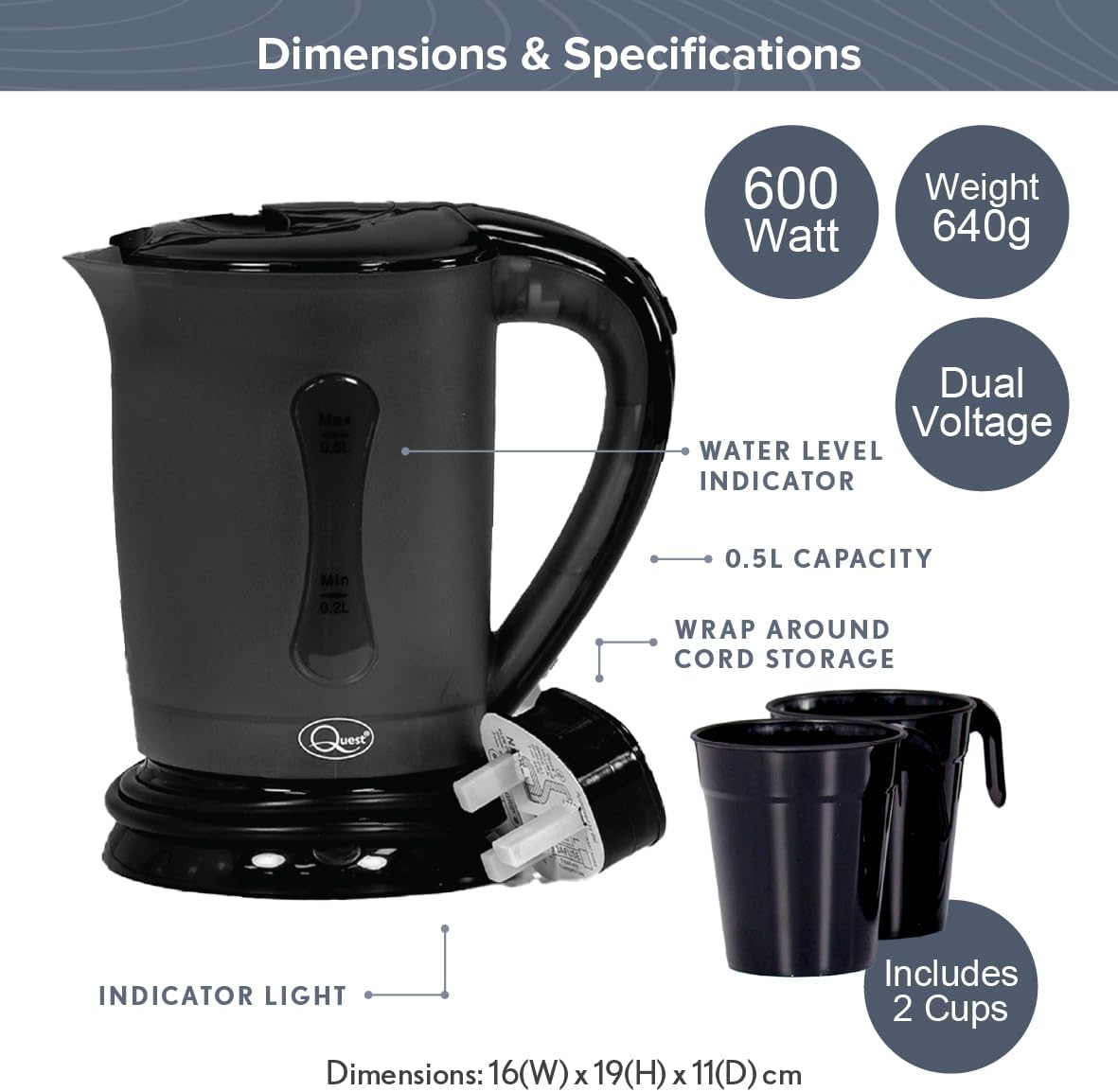
Travellers who move between hotels, RVs, and rented apartments often prefer a compact black travel kettle with dual voltage and an auto cut off switch. Independent tests of a 0.5 litre, 600 W compact travel kettle for worldwide use by organisations such as Stiftung Warentest and Consumer Reports show that such models fit easily into bags and suitcases while still providing enough hot water for two cups. When you read user reviews, pay attention to how often people mention nuisance shut offs, because overly sensitive boil dry systems can interrupt your morning coffee routine.
Extension cords and adapters deserve the same scrutiny as the kettle itself. Always match the cord rating to the kettle wattage, and avoid daisy chaining multiple adapters between the power source and the electric kettle. In damp environments, such as outdoor picnic tables, keep all connectors off the ground and use outlets with residual current protection to reduce shock risk while you travel.
Materials, taste, and temperature control for tea and coffee lovers
For many readers, the best electric kettles for RV and travel are judged less by speed and more by taste. The material that touches your water can subtly influence flavour, especially when you prepare delicate tea or speciality coffee. Food grade stainless steel interiors remain the benchmark for neutral taste and long term durability.
Plastic bodied kettles with stainless liners can perform well, but only if the water path avoids low quality plastics. When you evaluate a travel kettle on Amazon or in a store, check whether the lid underside and spout are also stainless or at least certified food grade materials. A fully stainless steel interior resists staining from coffee residues and makes it easier to remove limescale after many boiling cycles.
Glass kettles offer visual appeal, letting you watch boiling water swirl, yet they are less common in RVs. Glass adds weight, breaks more easily in transit, and often requires a bulkier frame that competes for space with your coffee pot and other gear. For most travellers, a compact stainless electric kettle strikes the best balance between taste, toughness, and portability.
Temperature control is another frontier, especially for serious tea and coffee enthusiasts. Some premium travel electric kettles allow you to select specific temperature settings for green tea, black tea, or pour over coffee, rather than always reaching a full boil. This protects delicate leaves from scalding and can improve extraction for manual coffee brewing in your RV.
Even without full digital controls, a kettle with a clear temperature indicator or a quick re boil function can help you fine tune hot water for different drinks. For example, you might boil water once, let it cool slightly, then briefly shut and restart the kettle to reach a lower target temperature. Such small habits can transform a basic electric tea kettle into a more versatile tool for travel tea and coffee rituals.
Travellers who enjoy pour over methods may also consider compact gooseneck kettles designed for precise pouring. Some budget gooseneck models under modest price thresholds manage to maintain excellent pour control without sacrificing fast boiling performance, as shown in independent tests of budget gooseneck kettles by coffee focused reviewers. Pairing a small gooseneck kettle with a standard travel kettle can give you both speed and finesse without overwhelming your limited RV storage.
Price, value, and how to read online reviews wisely
Price alone rarely identifies the best electric kettles for RV and travel, because value depends on how and where you use them. A budget kettle that fails after a few months of constant travel quickly becomes the most expensive option. On the other hand, a mid range stainless steel travel kettle with reliable auto shut and boil dry protection can serve for many seasons.
When you compare prices on Amazon or in physical stores, look beyond the headline number to the total package. Check whether the kettle includes a travel pouch, dual voltage support, and a long enough cord to reach awkward RV outlets. A slightly higher price for a portable electric kettle with proven dry protection and a robust hinge often pays off in reduced frustration and fewer replacements.
Online reviews can be extremely helpful, but they require careful reading. Focus on comments from users who clearly mention RVs, vans, or frequent travel, because their expectations match your own situation more closely. Repeated complaints about lid leaks, weak auto shut mechanisms, or slow boiling water times should carry more weight than isolated praise or criticism.
Look also at how a kettle performs over time, not just on the first day. Reviews that mention several months of daily tea and coffee use, or many long trips, provide better evidence of durability than early impressions. Pay attention to whether the stainless finish stains, whether the handle stays cool, and whether the power source compatibility holds up across different campsites.
Warranty terms and customer service responses are another indicator of real world value. A manufacturer that honours boil dry related claims and replaces faulty kettles quickly shows more confidence in its auto shut and dry protection systems. For frequent travellers, that kind of support can matter more than a small difference in initial price.
Finally, remember that no single kettle suits every traveller or every RV layout. Solo campers may prioritise ultra light travel tea kettles, while families might need larger pots that can handle multiple rounds of coffee, tea, and instant meals. The best approach is to match your kettle choice to your actual habits, then use reviews and specifications to confirm that the model can safely deliver fast boiling performance in your specific travel conditions.
Practical safety habits for using electric kettles in RVs
Even the best electric kettles for RV and travel rely on user habits to stay safe. A well designed electric kettle can still cause problems if it tips, runs empty, or overheats near flammable materials. Simple routines around water filling, placement, and storage dramatically reduce those risks.
Always place the kettle on a flat, non slip surface before you boil water. In a moving RV, a rubber mat or recessed counter section helps keep the pot stable during sudden stops or turns. Avoid placing kettles near curtains, paper towels, or low hanging cabinets that could be damaged by steam or heat.
Fill the kettle only between the minimum and maximum marks, because both overfilling and underfilling can trigger safety issues. Too much water may spill through the spout during boiling, while too little can activate boil dry protection and stress the heating element. A transparent window or internal gauge makes it easier to judge the right level for tea, coffee, or instant meals.
Never leave an electric tea kettle unattended while the vehicle is moving. Even with auto shut and dry protection, a sudden bump could knock the kettle over or splash boiling water onto nearby surfaces. Many experienced travellers make a rule to shut off all kettles and cooking appliances before driving, then restart them only when parked and level.
Cord management is another overlooked safety factor in tight RV spaces. Keep the power cord away from the edge of the counter, where a passing elbow could pull the kettle down, and avoid wrapping the cord tightly around the base while it is still warm. When you store the kettle after travel tea or coffee sessions, let it cool completely and empty any remaining hot water to prevent odours and mineral buildup.
Regular cleaning supports both safety and taste, especially in regions with hard water. Descale the stainless interior with a mild vinegar solution every few weeks, then rinse thoroughly before the next boiling cycle. This simple maintenance routine helps the thermostat read temperature accurately, supports consistent auto shut performance, and keeps your portable electric kettle working efficiently throughout many journeys.
Key figures about RV kettle use and energy consumption
- A typical 1 000 W travel electric kettle boiling 0.5 litres of water for three minutes uses about 0.05 kWh of energy, which is a small fraction of the daily capacity of a 100 Ah, 12 V RV battery system when powered through an efficient inverter (estimate based on standard electrical calculations published by the U.S. Department of Energy and similar agencies).
- Surveys of RV owners by major camping associations, including Kampgrounds of America (KOA) and the Caravan and Motorhome Club, indicate that more than half of respondents now carry at least one dedicated travel kettle, reflecting the growing preference for electric hot water preparation over gas stoves in confined interiors.
- Independent product testing labs such as Consumer Reports and Stiftung Warentest note that kettles with effective auto shut and boil dry protection show noticeably fewer heating element failures over time than models lacking these features, extending the practical lifespan of many portable electric appliances.
- Market analyses of small kitchen appliances from research firms like GfK and NPD Group show that compact and travel specific kettles represent a steadily increasing share of electric kettle sales, driven by van life, digital nomadism, and the expansion of RV tourism across Europe and North America.