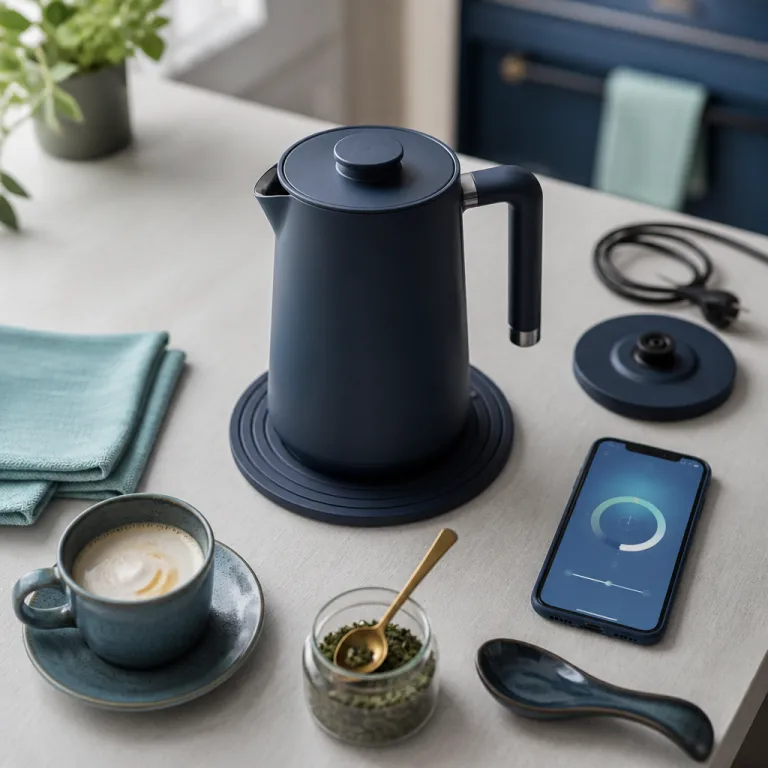
Smart WiFi kettles versus standard models: who actually needs the app?
For a specialty coffee or tea drinker, the real question is not whether a smart WiFi kettle is flashy, but whether a smart WiFi kettle is worth it for your daily routine. When you already care about kettle temperature, pour control and clean kettle water, the promise of app control sounds tempting yet often masks the same heating element found in a mid range electric kettle. A smart kettle with WiFi only earns its higher price when its smart features genuinely save you time several times a day rather than adding friction through buggy software.
Look at what a standard variable temperature kettle already does well before paying extra for a govee smart or similar connected model. A good gooseneck kettle such as the Fellow Stagg EKG or the Brewista Artisan lets you set an exact temperature, hold it with a reliable keep warm function and pour coffee with a stable, narrow stream that makes manual brewing feel precise. For most people who brew coffee tea drinks two or three times day, that combination of accurate kettle temperature and ergonomic gooseneck control matters more than whether the kettle will talk to an app.
Smart kettles add three main promises on top of this baseline, and each deserves scrutiny. First, they claim you can schedule the kettle to boil water at a set time, so hot water is ready when you wake or return from work, which sounds like a great upgrade until you realise you still need to fill the kettle water and leave it on the base in advance. Second, they offer remote control through an app or voice assistant, yet in practice many users find the govee app or equivalent works well only when the WiFi is stable and the firmware is up to date, which is not guaranteed over the full lifetime of the purchase.
The third promise is data and automation, such as tracking kettle times per day or integrating the smart kettle into routines with lights and speakers. For a minority of smart home enthusiasts this can be genuinely smart, letting a smart gooseneck kettle preheat to an exact temperature while your grinder starts and your scale powers on. For everyone else, the extra steps of opening an app, waiting for it to connect and checking whether the kettle boil command actually triggered often take more time than simply pressing the physical switch on the base.
Temperature control versus standard kettles: where the money really matters
When you compare temperature control kettles with basic models, the core issue is not whether a smart WiFi kettle is worth it, but whether precise temperature control itself is worth paying for in your kitchen. Green tea, light roasted filter coffee and delicate oolong all taste flat or bitter when brewed with rolling boil kettle water, so a kettle that can hit an exact temperature between 80 and 96 degrees Celsius can transform your cup. A standard on off electric kettle that only knows full boil will always force you to guess, swirl and wait, which wastes time and often wastes good beans or leaves.
For this reason, I would always tell a serious coffee tea drinker to prioritise a reliable variable temperature kettle over any smart features. Models like the Cuisinart CPK 17 or the Sage Smart Kettle offer multiple presets, a solid keep warm mode and a 360 degree base at a price that undercuts many WiFi enabled options, while still letting you dial in kettle temperature for different brews. If you want to compare a wider range of temperature preset kettles, a dedicated guide to top electric kettles with temperature presets is more useful than any marketing page for a single smart kettle.
Smart gooseneck kettles such as the Fellow Stagg EKG+ or the Govee smart gooseneck models layer app control on top of this temperature precision, but the heating performance is usually identical to their non WiFi siblings. The Fellow Stagg EKG+ uses the same element and gooseneck kettle body as the standard EKG, so the pour coffee experience and heat up time are effectively the same, which means you are paying extra mainly for Bluetooth or WiFi connectivity. When you ask whether a smart WiFi kettle is worth it, you should compare the price difference between the connected and non connected versions and ask if scheduling or remote start will genuinely change your times day pattern of brewing.
There is also a safety and quality angle that rarely appears in glossy app screenshots. Many cheaper smart kettles use thinner stainless steel, looser lids and less robust bases than well known non connected brands, which can lead to more limescale build up, noisier boils and less consistent kettle boil shutoff times. Over several years, that can mean more frequent replacements and higher running costs, as detailed in analyses of the real cost of a cheap kettle over five years, which matters more to your wallet than whether the govee app can send a notification when the water is hot.
Server dependency, privacy and the risk of a dumb expensive kettle
The most overlooked part of the smart WiFi kettle worth it debate is server dependency, because every app controlled kettle relies on a cloud service that you do not own. When that service goes down, changes policy or shuts entirely, your smart kettle will often lose its remote control, scheduling and sometimes even its ability to update firmware, leaving you with an expensive electric kettle that behaves like a basic one. This has already happened with several small appliance brands whose apps vanished from app stores, stranding buyers who had paid a premium for smart features that no longer work well or at all.
Fellow’s Stagg EKG+ and the Smarter iKettle illustrate two different approaches to this problem. The Stagg EKG+ uses Bluetooth and, in some versions, local WiFi integration, which reduces but does not eliminate reliance on external servers, while the Smarter iKettle leans heavily on its app and cloud connectivity for features like remote start and usage tracking. If you buy a Smarter iKettle mainly for its app, you are effectively betting that the company will maintain its servers and privacy policy for the full time you plan to own the kettle, which might be five to ten years of daily coffee tea brewing.
Privacy is the second half of this equation, and it is not paranoia to ask where your kettle data goes. A smart kettle that logs kettle times, temperature settings and times day you boil water can, in theory, build a profile of your routines, which some brands may use for analytics or marketing, as hinted in their privacy statements. You might not care that a server knows you like to pour coffee at 07:15, but you should at least make that choice consciously rather than by default when you tap “accept” in the app.
There is also the mundane frustration of software that ages badly while the hardware keeps working. Over the lifetime of a kettle, you will probably change phones, WiFi routers and operating systems several times, and each change is a chance for the govee app or any other control app to break, lag or lose compatibility. When that happens, the physical switch on the base becomes your only reliable interface, and the smart WiFi kettle worth it calculation suddenly looks very different from the day of purchase.
Timer plugs and physical switches: the low tech alternative
If your main goal is to have hot water ready at a certain time, a simple timer plug or smart plug paired with a standard kettle can achieve most of what a smart kettle promises. The trick is to use an electric kettle with a physical on switch that stays in the on position when power is cut, so when the plug energises at a set time the kettle will start to heat automatically. This setup cannot adjust kettle temperature or keep warm at an exact level, but for people who always boil to 100 degrees it covers the core need at a fraction of the price.
A ten pound smart plug plus a reliable variable temperature kettle without WiFi often costs less than a fully app controlled model, while giving you both precise brewing and basic scheduling. You can still set the kettle to a lower kettle temperature manually before bed, then let the plug power it on in the morning, which keeps the system simple and avoids any dependency on proprietary servers or a specific govee smart ecosystem. For many households, this hybrid approach works well because it separates the job of heating water from the job of timing, and each device does its part without needing firmware updates.
This is where the thought leadership angle matters. Instead of asking whether a smart WiFi kettle is worth it in the abstract, ask which part of the workflow truly benefits from being smart and which part should remain a robust mechanical switch that will still click reliably after thousands of kettle times. In most kitchens, the humble base, element and lid deserve more attention than the app icon on your phone.
Who genuinely benefits from smart kettles with WiFi and app control?
Not every buyer should avoid smart kettles, because there are clear cases where the extra control is more than a gimmick. People with mobility issues who find it hard to stand at the counter, shift workers who brew at odd times day and dedicated smart home enthusiasts can all gain real value from a kettle that responds to voice commands or app routines. For them, the smart WiFi kettle worth it question leans more toward yes, provided the hardware is solid and the app is not the only way to start a boil kettle cycle.
Specialty coffee drinkers who already own a gooseneck kettle may appreciate a smart gooseneck model if it lets them preheat to an exact temperature while they weigh beans or rinse filters. A Govee smart gooseneck kettle, for example, can be set via the govee app to reach 94 degrees and then keep warm for a set time, so the kettle will hold the right heat while you prepare a V60 or AeroPress. In this scenario, the app is not a toy but a way to align kettle temperature, grind size and brew time, which can improve consistency for pour coffee sessions.
Tea specialists who juggle green, white and oolong infusions may also find value in programmable profiles. A smart kettle that lets you store multiple temperature presets and keep warm durations for different teas can reduce mistakes, especially when you brew several infusions back to back and need to adjust kettle water temperature quickly. For guidance on matching kettle types to different infusions, a detailed resource on tea kettles for precise brewing is more actionable than any generic marketing claim about smart features.
Even in these cases, though, the fundamentals still matter more than connectivity. A smart kettle must pour cleanly, resist limescale, shut off reliably and feel stable on its base, or the app will not save it from daily irritation. In the end, what makes a smart WiFi kettle worth it is not the wattage, the WiFi chip or the number of icons in the app, but whether it still feels like a trusted tool on the tenth kettle of limescale rather than a fragile gadget that you baby every day.
Key figures on smart and temperature control kettles
- Market research from several appliance analysts shows that variable temperature kettles now account for roughly 25 percent of electric kettle sales in major European markets, up from around 10 percent a decade earlier, reflecting growing interest in precise brewing for coffee and tea.
- Surveys of specialty coffee drinkers consistently report that brewing between 92 and 96 degrees Celsius improves flavour clarity compared with boiling water, with many baristas targeting 94 degrees as an exact temperature sweet spot for light roasted beans.
- Energy efficiency studies indicate that repeatedly boiling a full 1.7 litre kettle when you only need 250 to 500 millilitres can waste up to 50 percent of the electricity used per cup, which makes accurate filling and right sized kettles more impactful than marginal differences in element wattage.
- Consumer testing organisations have found that limescale build up can increase boil times by 30 to 50 seconds over the first two years of use in hard water areas, which means regular descaling has a measurable effect on both energy use and waiting time.
- Reliability surveys of small kitchen appliances often show that basic kettles with mechanical switches outlast more complex models by one to three years on average, largely because there are fewer electronic components and no app or WiFi modules to fail.