Why kettle wattage speed is not the whole story
A fast electric kettle looks simple from the outside. Inside, actual boiling speed depends on how efficiently the heating element converts electricity into heat and how effectively that heat transfers into the water. A 3000 watts label on an electric kettle promises high power, yet real time to boil often disappoints when design details are poor.
Think of wattage as the size of the engine and element geometry as the grip of the tyres on wet tarmac. The power rating in watts tells you how quickly the appliance can theoretically add energy to the water, but the shape, placement and shielding of the element decide how much of that energy actually reaches the liquid instead of being lost to the air or the plastic shell. That is why two 3 kW electric kettles can differ by 40 seconds or more when they boil 1 litre for tea or coffee.
In the UK, most countertop kettles run at around 3000 watts on 230–240 volts. Across the Atlantic, many US electric kettles are limited to about 1500 watts on 120 volts, which roughly doubles the theoretical time to boil and helps explain why many Americans still use a microwave for hot water. Yet even within each market, boiling performance varies dramatically because some kettles waste energy through poor insulation, narrow element contact with water and badly tuned auto shut mechanisms that overshoot before boiling.
For specialty coffee and tea drinkers, the gap between theory and practice matters. A Fellow Stagg EKG gooseneck kettle with 1200 watts can feel surprisingly quick for 600 millilitres because its compact body, tight lid and efficient stainless steel interior minimise heat loss and reduce energy consumption. Meanwhile, a cheap 2200 watts jug with a wide lid, thin plastic walls and exposed seams can burn more kWh per boil, raise electricity costs and still keep you waiting longer for boiling water.
When you compare kettles, focus on the measured time to boil 500 millilitres and 1 litre, not just the headline power figure. Manufacturers rarely publish these timings under consistent test conditions, so independent tests and long term user reports become crucial for judging real boiling speed. Treat wattage as a starting filter, then interrogate how the kettle handles energy, water volume and element design before you trust the spec sheet. A simple methods note is useful: assume water starting at about 20 °C, lid closed, typical household voltage and a realistic element efficiency of roughly 80–90 percent when you compare quoted times.
Element geometry: flat discs, coils and the path of heat
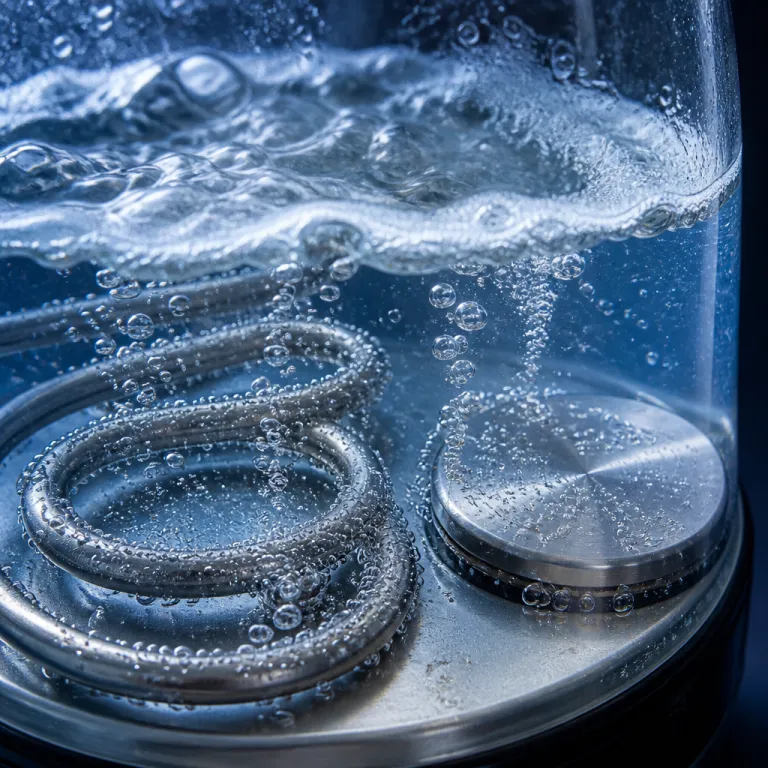
Inside every electric kettle, the heating element is where electricity becomes heat. That element can be a visible coil sitting in the water or a concealed flat disc bonded under the stainless steel floor, and the geometry of that part dictates how quickly the kettle can boil and how long it stays efficient. Understanding this engineering is more useful for buyers than memorising any marketing slogan about fast boiling.
In theory, a 3000 watts flat disc element can heat 1 litre of water in about one minute if you simply multiply power by time and ignore losses. Reality is messier, because only the thin layer of liquid touching the disc heats first, then convection currents move that hot water upward while cooler water sinks to the base to be heated again. When the disc is wide and well matched to the kettle body, this circulation is vigorous and boiling forms quickly, but a small disc in a tall jug can leave cold pockets that slow heating and increase power consumption.
Coiled elements, still common in older kettles and some portable models, offer more surface area in direct contact with water. That extra area can, on paper, improve thermal efficiency, yet the tight bends of the coil create hot spots where limescale bakes on, especially in hard water regions. Over time, that scale layer acts as insulation, forcing the element to run longer at high power to boil typical loads, which raises kWh use and electricity costs while making the kettle slower.
Modern concealed elements try to balance speed, durability and cleaning. Many mid range electric kettles from brands like Breville and Cuisinart use a broad stainless steel disc with a concealed element underneath, which keeps the surface smooth and easy to descale. If you want a deeper technical explanation of how an electric kettle really works to heat water efficiently, a dedicated engineering style guide on electric kettle heat transfer can be more enlightening than any glossy brochure, especially when it walks through the basic energy equation Q = mcΔT and shows how much power is lost to the surroundings.
Manufacturers are also reshaping coils and bases to squeeze more speed from the same watts. Publicly available test reports from organisations such as Consumer Reports and other independent labs show that a growing share of new kettles use optimised coil geometry and improved base insulation to hit demanding thermal efficiency targets, which means more of the electric power goes into boiling water and less into warming your countertop. For buyers, the practical takeaway is simple yet powerful: a well designed 2200 watts kettle with a wide concealed disc can beat a poorly designed 3000 watts jug with a cramped base and patchy contact between element and water.
Real world boiling speed: volume, overfilling and regional power limits
Most people blame a slow kettle on low wattage. In practice, boiling performance is often sabotaged by user habits, especially chronic overfilling and heating far more water than the next round of tea or coffee needs. Every extra 100 millilitres that you heat adds both time and energy consumption, even if you never pour it into a mug.
Consider a standard 1.7 litre jug with a 3000 watts element. If you routinely fill it to the maximum line but only use 500 millilitres for a single pour over, you are heating more than three times the necessary volume, which can almost triple the wait and waste roughly 70 percent of the energy for that cycle. Over a year of daily use, that habit quietly inflates electricity costs and kWh usage, turning a theoretically efficient electric kettle into an expensive way to boil water.
Regional power limits shape expectations too. In the UK and much of Europe, a 3000 watts kettle can bring 250 millilitres of water to boiling in under a minute when starting from around 20 °C with the lid closed, which makes quick tea breaks feel effortless and keeps the kitchen routine fast. In North America, where many electric kettles are capped at around 1500 watts, the same volume takes roughly twice as long under similar conditions, so users often reach for a microwave or a stovetop kettle on a gas hob instead of relying on electric kettles for every cup.
Portable power setups add another layer of compromise. When you run a kettle from a battery based power station or from portable power fed by a solar panel, the high surge draw of a 2000–3000 watts element can overwhelm the inverter or drain the battery in a few boils. In that context, a lower wattage travel kettle that heats 400 millilitres slowly but steadily can be more practical, especially if your solar panels recharge the power station during the day while you sip coffee or tea brewed from modest amounts of hot water.
For buyers chasing rapid performance, the smartest move is to match capacity, wattage and routine. If you mostly brew single cups of tea or small pour over coffee, a compact 0.8–1.0 litre gooseneck with 1200–1500 watts and precise temperature control will often beat a bulky 1.7 litre jug in real time to first sip. Lists of top fast boil electric kettles can be useful starting points, but you should always cross check the quoted times against your typical fill level, the starting temperature and the actual power available from your wall socket or off grid system, using the same basic assumptions about initial water temperature and lid position.
Materials, controls and long term efficiency for specialty brewers
Speed is only half the story for serious tea and coffee drinkers. The best boiling time for pour over or oolong means nothing if the spout dribbles, the temperature control drifts or the interior materials taint the water. Over years of use, the way a kettle handles heat, scale and repeated boiling cycles matters more than the first week of fast performance.
Stainless steel remains the most reliable interior material for electric kettles that see daily use. It tolerates repeated thermal cycling, resists cracking better than glass and, when well finished, keeps flavours neutral for delicate green tea and light roast coffee, although it still needs regular descaling to prevent flakes of limescale from clouding boiling water. Ceramic electric kettles can look beautiful on the worktop and hold heat well, yet they are often heavier, slower to respond to temperature changes and harder to descale without scratching the glaze, so buyers should weigh those compromises carefully when comparing kettle types and materials.
For specialty brewing, variable temperature control is not a luxury; it is the difference between flat matcha and vibrant matcha, between bitter coffee and a clean, sweet cup. Models like the Fellow Stagg EKG, Breville IQ and Cuisinart CPK 17 pair 1200–2400 watts of power with digital thermostats, keep warm or hold features and precise spouts that let you pour at a controlled rate over coffee grounds. These kettles often include auto shut safety systems that cut power once the set temperature is reached, which protects the element, limits unnecessary power consumption and keeps kWh usage predictable over many small boils.
Off grid enthusiasts face a different equation. When your electricity comes from a solar panel array feeding a home battery or a compact power station, every watt matters and every unnecessary boiling session eats into stored energy that might be needed for lights or refrigeration. In that scenario, a lower wattage portable kettle, or even a stovetop model heated on an induction plate tuned to match your solar panels output, can give you reliable hot water without overloading the system.
Whatever your setup, maintenance is the quiet lever that preserves boiling speed. Regular descaling keeps the element surface in close contact with water, prevents the auto shut sensor from being insulated by scale and stops energy consumption from creeping upward as the kettle ages. In the end, the fastest kettle is not just the one with the highest watts on the box, but the one whose element geometry, materials and owner habits keep it performing like new long after the tenth kettle of limescale would have slowed a lesser design.
Key figures on kettle wattage, speed and energy use
- A typical 3000 watts electric kettle boiling 1 litre of water from 20 °C to 100 °C in about 2.5 minutes uses roughly 0.12 kWh, calculated using Q = mcΔT (4.18 kJ per kg per °C × 1 kg × 80 °C ≈ 334 kJ) and then dividing by 3600 to convert to kWh, with an assumed element efficiency near 85 percent, which at an electricity price of £0.30 per kWh translates to about 3.6 pence per full boil.
- Boiling 1.7 litres when you only need 500 millilitres can waste up to 70 percent of the energy for that cycle, assuming similar starting temperature and lid position, meaning that three overfilled boils per day can add more than 40 kWh per year to household energy consumption.
- In many European markets, countertop kettles commonly run at 2200–3000 watts, while in North America the 120 volts supply limits most electric kettles to around 1500 watts, which roughly doubles the time needed to boil the same volume of water under comparable test conditions.
- Independent lab tests on variable temperature kettles, such as those published by Consumer Reports and similar reviewers, show that models with well insulated stainless steel bodies and tight fitting lids can reduce standby and keep warm losses by 20–30 percent compared with thin walled plastic kettles of similar capacity and wattage, based on controlled measurements of heat loss over time.
- Running a 1500 watts travel kettle from a 500 Wh portable power station allows for roughly three full 1 litre boils before the battery is depleted, assuming no other loads, a starting temperature near 20 °C, lid closed and ideal inverter efficiency, which highlights the importance of matching kettle wattage to off grid energy storage.
References
- UK Energy Saving Trust – guidance on efficient kettle use, recommended boiling volumes and typical household savings from avoiding overfilling, based on tests that assume cold tap water near 20 °C and standard domestic voltages.
- U.S. Department of Energy – appliance efficiency standards, test procedures and typical household electricity consumption data for small kitchen appliances, including methods for measuring energy use under defined load and temperature conditions.
- Consumer Reports and similar independent reviewers – comparative testing of electric kettles, including time to boil, energy use and temperature accuracy under defined laboratory conditions that specify starting water temperature, test volumes and whether lids remain closed.