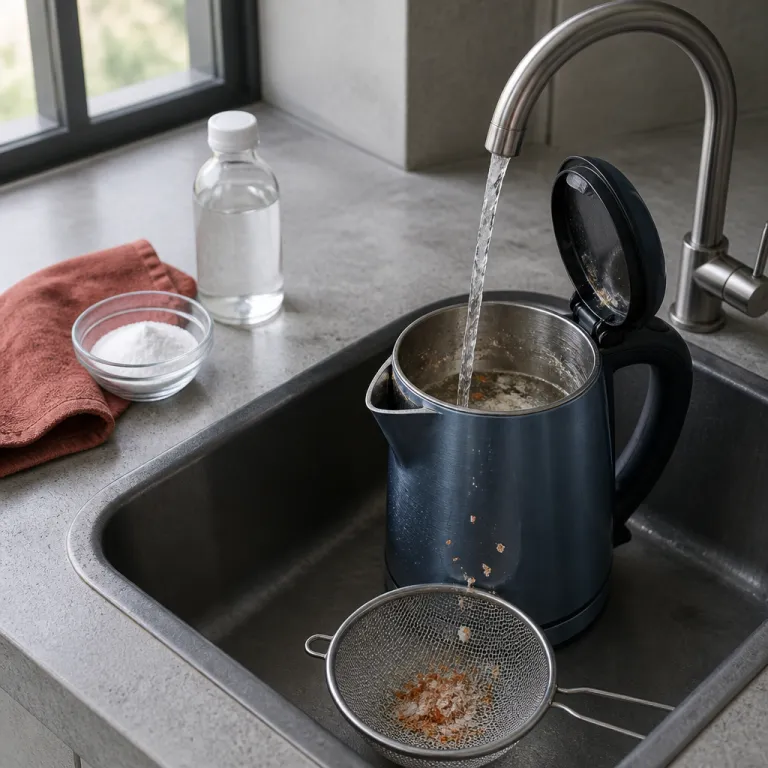
Why kettle water tastes metallic in the first weeks
When a new electric kettle makes your water taste metallic, it feels like a defect. In reality, that harsh taste water problem usually starts with manufacturing residues on the concealed element and inner walls that need several strong heat cycles to burn off properly. Many owners boil water once, throw away the boiled water, then assume the kettle is faulty when the next cups still taste metal and slightly bitter.
New stainless steel kettles such as the Fellow Stagg EKG or Breville IQ often ship with microscopic oils and polishing compounds on the metal surface. These residues react with hot water at a high temperature level, so the first litres of boiled water can carry a faint metallic or chemical edge that fades only after repeated use. If you only water boil once or twice, those residues remain in contact with every fresh fill, so the kettle metallic taste lingers and makes tea or coffee seem worse than it is.
The practical fix is boring but effective. Fill the kettle to its maximum level with fresh tap water, add a tablespoon of neutral bicarbonate of soda, then boil water fully and leave it to sit until the boiled water cools before discarding. Repeat three to five complete water boil and discard cycles, then switch to plain fresh water and boil again, because this sequence strips residues from both the metal element and any white plastic parts that touch the liquid.
During this burn off phase, do not drink the boiled water, even if the taste improves slightly. The water itself is unlikely to be harmful for most healthy adults, but there is no health benefit in ingesting trace manufacturing oils when you can simply pour them away. If the kettle metallic taste remains strong after a week of regular use and cleaning, the issue usually lies deeper in the materials rather than in leftover factory films.
Materials, metals and why some kettles always taste wrong
Once the break in period passes, persistent metallic taste usually points to the kettle’s construction. Budget electric models often use lower grade stainless steel or mixed metals, and that can make water taste metallic for their entire lifespan, no matter how often you boil water or clean them. The difference between a neutral tasting kettle and one where every sip tastes metal often comes down to the exact alloy and the quality of the inner finish.
Higher grade 304 stainless steel, sometimes labelled 18/8, resists corrosion and keeps boiled water neutral, while cheaper 201 grade steel contains more manganese and less nickel, which can leach slightly into hot water over time. If the inner surface is roughly finished, scratched or patched with chrome plating, those imperfections trap minerals from hard water and create tiny corrosion spots that change both taste and colour, sometimes leaving faint white or grey streaks where metal water has dried. In extreme cases, flaking chrome or low quality solder joints on the heating element can shed particles into the water, which is unpleasant even if not immediately harmful for health.
Glass and ceramic kettles avoid direct metal contact with the water, so they often give better tasting results for sensitive palates. A glass jug with a stainless steel base still exposes water to metal, but the contact area is smaller and easier to inspect for scale or rust, which helps you judge when to descale before the water tastes metallic again. If you care more about neutral taste than about designer looks, a plain borosilicate glass model can outperform many so called designer electric kettles that hide cheaper metals behind glossy finishes.
Plastic components add another layer of complexity. Lids, spouts and water level windows made from low grade plastics can give boiled water a flat or synthetic edge, especially when you leave water sitting hot in the kettle overnight. If you notice that only the first cup in the morning tastes metallic or plasticky, while later boils taste better, that pattern often points to long contact between hot metal, plastic and minerals rather than a single dramatic failure in the kettle itself.
Hard water, minerals and the limescale–metallic taste loop
Even a premium kettle can make water taste metallic if you live with hard water. Calcium and magnesium minerals in tap water form limescale when repeatedly boiled, and that chalky white crust changes how hot water flows across the metal element and inner base. Over time, the scale traps tiny metal ions from the element surface, creating a loop where each water boil slightly worsens the taste.
Look inside a well used Cuisinart CPK 17 or any similar electric model and you will often see a ring of white scale around the concealed element and spout. That crust not only slows the boil and wastes energy, it also roughens the surface so that fresh water has more contact with both minerals and exposed metal, which can make boiled water taste metallic even when the steel grade is good. If you start to notice that tea tastes flat or coffee tastes metal only after a few weeks in a new home, the local water hardness is usually the culprit rather than the kettle brand.
The fix is regular descaling with a mild acid. Mix one part clear white vinegar or citric acid with three parts fresh water, fill to the maximum level, then boil water and leave the hot solution in contact with the scale for at least twenty minutes before discarding and rinsing thoroughly. For very hard water, repeat this process monthly, because letting scale build for a year and then attacking it once is far more harmful to both taste and the heating element than gentle, frequent cleaning supported by a temperature controlled kettle that avoids unnecessary rolling boils.
Variable temperature models such as the Fellow Stagg EKG or Breville IQ let you heat only to the level you need for green tea or coffee, which reduces both scale and metallic off notes over time. A good guide on how a temperature controlled kettle transforms everyday tea and coffee rituals can help you pair better brewing habits with regular descaling. When you combine softer boiling profiles with monthly citric acid treatments, the kettle metallic taste usually fades and stays away, unless the underlying metal quality is fundamentally poor.
Usage habits that quietly ruin taste: from kettle overnight to reboiling
How you use the kettle day to day matters as much as its materials. Leaving metal water sitting in the jug for hours, especially when you leave the kettle overnight still half full, gives minerals and metals more time to interact and change the taste. Many households top up old boiled water with fresh water, then boil again, which slowly concentrates minerals and makes every later cup taste metallic or stale.
Try a simple experiment to isolate your own role in the kettle metallic taste problem. One day, always empty the kettle fully after each use, let the interior dry, then refill only with fresh cold water before each boil, and pay attention to how the boiled water tastes compared with a day when you constantly reboil leftovers. If the taste water improves dramatically on the first day, your routine rather than the appliance is driving the off flavours, because long contact between hot metal, plastic and concentrated minerals is what makes the water tastes metal rather than clean.
Another habit to watch is how often you boil water to a rolling, aggressive boil when you only need it just off the boil for tea or coffee. Repeated super hot cycles drive off dissolved gases that give water a fresher mouthfeel, leaving a flat, slightly metallic impression even when no harmful substances are present, and this effect is stronger when the water already contains a high level of minerals. Using a kettle with a reliable digital timer or hold feature, as explained in guides on how digital timers elevate everyday use of your electric kettle, lets you stop the heat at the right point instead of punishing the element and your taste buds with endless reboils.
Finally, avoid storing water in the kettle overnight as a habit. Fill only what you expect to use within a few hours, then pour away any leftover boiled water rather than letting it sit and cool slowly against metal and plastic surfaces. This small change protects both taste and long term health of the appliance, because it reduces corrosion risk and keeps the inner surfaces cleaner between proper descaling sessions.
Permanent fixes and when to replace a bad tasting kettle
Once you understand the sources of metallic taste, you can work through a clear checklist. Start with a deep clean and burn off, then adjust your habits, and only then decide whether the kettle itself is the problem that no amount of boiled water or careful rinsing will solve. A structured approach saves money and avoids sending a perfectly serviceable electric appliance to recycling just because the first few cups tasted wrong.
Step one is always to clean aggressively but safely. Perform three to five full boil and discard cycles with fresh water, then descale with citric acid until the inner metal looks bright rather than dull white or grey, and finally rinse thoroughly so no acid remains in contact with the element. Step two is to change behaviour for at least two weeks by never leaving kettle overnight water inside, always starting with fresh cold water, and avoiding unnecessary reboils, then judge whether the kettle metallic taste has faded or whether tea still tastes metal despite your efforts.
If the taste persists after a month of good care, the issue is probably baked into the materials. At that point, replacing the kettle is better for both your enjoyment and your health, especially if you see rust spots, flaking chrome or cloudy plastic that stays stained even after cleaning, because those are signs of ongoing corrosion and potential harmful leaching into the water. When you shop for a replacement, prioritise models with 304 stainless steel interiors, minimal plastic in contact with water, and a smooth, easy to clean base, because the best defence against metallic taste is not the wattage, but the tenth kettle of limescale you never let form.
For heavy tea and coffee households that boil water many times a day, investing in a variable temperature model with a clear water level window and a wide lid opening makes maintenance easier and more effective. You will descale more often if you can see the first white spots of scale and reach them easily, and that alone keeps boiled water tasting better for years. In the end, a kettle that quietly produces neutral tasting water is doing more for your daily comfort and long term health than any flashy feature that never touches the liquid.
FAQ
Is metallic tasting kettle water harmful to drink ?
In most homes, a mild metallic taste in boiled water comes from minerals and tiny amounts of metal ions, which are usually not harmful for healthy adults. However, if you see rust, flaking chrome or cloudy plastic, or if the taste water is very strong and persistent, it is safer to stop using that kettle for drinking water. In such cases, replacing the appliance is a better option than trying to mask the taste with tea or coffee.
Why does my kettle water taste metallic only in the morning ?
When you leave water in the kettle overnight, it stays in long contact with metal and plastic parts, and minerals slowly interact with those surfaces. By morning, that metal water often tastes metallic or flat, even if later boils from fresh fills taste better. Emptying the kettle after the last use each evening usually removes this specific problem within a few days.
Can limescale alone make boiled water taste metallic ?
Limescale itself is mainly calcium carbonate, which tastes chalky rather than metallic, but it changes how water flows across the metal element. Thick white scale traps metal ions and creates rough surfaces, so the combined effect can make water tastes metal even when the steel grade is good. Regular descaling with citric acid or clear white vinegar breaks this loop and restores a cleaner taste.
Will a glass or ceramic kettle always taste better than stainless steel ?
Glass and ceramic kettles reduce direct metal contact with the water, so they often give a cleaner taste for sensitive drinkers. However, they still use metal bases and sometimes metal lids, and hard water minerals can still build up and affect flavour if you rarely descale. A high quality 304 stainless steel kettle that is cleaned monthly can match or beat the taste from a neglected glass model.
How often should I descale to prevent metallic taste in my kettle ?
In soft water areas, descaling every two to three months is usually enough to keep boiled water tasting neutral. In hard water regions where you see white deposits within weeks, a monthly citric acid treatment is better, especially if you boil water many times a day. The moment you see a rough white ring forming around the element or base, it is time to descale before the kettle metallic taste returns.