How long should an electric kettle last in real kitchen years ?
Most households expect an electric kettle lifespan of at least five years. Heavy tea and coffee drinkers who boil the water kettle eight to ten times a day often see cheaper electric kettles fail after only two or three years, which exposes how fragile some components really are. The typical lifespan that brands hint at in glossy brochures rarely matches the lifespan kettle owners experience when hard water, rushed maintenance and daily boiling collide.
When you strip away marketing, three factors decide how many kettle years you actually get. The thermostat that controls boiling, the 360 degree base connector and the heating element inside kettle are the parts that quietly age with every boil, and each of these parts has its own failure pattern that will shorten the lifespan electric users can expect. Planned obsolescence is not a conspiracy theory here ; it is often a simple equation of component quality, water quality and how much care you give the kettle between cycles.
Think of electric kettle lifespan as a budget you spend with every button press. A high quality stainless steel body or a pretty colour does not change how many times the heating element can safely boil water before limescale buildup and dry boiling events start to cause damage. What does change the typical lifespan is whether the manufacturer instructions were followed, whether you use filtered water in hard water regions and whether regular cleaning becomes a habit rather than a chore.
Thermostat fatigue : the silent end of auto shut off
The first common failure point in quality kettles and budget models alike is the thermostat. Most kettles still rely on a bimetallic strip that flexes when steam from boiling water hits it, and after roughly five thousand to eight thousand cycles that strip can fatigue and misjudge when to cut power, which directly shortens electric kettle lifespan. When that happens, the kettle will either switch off too early and never quite boil kettle properly, or it will run long and flirt with dry boiling that cooks the heating element.
Premium models such as the Fellow Stagg EKG and the Breville IQ often use more sophisticated electronic control in addition to a mechanical thermostat. That extra circuitry can extend lifespan when it is well sealed from steam, but it also adds more points of failure if water quality is poor and limescale creeps into crevices around the sensor. Either way, the thermostat remains the referee of every boiling cycle, and its gradual drift is one of the least visible factors that will decide whether your lifespan kettle feels solid after three years or starts behaving erratically.
You can spot early thermostat trouble by listening and watching. If the kettle clicks off before a full rolling boiling phase, or if the heating resumes a few seconds after shut off without you touching the switch, the heating element is being cycled more often than designed and that will reduce the typical lifespan of the appliance. At that point, no amount of gentle care or filtered water will fully reverse the wear, but reducing overfilling and avoiding repeated reboils in quick succession can still extend lifespan slightly.
Why overfilling quietly kills the base connector
The second failure point sits where the kettle meets its base. That 360 degree connector carries high current through small metal pins, and when users fill above the maximum line, boiling water and steam can travel through vents and drip down into that connector, which is one of the fastest ways to shorten electric kettle lifespan. Over a few kettle years of this habit, corrosion builds up, contact resistance rises and the base starts to run hot, which stresses both the plastic housing and the wiring.
On the Breville IQ and the Cuisinart CPK 17, the connector pins are reasonably robust, but even these quality kettles suffer if they live on a perpetually wet countertop. Water quality matters here too ; hard water droplets leave mineral traces that attract more moisture, while filtered water leaves fewer conductive paths that could bridge pins and cause damage. When the base finally fails, users often blame the heating element or the brand, yet the real culprit is usually a mix of overfilling, poor maintenance and a design that did not protect the connector from everyday splashes.
When you shop, flip the base over and look closely at the connector. Gold plated or well coated pins resist corrosion better than bare copper, and a firm, wobble free fit between kettle and base will help extend lifespan by reducing micro arcs during every boil. Treat the base as part of your regular cleaning routine as well, wiping away any limescale buildup or sticky tea stains so that the electric contacts stay dry and clean for many years of safe boiling.
How limescale strangles the heating element from the inside
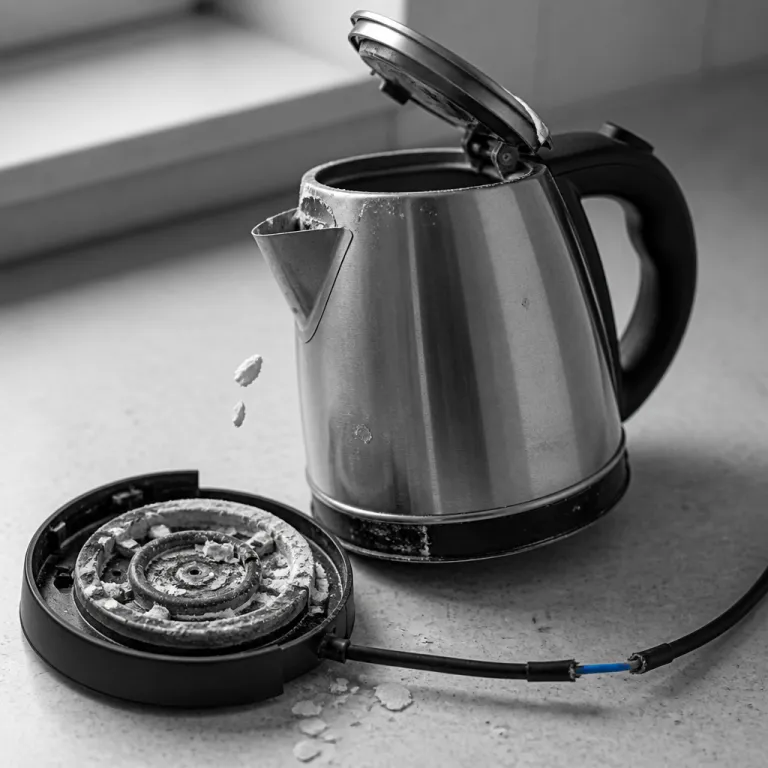
The third and most preventable killer of electric kettles is limescale on the heating element. In hard water regions, every boiling cycle leaves a microscopic ring of minerals on the element and inside kettle walls, and over a few kettle years those rings thicken into a crust that insulates the metal from the water. That insulation forces the heating element to run hotter for longer, which quietly shortens electric kettle lifespan while also wasting energy.
When limescale buildup reaches a certain thickness, the element can develop hot spots. These hot spots trigger the thermal fuse earlier than intended, and repeated trips of that safety device will eventually lock the kettle out permanently, ending the lifespan electric users expected long before any visible rust appears. You might notice this stage when the kettle takes noticeably longer to boil water or when flakes of scale appear in the first pour, especially around the spout where turbulence dislodges deposits.
Regular cleaning is the only reliable way to extend lifespan in hard water areas. A simple monthly descale with a mild acid solution, followed by a thorough rinse with filtered water, keeps the inside kettle surface smooth so that boiling remains efficient and gentle on the element. If you want a step by step routine, follow a dedicated guide to simple steps to effectively clean your electric kettle and then adapt the frequency to your local water quality and how often you boil kettle for drinks or cooking.
Stainless steel versus plastic : what really affects lifespan
Many buyers assume that a stainless steel body automatically means a longer electric kettle lifespan. The reality is that stainless steel protects against dents and some staining, but it does nothing for the thermostat, the base connector or the heating element that actually determine the typical lifespan. A plastic water kettle with a well designed concealed element and a robust connector can outlast a heavier stainless steel model that skimps on internal components.
Where stainless steel does help is in cleaning and maintenance. Smooth steel surfaces resist deep limescale buildup better than textured plastic, and they tolerate gentle scrubbing when regular cleaning has been neglected for a few years, which can indirectly extend lifespan by making it easier to restore the inside kettle to a clean state. However, if the heating element is poorly bonded or the thermostat is under specified, even the best shell material will not save the lifespan kettle owners hope for.
Plastic kettles bring their own trade offs. They are lighter and often cheaper, but they can retain odours if water quality is poor or if dry boiling has scorched residue onto the base, and that smell is a sign of heat damage that will shorten the lifespan electric users experience. When choosing between materials, focus less on the outer shell and more on the quality of the concealed heating element, the clarity of the manufacturer instructions about descaling and the ease of accessing the interior for proper care.
Variable temperature and keep warm : comfort versus component stress
Modern electric kettles often add variable temperature control and a keep warm or hold feature. These functions are excellent for coffee brewing and green tea, but they also increase the total heating time per day, which can reduce electric kettle lifespan if the thermostat and element were only sized for occasional full boiling. Holding water at ninety degrees for an hour is effectively several mini boils, and each one counts against the finite cycle life of the heating element and its safety cut outs.
On models like the Fellow Stagg EKG, the electronics that manage precise temperatures are well engineered, but they still rely on the same physical heating element and base connector as simpler kettles. If you use keep warm all day, you are asking those parts to handle more thermal cycles and more opportunities for limescale to bake onto hot metal, which will accelerate limescale buildup and shorten the typical lifespan. To extend lifespan while still enjoying convenience, reserve keep warm for specific brewing sessions rather than leaving it on as a default.
For households that mainly boil water for black tea or instant coffee, a straightforward on off kettle with a concealed element and a strong connector often offers the best balance of simplicity and durability. Fewer components mean fewer failure points, and when combined with regular cleaning and decent water quality, such a kettle can quietly exceed the advertised lifespan electric buyers expect. The key is not the feature list but how those features interact with the three core failure points over thousands of boiling cycles.
Cleaning and descaling habits that genuinely extend kettle years
Cleaning routines are where users have the most control over electric kettle lifespan. A kettle that is descaled on schedule, dried properly and never left sitting with stale water overnight will usually outlive an identical model that is left to stew in mineral rich water, even if both share the same heating element and thermostat design. The difference in lifespan kettle owners see often comes down to a few minutes of care each week.
Start with the basics of regular cleaning. Empty the water kettle after each use, leave the lid open to let the interior dry and wipe the exterior so that drips do not creep down into the base connector, because those small actions directly extend lifespan by reducing corrosion and stray moisture. Once a month in soft water areas, or every one to two weeks in hard water regions, run a descaling cycle using either a dedicated kettle descaler or a diluted food safe acid, then rinse thoroughly with filtered water to protect both taste and components.
Households in hard water zones need a deeper routine. Mineral rich water quality means limescale buildup can form quickly on the heating element and inside kettle seams, so a seasonal deep clean that includes soaking the spout and scrubbing around the concealed element housing is essential if you want to extend lifespan beyond the typical three to five kettle years. A structured guide such as the spring kettle reset for hard water households can help you plan this maintenance so it becomes a habit rather than a reaction to visible scale.
How to avoid dry boiling and hidden heat damage
Dry boiling is one of the fastest ways to kill a heating element. When an electric kettle is switched on with too little water, or when it is left boiling until every last drop has turned to steam, the element runs far hotter than intended and can warp, crack its protective coating or trigger the thermal fuse, all of which reduce electric kettle lifespan dramatically. Even a single severe dry boiling event can take years off the typical lifespan, especially in cheaper models with thinner element coatings.
To prevent this, always respect the minimum fill line and never walk away for long periods when you boil kettle for cooking tasks. If you hear unusual popping or smell hot plastic, switch off immediately and let the kettle cool before inspecting for visible damage around the element housing, because catching these signs early can still extend lifespan by avoiding repeated overheating. Remember that the thermostat and safety cut outs are designed as last resorts, not everyday tools, and relying on them constantly will age them faster than any number of gentle boiling cycles.
Some users try to stretch kettle years by ignoring minor faults, such as a switch that occasionally fails to latch or a base that feels warm even when idle. These are warning signs that the connector or thermostat is already stressed, and continuing to use the appliance in this state will shorten the lifespan electric owners can realistically expect. When in doubt, retire a suspect kettle rather than risking further damage or safety issues, especially if you see scorch marks near the base or smell burnt insulation.
Filtered water, taste and long term component health
Using filtered water is not just about taste. In hard water regions, a simple jug filter can reduce the mineral load that reaches the heating element and inside kettle surfaces, which slows limescale buildup and directly extends electric kettle lifespan. Over several kettle years, that reduction in scale can mean the difference between a clean, efficient boil and a noisy, sluggish kettle that strains its thermostat and thermal fuse.
Filtered water also helps the base connector and external surfaces. Fewer minerals in drips and splashes mean less crust forming around the connector pins, which reduces corrosion and helps maintain a low resistance contact that runs cooler during every boiling cycle, and cooler contacts will always extend lifespan compared with overheated, oxidised ones. Even in soft water areas, filtration can remove chlorine and other compounds that might otherwise leave residues when water dries on hot plastic or stainless steel.
That said, filtration is not a magic shield. If you ignore manufacturer instructions about descaling intervals, or if you routinely overfill and force water into vents, the lifespan kettle owners see will still fall short of what the internal components could have delivered under kinder conditions. Think of filtered water as one tool in a broader maintenance kit that includes regular cleaning, careful filling and respect for the minimum and maximum lines on the water kettle.
Buying for longevity : how to read past the spec sheet
When you shop for a new kettle, most boxes shout about capacity, wattage and finish. None of those tells you much about electric kettle lifespan, because they ignore the three real failure points that end kettle years early in busy households. To buy for longevity, you need to look at the thermostat design, the base connector build and the heating element protection, not just the litre figure and the colour.
Start with the connector. Pick up the base and inspect the pins ; solid, well coated or gold plated contacts signal that the brand expects the kettle to survive years of steam and the occasional spill, while thin, exposed metal suggests a shorter typical lifespan, especially if your kitchen surfaces are often damp. The way the kettle locks onto the base also matters, because a loose fit allows micro movement that can arc and pit the contacts over thousands of boiling cycles, which will quietly shorten electric kettle lifespan even if everything else looks pristine.
Next, consider the heating element and how it is shielded from limescale and dry boiling. A fully concealed element with a smooth stainless steel floor is easier to descale and less likely to trap mineral deposits than an exposed coil, which makes regular cleaning more effective and helps extend lifespan in hard water regions where limescale buildup is relentless. Check that the manufacturer instructions mention descaling explicitly and give realistic intervals, because silence on this point often signals that the brand is not designing for a long lifespan kettle but for quick replacement.
Capacity, usage patterns and realistic lifespan expectations
Capacity is another spec that hides more than it reveals. A 1,7 litre label does not mean you should routinely fill to that line, because overfilling increases the risk of water entering vents and reaching the base connector, which is one of the main factors that will shorten electric kettle lifespan in real kitchens. For many households, a slightly smaller but well built kettle that is filled to a sensible level will outlast a larger, cheaper model that is constantly pushed to its limits.
Think about how often you boil water and for what. A family that boils the water kettle ten times a day for tea, coffee and cooking will burn through thermostat cycles far faster than a couple who only use it for morning drinks, so their typical lifespan will naturally be shorter unless they invest in quality kettles with robust components and follow strict maintenance routines. Matching capacity to actual use, as explored in guides on getting kettle capacity right, also reduces wasted boiling and the total number of heating cycles per year.
Usage patterns also influence how much limescale forms and where. Repeated small boils to just below the minimum line can concentrate minerals near the heating element, while constant full boils in hard water can coat the entire inside kettle surface, so adjusting your routine to include occasional full flushes with filtered water can help extend lifespan by distributing deposits more evenly before descaling. The goal is not perfection but a set of habits that respect the limits of the thermostat, the connector and the element so that the lifespan electric users achieve matches or exceeds their expectations.
When to repair, when to replace and how to plan ahead
Once problems appear, the decision between repair and replacement becomes a question of safety and cost. A cracked handle or a loose lid can sometimes be fixed cheaply, but a damaged base connector, a failing thermostat or a heating element that has suffered repeated dry boiling usually means the electric kettle lifespan is effectively over, because those parts are rarely economical to replace outside warranty. Continuing to use a kettle with these faults risks not only further damage but also electrical hazards.
Planning ahead means accepting that even the best quality kettles have a finite typical lifespan. Budget for replacement every five to seven kettle years if you live in a hard water area and boil frequently, and slightly longer if your water quality is softer and your maintenance is meticulous, because this mindset encourages you to track performance changes such as slower boiling or inconsistent shut off. When these signs appear, you can retire the appliance on your terms rather than waiting for a sudden failure that interrupts your morning routine.
Ultimately, what kills an electric kettle is rarely a single dramatic event. It is the cumulative effect of limescale on the heating element, moisture and corrosion in the base connector and fatigue in the thermostat, all accelerated or slowed by how you fill, boil, clean and store the appliance day after day. In other words, the real measure of electric kettle lifespan is not the wattage on the box but how you treat the tenth kettle of limescale.
Key figures on electric kettle lifespan and failure
- Surveys from major consumer organisations in Europe report that the average electric kettle lifespan in busy households is between three and five years, with hard water regions clustering at the lower end of that range compared with soft water areas.
- Independent testing by consumer magazines has shown that heavy limescale buildup on a heating element can reduce energy efficiency by around 10 to 15 percent per year, which both increases running costs and accelerates thermal stress on components.
- Field failure analyses from appliance repair services indicate that thermostat and auto shut off issues account for roughly 40 percent of early kettle failures, while base connector problems and visible limescale related damage make up much of the remainder.
- Studies on household water quality suggest that using filtered water in hard water regions can cut visible limescale buildup inside kettle bodies by up to half over a twelve month period, which correlates with fewer heating element failures in those homes.
- Consumer advice bodies note that following manufacturer instructions on descaling frequency can extend lifespan by one to two kettle years on average, especially for stainless steel models with concealed elements that respond well to regular cleaning.